

Black cats are the hardest to identify by breed. The reason is simple: solid black hides the features that make breeds distinct. Coat pattern? Gone. Color variation? Gone. You are left with silhouette, body shape, eye color, and ear type. If you can see those clearly, you can still identify the breed. If you cannot , and that happens with black cats in dim rooms, which is basically all the time , you are guessing.
Here are six breeds where solid black is a recognized color, with the non-color features that separate them.
1. Bombay
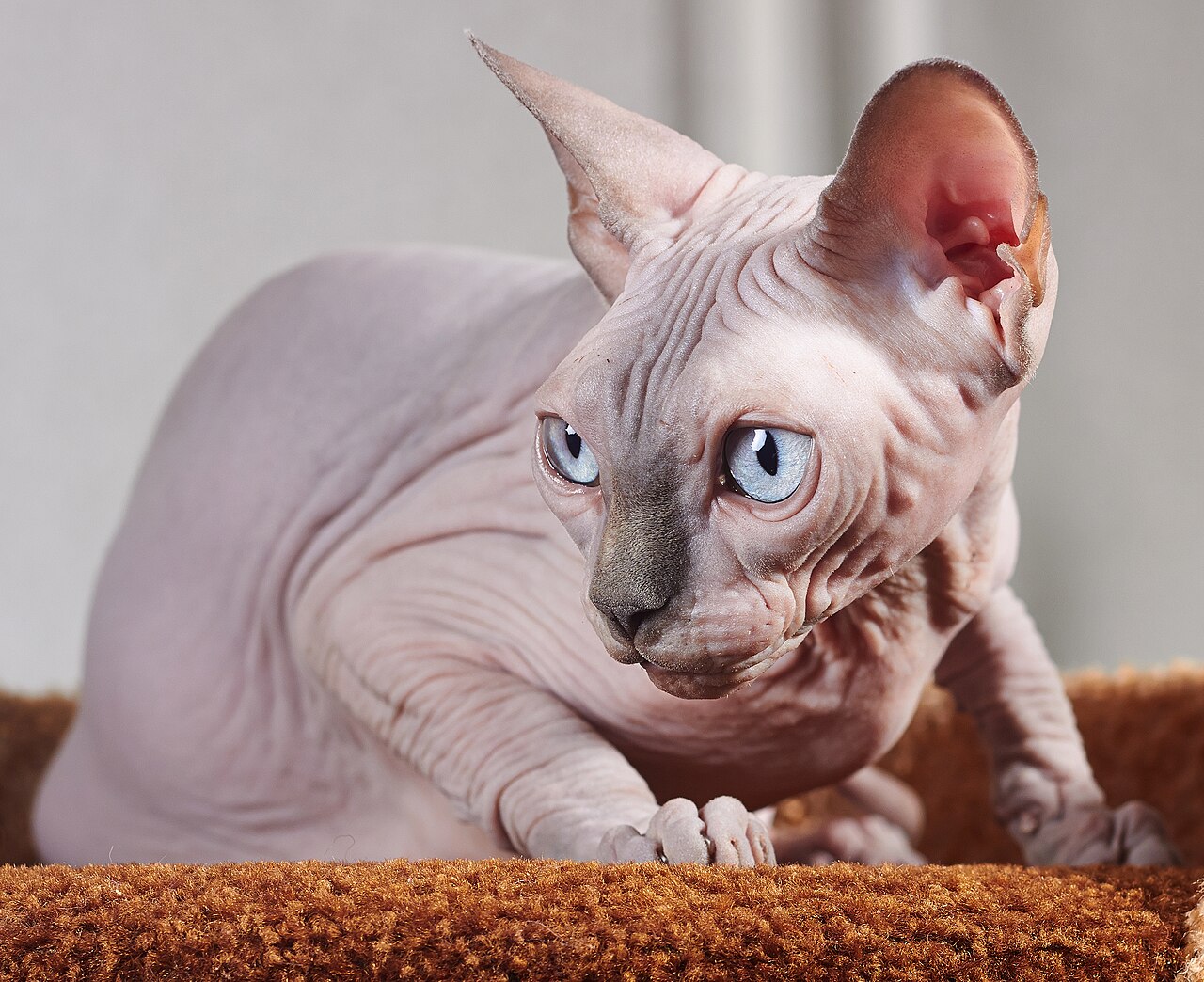
The Bombay was bred to look like a miniature panther. Black coat, black nose, black paw pads, copper or gold eyes. Everything is black except the eyes. The body is medium-sized, muscular, and surprisingly heavy for its size. The head is rounded with a short muzzle. If your black cat has copper eyes and a sleek, glossy coat that looks almost patent leather, and the build is muscular but not bulky, Bombay is the most specific answer. No other breed was deliberately created to be an all-black cat. A solid black American Shorthair is a much more common outcome: same color, but a sturdy, unremarkable build with no panther-like polish.
2. Persian
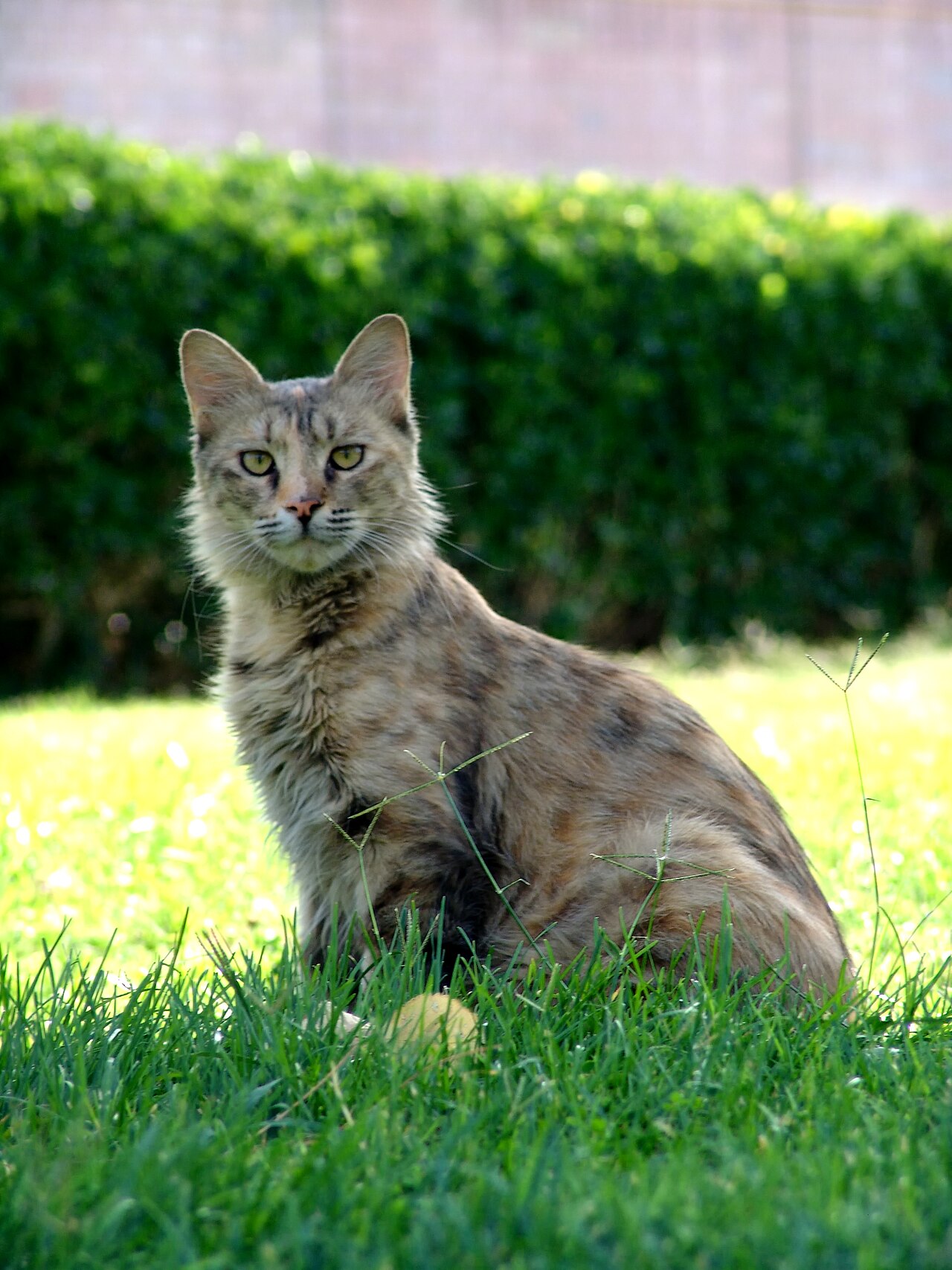
A black Persian is unmistakable once you see the face. The flat profile, short nose, round head, and small ears are the same whether the cat is white, orange, or black. The coat is long, thick, and cottony. If your black cat has a squished face and a floor-length coat, Persian is the answer. The coat color is incidental. The face is diagnostic.
One thing about black Persians: their coat shows dust and lint more than lighter colors. If your cat always looks slightly dusty no matter how much you brush, that is a black cat thing, not a breed thing.
3. Maine Coon
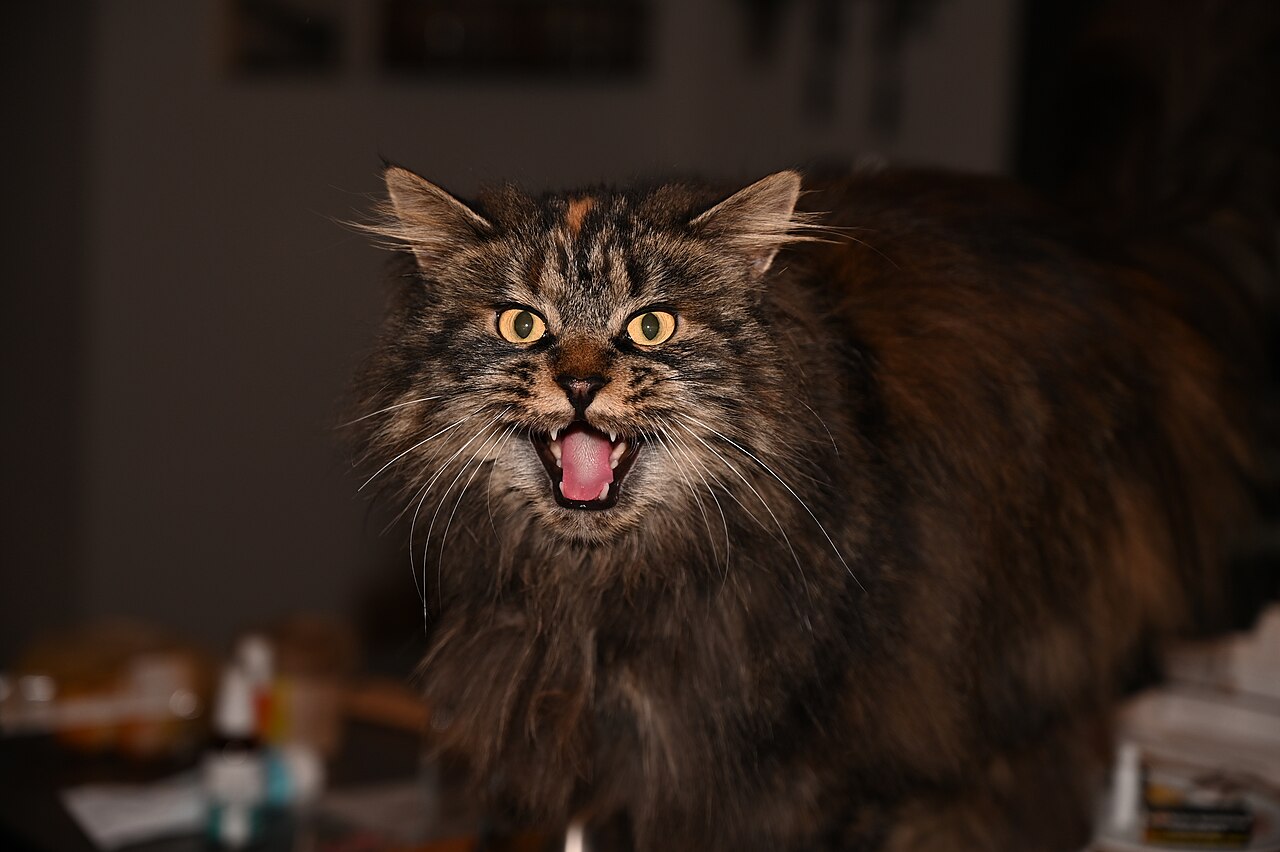
Black Maine Coons are common. The color is solid but the size and structure are the same as any other Maine Coon: large rectangular body, square muzzle, ear tufts, bushy tail. Look at the bone structure. A black cat over 15 pounds with a broad chest and lynx tips is probably a Maine Coon or Maine Coon mix. The coat may have a faint brownish or reddish tinge in direct sunlight , that is normal for black Maine Coons and is called "rusting." It is not a different color. It is sun bleaching.
4. British Shorthair
A black British Shorthair is a solid block of cat. The coat is plush and dense, the body is compact and cobby, the face is round with full cheeks, and the eyes are copper or gold. The coat has a distinctive crisp texture , it stands slightly away from the body rather than lying flat. British Shorthair in black looks like a velvet cushion with eyes. The roundness is the key. A round face, round eyes, round body, and dense plush coat in solid black is a strong profile match.
5. Sphynx
A black Sphynx is technically not black-furred. It is black-skinned. The skin pigmentation shows the color that the fur would have been. A black Sphynx has dark gray to black skin, often with a suede-like texture, and large bat-like ears. If your cat is hairless and dark-skinned, Sphynx is the answer. The lack of fur makes this the easiest black cat breed to identify , there is no coat to hide behind.
6. Oriental Shorthair
A black Oriental Shorthair is sleek, tubular, and angular. The body is long and lean, the legs are long, the tail is whip-thin, and the head is a long wedge with enormous ears. The coat is short, fine, and lies flat against the body. Oriental Shorthair in black looks like a cat drawn by an artist who exaggerated every dimension. The extreme body type , long, thin, angular , separates it from every other black cat breed. A round black cat is not an Oriental. A lean black cat with huge ears might be.
Black cat breed comparison at a glance
| Feature | Bombay | Persian | Maine Coon | British Shorthair | Sphynx | Oriental Shorthair |
|---|---|---|---|---|---|---|
| Body Type | Muscular, medium | Cobby, round | Large, rectangular | Compact, round | Hairless, medium | Lean, tubular |
| Face Shape | Rounded, short muzzle | Flat, round | Square muzzle | Round, full cheeks | Wedge, large ears | Long wedge |
| Eye Color | Copper or gold | Copper | Gold or green | Copper or gold | Any | Green or blue |
| Coat Texture | Short, glossy | Long, cottony | Long, shaggy | Short, dense plush | Hairless (skin) | Short, fine |
| Key Tell | All-black + copper eyes | Flat face | Size + ear tufts | Round body | Hairless | Large ears + lean body |
Black Cat Breed Quick Guide: Follow the Traits
Skip the reading if you want a shortcut. Work through your cat in this order, coat first, then size, then face, and each step narrows the list. Most black cats will stop at "domestic shorthair", and that is the honest answer for the majority of cats.
Step 1: Is your cat hairless?
If the skin is bare or nearly bare with large bat ears, go straight to the Sphynx. A hairless black cat is black-skinned, not black-furred, and it is the easiest black cat to identify.
Step 2: Long coat or short coat?
Long, thick coat: check the face next. A flat, squished face with a short nose means Persian. A broad rectangular body over 15 lbs with ear tufts and a shaggy coat points to Maine Coon. Short coat: continue to step 3.
Step 3: Short coat, now look at body shape.
Compact, round body with a round face and full cheeks: British Shorthair. Lean, tubular, angular body with a long wedge head and enormous ears: Oriental Shorthair. Muscular and medium-sized: check the eyes.
Step 4: Muscular medium build, now the eyes.
Copper or gold eyes on a glossy, patent-leather coat, black nose and paw pads: Bombay. Anything else, or any combination that does not fit cleanly: your cat is almost certainly a black domestic shorthair or longhair, and that is the statistically likely answer for any black cat.
One rule applies to every step: a single trait is never enough. A black domestic shorthair can have copper eyes, a lean build, or big ears separately. It is the combination, and the extremes, that point to a breed.
Black Cat Breeds: The Full Short List
The six profiles above cover the breeds people ask about most. But searches for black cat breeds turn up a few more names worth knowing, because solid black is accepted in more places than you would think. Here is the wider field, with the one feature that separates each from a random black cat.
The Bombay remains the only breed created specifically to be black from nose to tail. Copper eyes on a patent-leather coat are the tell. A black American Shorthair is the far more common pedigreed outcome: same color, but a sturdy, working-cat build with no panther polish. A black British Shorthair reads as roundness everywhere, full cheeks, dense plush coat, copper or gold eyes. The black Persian gives itself away with the flat face alone, long cottony coat or not. A black Norwegian Forest Cat is the big northern option: a triangular head, a straight profile with no break, and a water-resistant double coat built for winters. And the Russian Blue is the honorable mention. Its coat reads as deep charcoal in dim light, close enough to black that owners regularly search for it as a black cat, until daylight shows the silvery blue tips and the vivid green eyes. If allergies factor into your breed shortlist, our hypoallergenic cat breeds guide covers which of these breeds produce less Fel d 1.
None of these colors change the method. Black hides pattern, so body, face, ears, and eyes still do the work. The list just tells you which names to test first. One more color note: if your cat is not actually solid black but white with distinct orange and black patches, you have a calico, not a black cat. Our calico cat glossary entry explains the tri-color pattern and why almost all calicos are female.
How to photograph a black cat for identification
Black cats photograph terribly in low light. The fur absorbs light and the camera loses detail. Here is what works: photograph your cat near a window during daylight, on a light-colored surface, from the side. The side profile reveals face shape, body length, and ear position , the features that matter most when coat color gives you nothing. Avoid flash. It bounces off the coat and washes out the texture. Natural light, profile angle, light background. Three things that make a black cat identifiable in a photo.
Got a clear profile shot? Try uploading it to our cat breed identifier. The model has been trained on enough black cats to look past the coat color and focus on structural features. It is not perfect. Black cats in dark rooms still stump it. But with a well-lit photo it gets surprisingly close. Still not sure? The cat coat patterns guide explains how tabby, bicolor, and pointed patterns change what a black coat can tell you, and our visual breed identification guide walks through every marker in order.
Frequently Asked Questions
What breed is my black cat?
Most black cats are domestic shorthairs, not a specific breed. Solid black is a common color across many breeds. To narrow it down, ignore the coat and look at structural clues: copper eyes point to Bombay, a flat face to Persian, a massive rectangular body to Maine Coon, and a sleek wedge head to Oriental Shorthair.
Are black cats a specific breed?
No. Black is a coat color, not a breed. The only breed bred specifically for an all-black coat is the Bombay. Other breeds like Persian, Maine Coon, British Shorthair, Sphynx, and Oriental Shorthair all recognize solid black, but a black domestic shorthair is the most common outcome.
What is the rarest black cat breed?
Bombay is the rarest and most deliberate: it was created in the 1950s to resemble a miniature panther. Solid black is also one of the rarer colors in breeds like the Norwegian Forest Cat and Maine Coon, where brown and tabby dominate.
Can a black cat be a Maine Coon?
Yes. Solid black is an accepted Maine Coon color. The distinguishing features are size, a rectangular body, ear tufts, and a shaggy coat. A black Maine Coon is large and heavy, with lynx tips on the ears. Size alone usually separates it from a random black domestic longhair.
Why is it hard to identify a black cat's breed?
Solid black hides coat pattern, which is normally the strongest single identification clue. Stripes, spots, and ticking all disappear into the black. That leaves silhouette, eye color, ear shape, and body type as the only tells, which is why a well-lit profile photo matters so much for black cats.
Keep reading
All articlesIdentification
How to Identify a Mixed Breed Cat: 7 Common Mixes Explained
Identify your mixed breed cat: Birman, Turkish Angora, Abyssinian, Maine Coon, Siamese, and Ragdoll mixes. What each mix actually looks like and how to count the clues.
9 min read
Identification
Cats That Look Like Bengals: 5 Breeds Compared
Egyptian Mau, Ocicat, or Savannah? Compare 5 breeds that mimic Bengal rosettes, athletic build, and wild expression — side-by-side photos and trait checklists inside.
6 min read
Identification
Cats That Look Like British Shorthairs
Chartreux, Scottish Fold, or Russian Blue? Compare the 4 breeds most often confused with British Shorthairs — differences in face shape, coat texture, eye color, and temperament.
5 min read
Still not sure what your cat is?
Stop guessing from photos and text. Upload one clear photo and the AI checks 40+ visual markers in seconds. Free, no sign-up, and your photo is never stored.
🐱 Free cat breed scan