

Quick answer: No cat breed is truly hypoallergenic. All cats produce the Fel d 1 protein — the primary allergen found in cat saliva, skin oils, and dander — and no breed is completely free of it. But some breeds produce significantly less Fel d 1, shed less fur, or have coats that trap fewer allergens. If you have cat allergies and want a feline companion, these are the breeds most likely to work for you.
The term "hypoallergenic" literally means "below normal allergens" — not "zero allergens." When people search for hypoallergenic cat breeds, they are really asking: which cats will make me sneeze the least? The answer depends on which specific allergen you react to, how sensitive you are, and the individual cat. Some Siberians produce far less Fel d 1 than average. Some Sphynx cats have no fur to shed. Some Rex breeds shed so little that airborne dander is reduced. None of them are allergy-proof, but all of them give allergy sufferers a better chance than a Persian or Maine Coon.
What Does Hypoallergenic Actually Mean for Cats?
The biggest misconception about hypoallergenic cats is that they do not cause allergic reactions. They do — just potentially fewer or milder ones. Cat allergies are triggered by proteins, not fur:
- Fel d 1 — the primary cat allergen, produced in the salivary and sebaceous glands. Cats spread it across their coat during grooming. It becomes airborne when dried saliva flakes off fur as dander. Fel d 1 is responsible for roughly 90% of cat allergies.
- Fel d 2, Fel d 3, Fel d 4 — secondary allergens found in cat serum, urine, and other secretions. These matter less for most people but can be the trigger for a small percentage of allergy sufferers.
When a breed is called "hypoallergenic," it usually means one of three things:
- Lower Fel d 1 production — some breeds (notably Siberians and Russian Blues) are reported to produce less Fel d 1 than average. This is the most scientifically meaningful claim, though individual variation within a breed is significant.
- Less shedding — breeds with single coats, minimal undercoat, or no fur at all release fewer allergen-laden hairs into the environment. Less airborne fur means less airborne Fel d 1.
- Less grooming — cats that groom less spread less saliva across their coat. This is hard to measure and varies more by individual than by breed.
The honest truth: you cannot predict whether a specific cat will trigger your allergies based on breed alone. Two Siberians from the same litter can produce very different Fel d 1 levels. The breed gives you better odds, not a guarantee.
The Best Hypoallergenic Cat Breeds
These eight breeds are the ones most commonly recommended for allergy sufferers, ranked by the strength of the evidence behind their hypoallergenic reputation.
Hypoallergenic cat breeds at a glance
| Breed | Fel d 1 Level | Shedding | Size | Lifespan |
|---|---|---|---|---|
| Siberian | 30-50% lower | Moderate (triple coat traps fur) | 8-15 lbs | 12-18 years |
| Russian Blue | Possibly lower | Low | 7-15 lbs | 15-20 years |
| Balinese | Normal | Low (single coat, no undercoat) | 6-11 lbs | 15-20 years |
| Devon Rex | Normal | Very low | 6-9 lbs | 12-16 years |
| Cornish Rex | Normal | Very low (single-layer coat) | 6-10 lbs | 12-16 years |
| Sphynx | Normal (skin oils) | None (hairless) | 6-12 lbs | 8-14 years |
| Oriental Shorthair | Normal | Low | 6-12 lbs | 12-15 years |
| Bengal | Normal | Low (pelt-like coat) | 8-15 lbs | 12-16 years |
1. Siberian
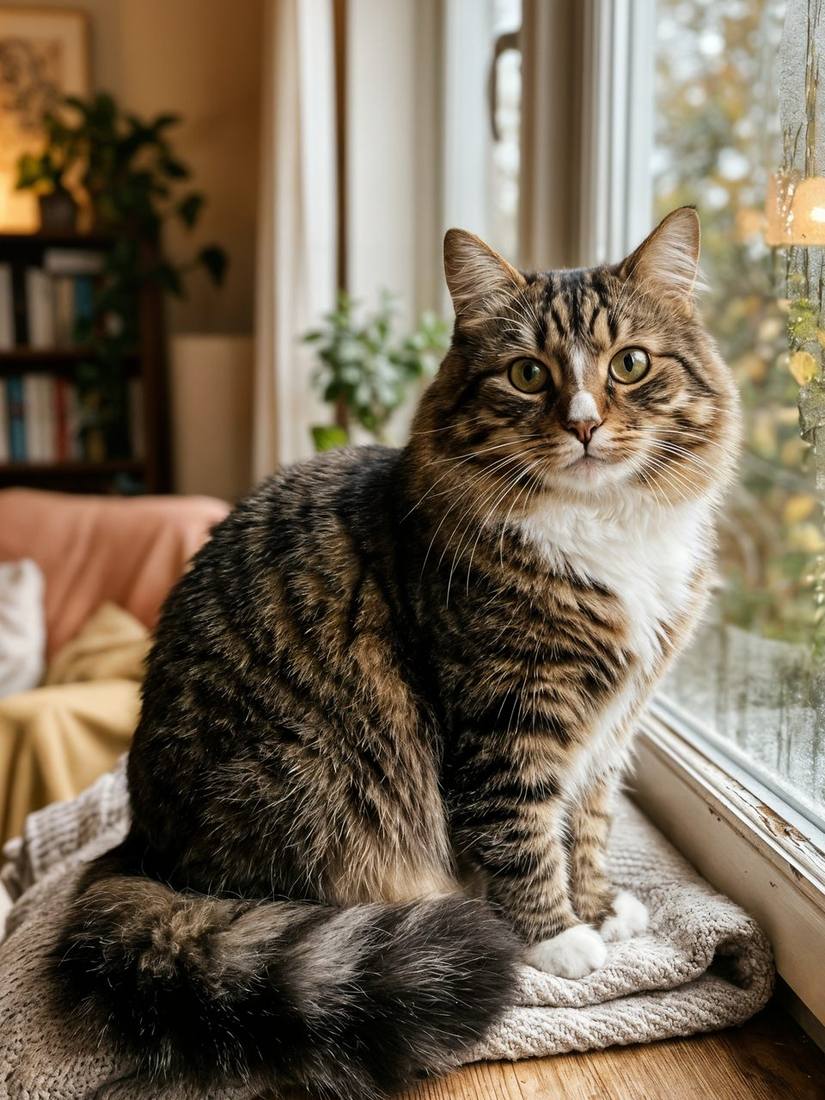
The Siberian is the breed with the strongest scientific case for being allergy-friendly. Multiple studies have found that Siberians produce significantly lower levels of Fel d 1 in their saliva and skin oils compared to other breeds — some research suggests 30-50% less than average. This is not universal across every Siberian, but the trend is consistent enough that many breeders now offer Fel d 1 testing on individual cats.
The irony is that Siberians have thick, triple-layered coats — the kind of fur you would expect to shed everywhere. In practice, their coat is surprisingly low-maintenance because the dense undercoat traps loose hair rather than releasing it into the air. Regular brushing (2-3 times per week) keeps shedding under control. If you are looking for a large, affectionate, dog-like cat that is also allergy-friendly, the Siberian is the strongest candidate.
2. Russian Blue
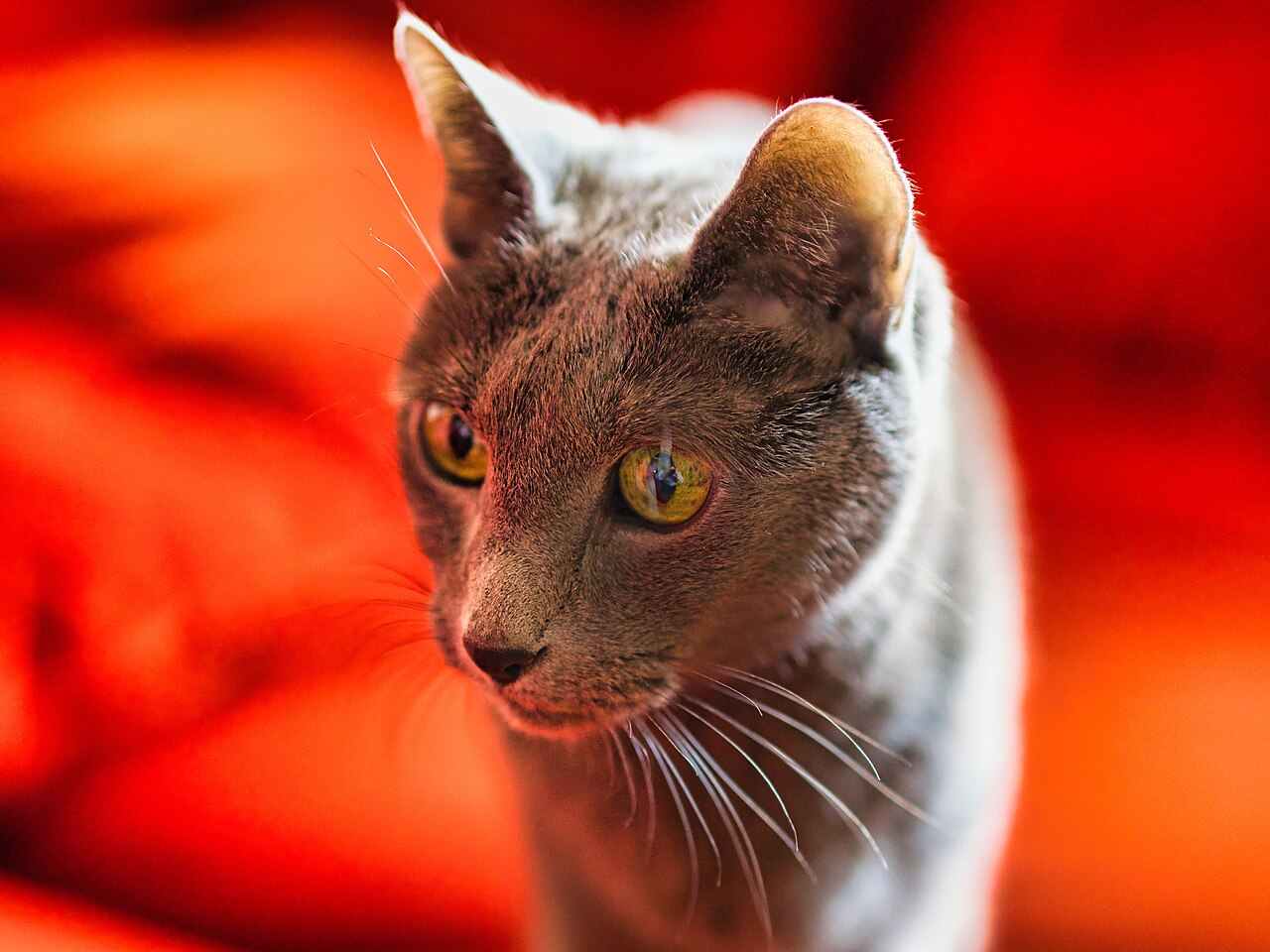
The Russian Blue is often cited as hypoallergenic because of its dense, plush double coat that sheds less than many breeds. The short, fine fur lies close to the body and releases fewer airborne particles than a longhaired cat's coat. Some allergy sufferers also report that Russian Blues produce lower Fel d 1 levels, though this is less well-documented than the Siberian claim.
What makes the Russian Blue practical for allergy sufferers is the coat management: weekly brushing is enough, and the breed's fastidious self-grooming means less loose fur on furniture. The trade-off is temperament — Russian Blues are reserved with strangers and sensitive to change, so they need a calm, predictable home.
3. Balinese
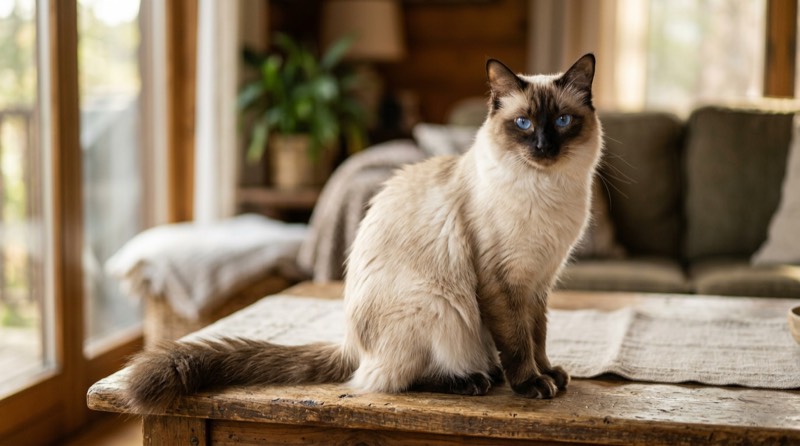
The Balinese is essentially a longhaired Siamese, which sounds like the worst possible choice for allergy sufferers. But the Balinese coat is a single coat with no undercoat — unlike Persians, Maine Coons, or Norwegian Forest Cats, which have dense double coats that shed heavily. The lack of undercoat means less total fur to trap and release dander.
Balinese cats are sometimes called "the longhaired hypoallergenic cat" because they combine the low-shedding advantage of a single coat with the social, vocal, people-oriented personality of the Siamese. They still produce Fel d 1, and the longer fur does carry more allergen than a short-haired breed's coat, but the shedding difference is real.
4. Devon Rex
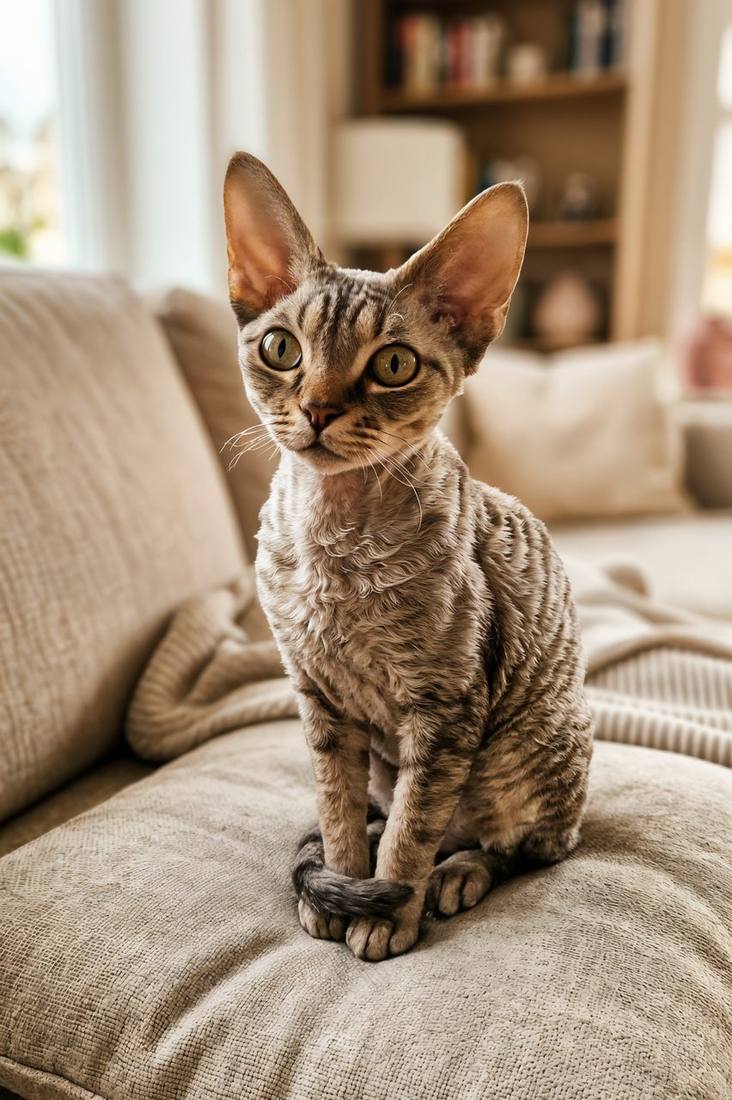
The Devon Rex has a short, wavy coat that sheds very little. The fine, delicate fur is often compared to lamb's wool, and some Devon Rex cats have bald patches, especially on the head and neck. Less fur means less shedding, which means fewer allergen-laden hairs in the air and on furniture.
Devon Rex cats are playful, mischievous, and intensely people-oriented — they want to be on your lap, on your shoulder, or in your face at all times. This is both an advantage (they are wonderful companions) and a challenge for allergy sufferers (close contact means more direct allergen exposure). If your allergies are mild, the Devon Rex's minimal shedding may be enough. If you are highly sensitive, the constant proximity could be a problem.
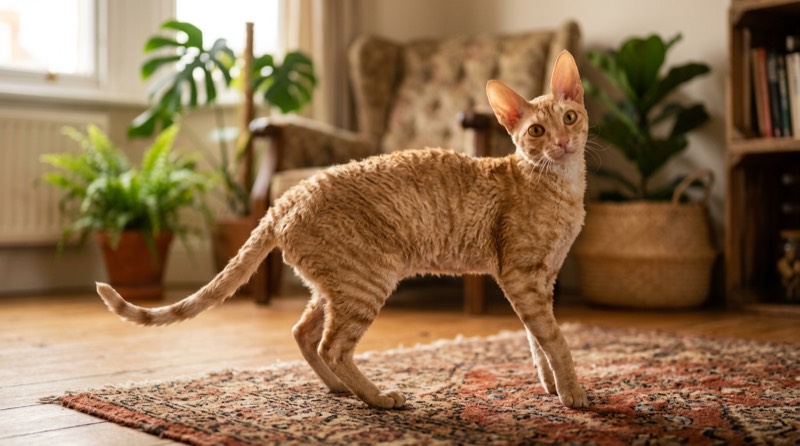
5. Cornish Rex
The Cornish Rex has a single-layer coat — no guard hairs, no undercoat, just the fine downy undercoat that most breeds have beneath their outer fur. This means significantly less shedding than double-coated breeds. The coat is short, soft, and lies in tight waves against the body.
Like the Devon Rex, the Cornish Rex sheds very little and produces less airborne dander. The breed is active, athletic, and loves to climb — not a lap cat, but a playful companion that keeps its fur mostly on itself rather than on your couch.
6. Sphynx
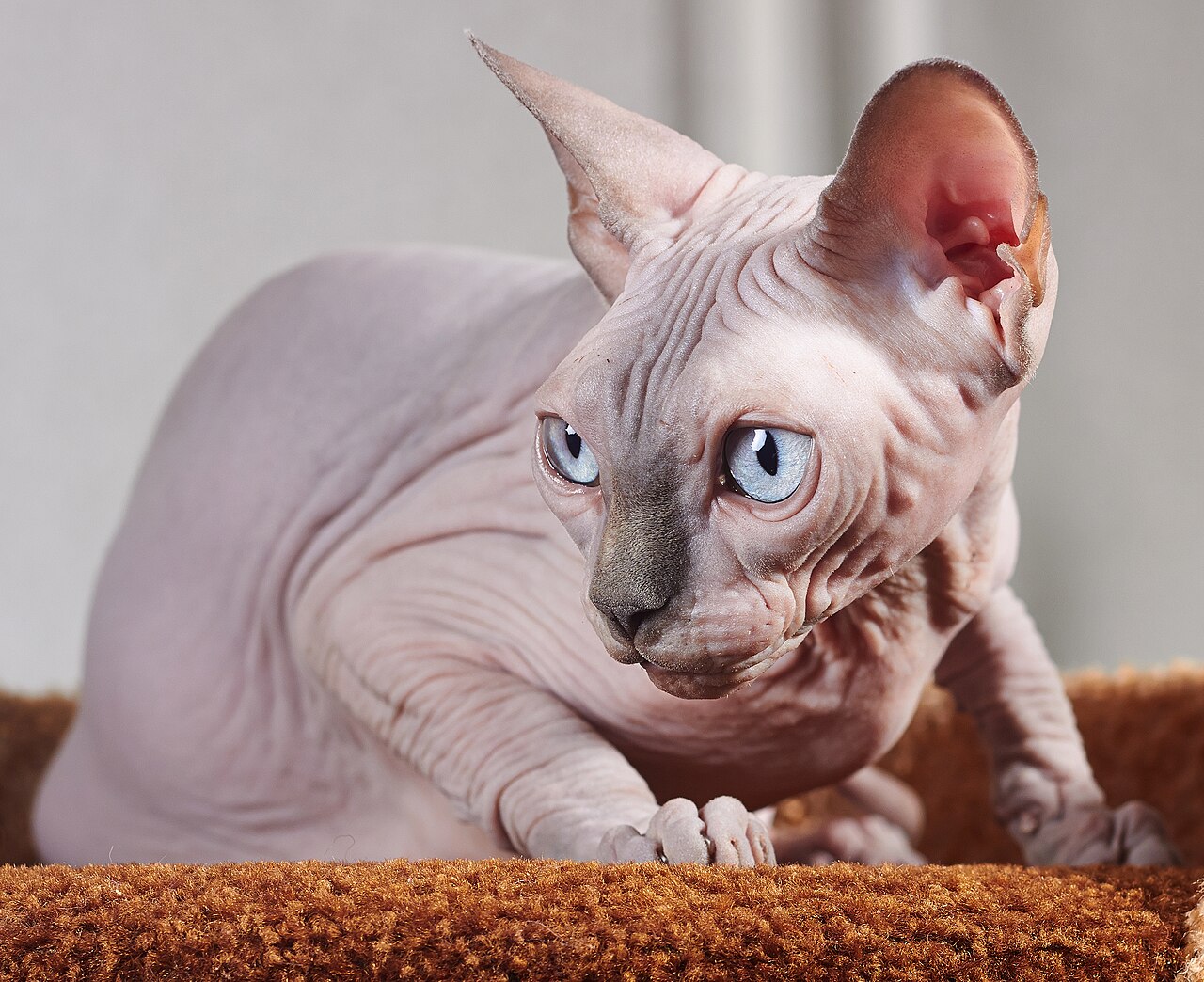
The Sphynx is the most obvious choice for allergy sufferers: no fur means no shedding. In practice, it is more complicated. Sphynx cats are not truly hairless — they have a fine peach-fuzz down — and they still produce Fel d 1 in their saliva and skin oils. Without fur to absorb it, the allergen sits directly on the skin and transfers to anything the cat touches.
Sphynx cats also need regular bathing (about once a week) to manage the skin oils that would normally be distributed through fur. If you are allergic to Fel d 1 specifically, a Sphynx may not help much — the allergen is still there, just delivered differently. But if your main trigger is airborne dander and loose fur, the Sphynx eliminates that channel entirely.
7. Oriental Shorthair
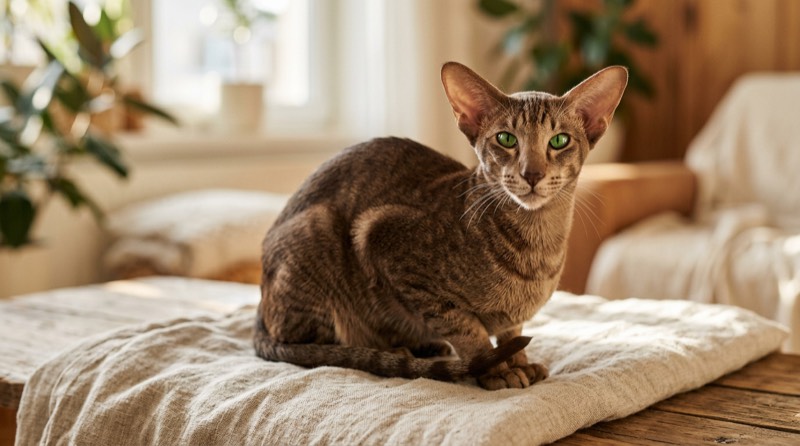
The Oriental Shorthair has a short, fine, close-lying coat that sheds minimally. The breed comes in over 300 color and pattern combinations, but the coat type is consistent: short, sleek, and low-shedding. Oriental Shorthairs are vocal, social, and demand attention — very similar to Siamese in temperament.
The hypoallergenic case for Orientals is primarily about shedding rather than Fel d 1 production. The short coat releases less fur into the environment, which reduces airborne allergen levels. Regular weekly brushing is enough to manage loose hair.
8. Bengal
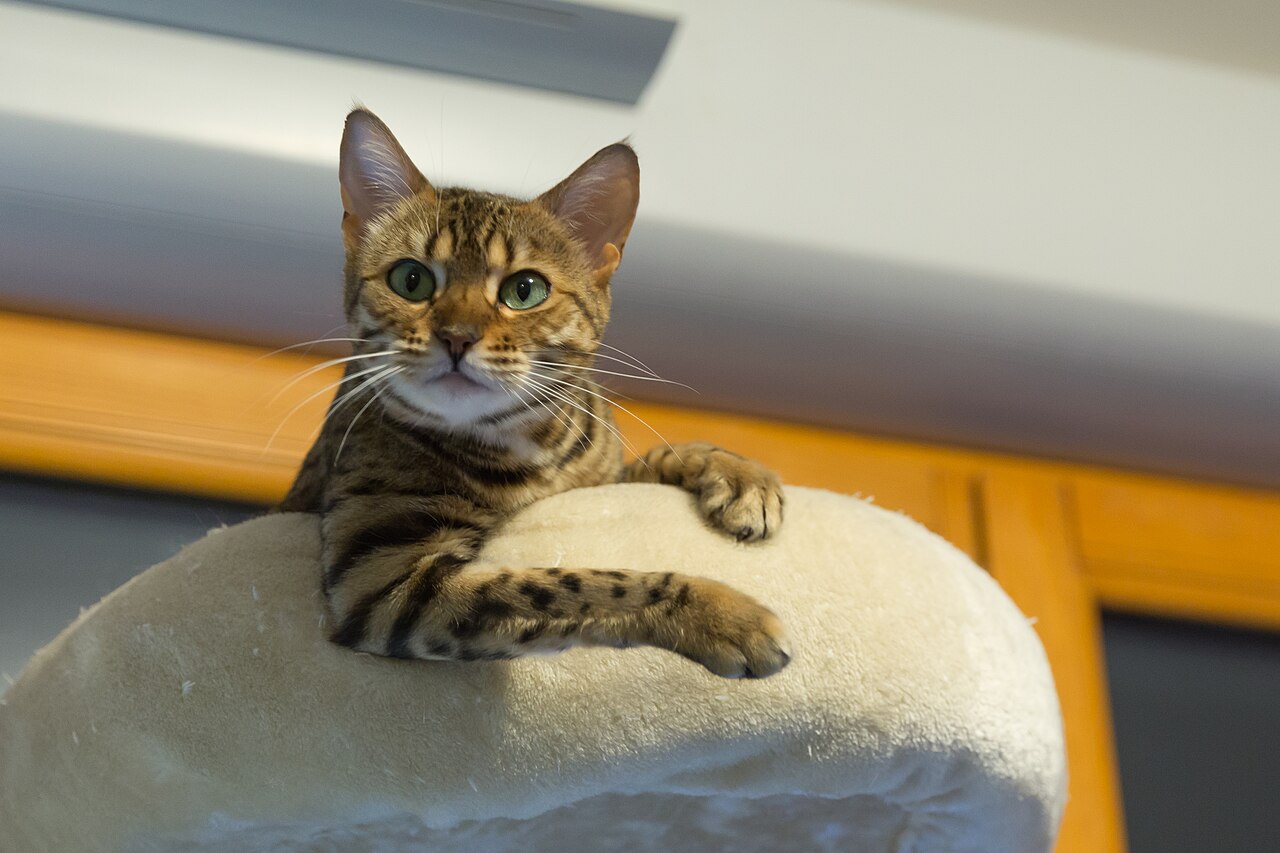
The Bengal has a short, dense, pelt-like coat that lies close to the body and sheds less than many breeds. Some allergy sufferers report fewer reactions around Bengals, possibly because the coat's tight structure traps dander rather than releasing it. Bengals also tend to groom themselves less obsessively than some breeds, which means less saliva spread across the coat.
The Bengal's hypoallergenic reputation is weaker than the breeds above — there is less scientific evidence for lower Fel d 1 production, and the "less shedding" claim is relative (they still shed, just less than a Persian). But for mild allergy sufferers who want an active, intelligent, striking-looking cat, the Bengal is worth considering.
Cat Breeds to Avoid If You Have Allergies
Some breeds are particularly challenging for allergy sufferers because of heavy shedding, dense double coats, or high Fel d 1 production:
- Persian — long, dense coat that sheds heavily and traps dander. Daily grooming releases clouds of loose fur. One of the worst breeds for allergy sufferers.
- Maine Coon — thick, semi-long double coat with heavy seasonal shedding. Produces normal Fel d 1 levels and spreads it widely through grooming.
- British Shorthair — dense, plush double coat that sheds a great deal of dander and fur despite being shorthaired.
- Norwegian Forest Cat — thick, water-repellent double coat designed for harsh winters. Sheds heavily, especially during seasonal coat changes.
- Himalayan — longhaired Persian-type coat with the same heavy shedding and dander problems.
If you have moderate to severe cat allergies, these breeds are likely to cause significant symptoms. Even mild allergy sufferers should spend extended time with these breeds before committing.
Understanding Cat Allergies: Fel d 1 and Beyond
Cat allergies affect an estimated 10-20% of the global population, making them twice as common as dog allergies. The primary culprit is Fel d 1, a small protein produced in the cat's sebaceous glands (skin), salivary glands, and lacrimal glands (tears). Here is how it works:
- The cat grooms itself, spreading saliva containing Fel d 1 across its coat.
- The saliva dries and flakes off as microscopic particles (dander).
- Dander becomes airborne and settles on surfaces, furniture, clothing, and bedding.
- When an allergic person inhales or touches these particles, their immune system overreacts — producing histamine, which causes sneezing, itchy eyes, congestion, and in severe cases, asthma attacks.
Important facts about cat allergies:
- Male cats produce more Fel d 1 than females. Neutering reduces Fel d 1 production in males. If you are choosing a breed for allergy reasons, a neutered female is the lowest-allergen option.
- Kittens produce less Fel d 1 than adults. This is why some people think they are not allergic to a kitten, only to develop symptoms as the cat matures.
- Dark-colored cats may produce more allergen than light-colored cats of the same breed, though the evidence is mixed. If your dark cat's breed is a mystery, our black cat breed guide narrows the field using body shape, eye color, and ear type instead of coat pattern.
- Fel d 1 is sticky. It adheres to walls, carpets, and clothing, and can remain allergenic for months after the cat is gone. This is why thorough cleaning matters as much as breed selection.
Tips for Living with a Cat When You Have Allergies
Choosing a low-allergen breed is only part of the equation. How you manage your home environment matters just as much:
- Use a HEPA air purifier. A good HEPA filter removes 99.97% of airborne particles larger than 0.3 microns, including Fel d 1-bearing dander. Run one in the room where you spend the most time and in the bedroom.
- Create an allergy-free bedroom. Keep the cat out of the bedroom entirely. This gives you 8+ hours per day in a low-allergen environment, which can significantly reduce symptoms.
- Wash bedding weekly in hot water (130°F / 54°C minimum) to kill allergens. Use allergen-proof covers on pillows and mattresses.
- Vacuum frequently with a HEPA-filtered vacuum. Standard vacuums can recirculate allergens back into the air. Vacuum carpets, upholstery, and any fabric surface the cat contacts.
- Brush your cat regularly — ideally outdoors or in a well-ventilated area. This removes loose fur and dander before it spreads through the house. Some allergy sufferers wear a mask during grooming.
- Wash your hands after petting. Fel d 1 transfers from fur to skin to eyes/nose. Avoid touching your face after handling your cat until you have washed.
- Consider allergy immunotherapy. Allergy shots or sublingual tablets can reduce sensitivity to Fel d 1 over time. This is a long-term solution (6-12 months to see full effect) but can be highly effective for people who want to live with cats despite allergies.
How to Test If You Are Allergic to a Specific Breed
Before committing to a cat, test your reaction:
- Visit a breeder or rescue that has the breed you are interested in. Spend at least 30-60 minutes in the same room with the cats. Note any symptoms: sneezing, itchy eyes, congestion, skin rash, or breathing difficulty.
- Test with the specific cat, not just the breed. Fel d 1 production varies significantly between individual cats. A Siberian from one line may trigger your allergies while another does not.
- Ask about Fel d 1 testing. Some breeders now test individual cats for Fel d 1 levels and can tell you whether a specific kitten produces above or below average levels.
- Try a foster arrangement. Many rescue organizations offer foster-to-adopt programs. This lets you live with the cat for 1-2 weeks before committing, which is the best real-world test.
- See an allergist. A skin prick test or blood test can confirm whether you are specifically allergic to cat dander (Fel d 1) or to something else entirely. Some people who think they are allergic to cats are actually allergic to dust mites or pollen that the cat carries in from outdoors.
Frequently Asked Questions
Are there any truly hypoallergenic cats?
No. All cats produce Fel d 1, the primary cat allergen. No breed is completely free of it. "Hypoallergenic" means lower allergens, not zero allergens. Some breeds produce less Fel d 1 or shed less fur, which reduces allergen exposure, but no cat is allergy-proof.
What is the best hypoallergenic cat breed?
The Siberian has the strongest scientific evidence for lower Fel d 1 production — studies suggest they produce 30-50% less of the primary cat allergen than average. Russian Blues and Balinese are also commonly recommended. But individual variation matters more than breed, so test with a specific cat before committing.
Are hypoallergenic cats really hypoallergenic?
The term is misleading. "Hypoallergenic" means "reduced allergens," not "no allergens." These cats still produce Fel d 1 and can trigger allergic reactions. They are better options for allergy sufferers than heavy-shedding breeds like Persians or Maine Coons, but they are not a cure for cat allergies.
Can I be allergic to one cat but not another of the same breed?
Yes. Fel d 1 production varies significantly between individual cats, even within the same breed and litter. A Siberian from one line may produce much less Fel d 1 than a Siberian from another. This is why some breeders offer Fel d 1 testing on individual cats — the breed gives you better odds, but the individual cat determines your actual reaction.
Are male or female cats more allergenic?
Male cats produce more Fel d 1 than females, especially unneutered males. Neutering reduces Fel d 1 production significantly. If you are choosing a cat for allergy reasons, a neutered female is the lowest-allergen option within any breed.
Do Sphynx cats cause allergies?
Yes, they can. Sphynx cats are hairless but still produce Fel d 1 in their saliva and skin oils. Without fur to absorb it, the allergen sits directly on the skin and transfers to anything the cat touches. Some allergy sufferers find Sphynx cats easier to live with because there is no airborne fur or dander, but others react to the skin oils directly.
Are Siberian cats really hypoallergenic?
Siberians produce lower levels of Fel d 1 than most breeds — some studies suggest 30-50% less. This makes them the strongest candidate for allergy sufferers, but "hypoallergenic" is relative. Individual Siberians vary, and some may still trigger allergies. The best approach is to test with a specific cat and ask the breeder about Fel d 1 testing.
Can I build immunity to cat allergies?
Some people do develop reduced sensitivity over time with prolonged exposure, but this is unpredictable and does not work for everyone. Allergy immunotherapy (shots or sublingual tablets) is a more reliable way to reduce sensitivity to Fel d 1. It takes 6-12 months for full effect and requires ongoing treatment, but it can be highly effective for people who want to live with cats despite allergies.
What cat breeds are worst for allergies?
Persians, Maine Coons, British Shorthairs, Norwegian Forest Cats, and Himalayans are the worst breeds for allergy sufferers. They have dense double coats that shed heavily, producing large amounts of airborne dander. They also produce normal or above-average levels of Fel d 1.
Is there a hypoallergenic cat that looks like a Maine Coon?
No breed combines the Maine Coon's size and look with hypoallergenic properties. The closest option is the Siberian — a large, semi-longhaired breed with a friendly, dog-like personality and documented lower Fel d 1 production. Siberians are not as large as Maine Coons (8-15 lbs vs. 9-18 lbs) but share the affectionate, playful temperament.
Are British Shorthairs hypoallergenic?
No. British Shorthairs are one of the worst choices for allergy sufferers. Their dense, plush double coat sheds a great deal of dander and fur despite being shorthaired, and they produce normal or above-average levels of Fel d 1. If you want a low-allergen shorthair, look at the Devon Rex, Cornish Rex, or Oriental Shorthair instead.
Are Persian cats hypoallergenic?
No. Persians have a long, dense coat that sheds heavily and spreads dander through your home, which puts them near the top of the list of breeds to avoid if you have allergies. The closest lower-allergen alternative with a long, flowing coat is the Balinese, which produces less Fel d 1 than most breeds.
Are tabby cats hypoallergenic?
Tabby is a coat pattern, not a breed, so it tells you nothing about allergens. Any breed can carry the tabby pattern, including low-allergen ones like the Russian Blue and high-shedding ones like the British Shorthair. What matters is the breed and the individual cat's Fel d 1 level, not the pattern. If you cannot place the breed, upload a photo to our breed identifier and start from there.
What are true hypoallergenic cats?
Strictly speaking, none exist. Every cat produces Fel d 1, so "true hypoallergenic" is marketing language, not biology. The honest version is a shortlist of breeds that produce measurably less of the allergen or shed less of it around your home: Siberian, Russian Blue, Balinese, Devon Rex, Cornish Rex, Sphynx, and Oriental Shorthair. Even then, spend time with the specific cat before committing.
Are Bengal cats hypoallergenic?
No. Bengals have a short, dense coat that sheds moderately, and they produce normal levels of Fel d 1. Their short coat means less airborne fur than a Persian, but they are not a low-allergen breed. If you want a spotted or rosetted cat with lower allergens, the Ocicat or Egyptian Mau are better bets — both have short coats and average Fel d 1 production, with less shedding than a Bengal.
Are Russian Blue cats hypoallergenic?
Russian Blues are often listed as hypoallergenic, and there is some basis for it. They produce lower-than-average Fel d 1 levels and have a dense double coat that traps dander close to the body instead of releasing it into the air. They are not as low-allergen as Siberians, but they are a genuine step above average for allergy sufferers.
What is Fel d 1 and why does it matter?
Fel d 1 is the primary allergen produced by cats, found in saliva, skin glands, and sebaceous glands. When cats groom themselves, Fel d 1 transfers from saliva to fur, then becomes airborne as dried dander. It is a small, sticky protein that stays suspended in air for hours and clings to furniture, clothing, and walls. Understanding Fel d 1 matters because it explains why "hypoallergenic" claims are about reducing this one protein, not eliminating all allergens.
Are kittens less allergenic than adult cats?
Yes, temporarily. Kittens produce less Fel d 1 than adult cats because the protein is linked to testosterone and sebaceous gland activity, both of which increase with sexual maturity. A kitten that seems allergy-friendly at 12 weeks may trigger reactions by 6 to 12 months. If you are testing for allergies, spend time with an adult cat of the breed you are considering, not a kitten.
What hypoallergenic cats stay small?
The Cornish Rex (5-8 lbs) and Devon Rex (5-9 lbs) are the smallest low-allergen breeds. Both have minimal shedding due to their unique coat textures — the Cornish Rex has a fine, wavy undercoat only, and the Devon Rex has a sparse, curly coat. The Sphynx (6-12 lbs) is also relatively small and hairless, though it still produces Fel d 1 on its skin. None of these are truly hypoallergenic, but their size and coat type reduce airborne allergens compared to larger, heavier-shedding breeds.
Not Sure What Breed Your Cat Is?
Upload a photo to Furriq's breed identifier. It checks 40+ visual markers and tells you the most likely breed in seconds — useful if you adopted a cat and want to know if it might be a low-allergen breed. No sign-up, no storage.
Want to learn more about cat coat types? Read our complete guide to cat coat patterns for a deeper dive on tabby, calico, tortoiseshell, and solid coats. Trying to tell whether your tri-color cat is calico or tortoiseshell? Our calico cat glossary entry explains the pattern, and the cat coat patterns visual guide shows side-by-side photos of all six patterns. Or browse our breed directory to explore individual breed profiles.
Related breeds
All breedsSiberian
A large, powerful forest cat from Russia with a water-repellent triple coat and a gentle, dog-like personality. Famous for lower Fel d 1 enzyme levels than most cats, some Siberians are tolerated by people with mild cat allergies — though individual response varies widely.
Russian Blue
A blue-gray short-hair with a shimmering silver sheen and vivid green eyes. Russian Blues are reserved with strangers but deeply affectionate with their own people — quiet, gentle, and sensitive. The breed’s double coat stands up from the body, giving the cat a plush, velvety feel that cat breeders call "the smile under the hand."
Balinese
A longhaired Siamese: the same wedge head, vivid blue almond eyes, and colorpoint pattern, wrapped in a silky coat with no undercoat. Longhaired kittens appeared in Siamese litters in the US in the 1940s and 1950s, and breeders developed them into their own breed. Agile, vocal, and devoted, the Balinese keeps Siamese personality in a softer package.
Devon Rex
A pixie-faced cat with oversized bat ears and a short wavy coat that feels like soft lamb’s wool. Mischievous, people-oriented, and endlessly energetic — the breed was discovered in Devon, England in 1960 when a stray cat gave birth to a curly-coated kitten.
Cornish Rex
A slender, curly-coated cat with a whippet-like silhouette — long legs, arched back, and a deep chest. The Cornish Rex coat has only an undercoat — no guard hairs — giving it a short, tight wave of fur that feels like warm silk. Active, people-oriented, and endlessly curious, the breed stays kittenish well into old age.
Sphynx
A hairless cat with a warm suede-like skin, oversized bat ears, and a personality that demands your attention. Sphynx cats are intensely social, dog-like in their loyalty, and need human company more than most breeds.
Oriental Shorthair
A Siamese freed from the color-point restriction — same wedge-shaped head, large ears, athletic body, and vocal personality, available in over 300 color and pattern combinations. Developed by crossing Siamese with other short-haired cats to introduce new colors while preserving the Siamese body type. Curious, demanding, never boring.
Bengal
A striking, wild-looking domestic cat breed developed from Asian leopard cats. Bengals are known for their distinctive spotted or marbled rosette coats, athletic build, and highly energetic, adventurous personality.
Keep reading
All articlesCat Breeds
Maine Coon Price 2026: $1,800-$3,500 Kitten Cost Breakdown
Maine Coon kittens cost $1,800-$3,500 from a good breeder in 2026. Full breakdown: price by color, adoption vs breeder, red flags, and lifetime costs.
9 min read
Cat Breeds
Bengal Cat Price 2026: $1,500-$3,500 Kitten Cost Guide
Bengal kittens cost $1,500-$3,500 from a breeder in 2026, up to $10,000+ for early generations. Price by generation and pattern, adoption vs breeder, red flags.
11 min read
Cat Breeds
Ragdoll Cat Price 2026: $1,200-$3,500 Kitten Cost Guide
Ragdoll kittens cost $1,200-$3,500 from a breeder in 2026. Price by color pattern, adoption vs breeder, ongoing costs, and how to avoid scams.
10 min read
Still not sure what your cat is?
Stop guessing from photos and text. Upload one clear photo and the AI checks 40+ visual markers in seconds. Free, no sign-up, and your photo is never stored.
Free cat breed scan