

You have a cat. You want to know what breed it is. Maybe the shelter said "domestic shorthair" and left it at that. Maybe your neighbor insists your cat looks like a Maine Coon but your vet says it is just a big tabby. You do not really want to spend $100 on a DNA test and mail a cheek swab to a lab. Here is what actually works.
Visual breed identification is not magic. It is pattern matching. You look at specific physical features, then compare them against known breed standards. The same method that vets, shelter workers, and cat show judges use. It will not give you a certificate. But it will give you a shortlist of likely breeds, and a much better answer than "domestic shorthair."
This guide walks through the five features that matter most. Work through them in order. By the end you will have a hypothesis you can test against our cat breed identifier or individual breed profiles.
1. Coat Pattern and Color
Coat pattern is the single most visible clue. For some breeds it is almost diagnostic.
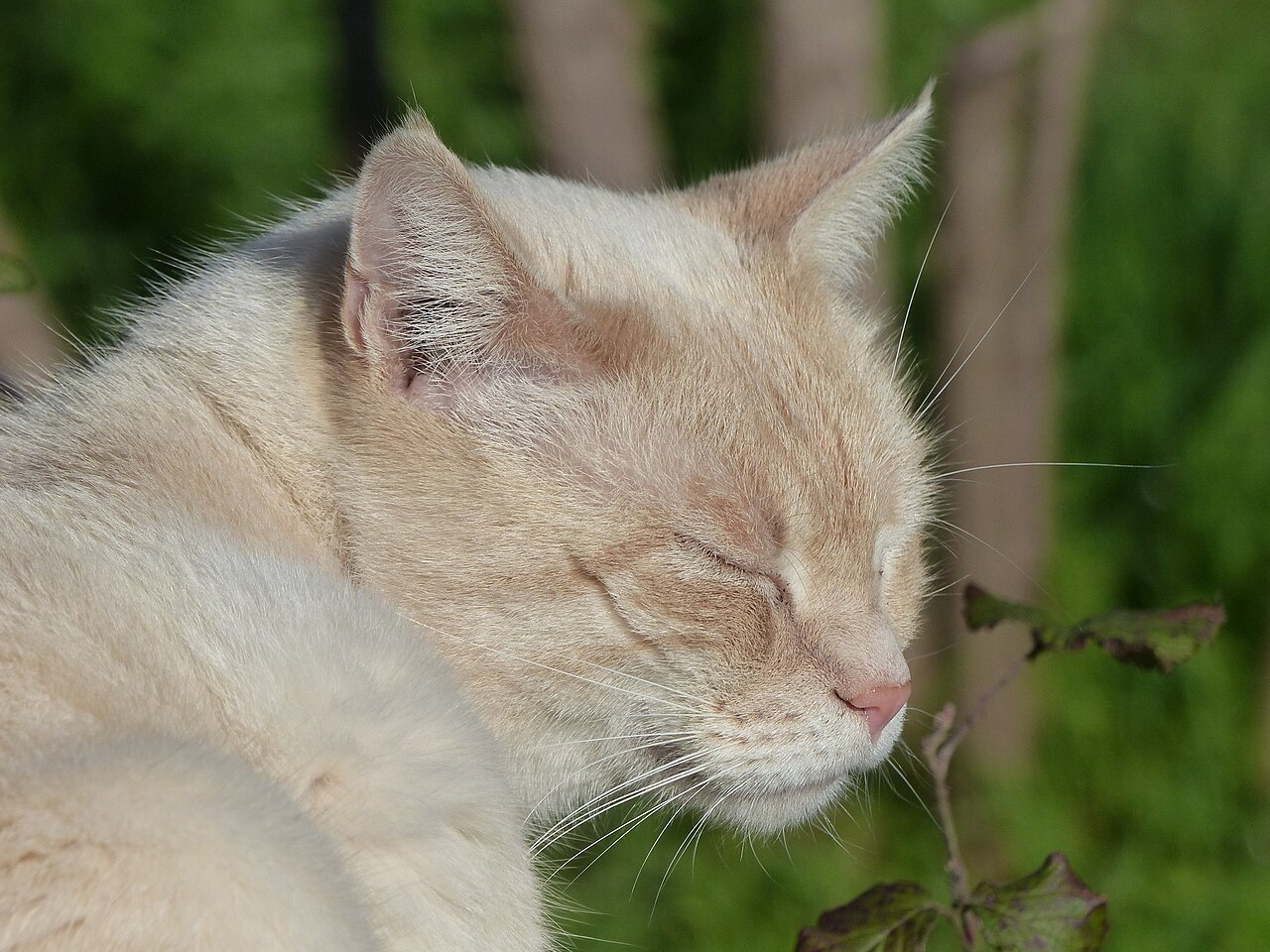
The pointed pattern, a pale body with dark ears, face, paws, and tail, is the Himalayan gene at work. If your cat has this pattern, the breed list is short: Siamese, Ragdoll, Birman, or Himalayan. Period. Pointed cats do not appear randomly in the general cat population. Someone bred for that.
Key signal
Pointed pattern (pale body + dark extremities) narrows the field to Siamese, Ragdoll, Birman, or Himalayan. This is a 4-breed shortlist. If your cat is pointed, you already have your answer within 4 names.
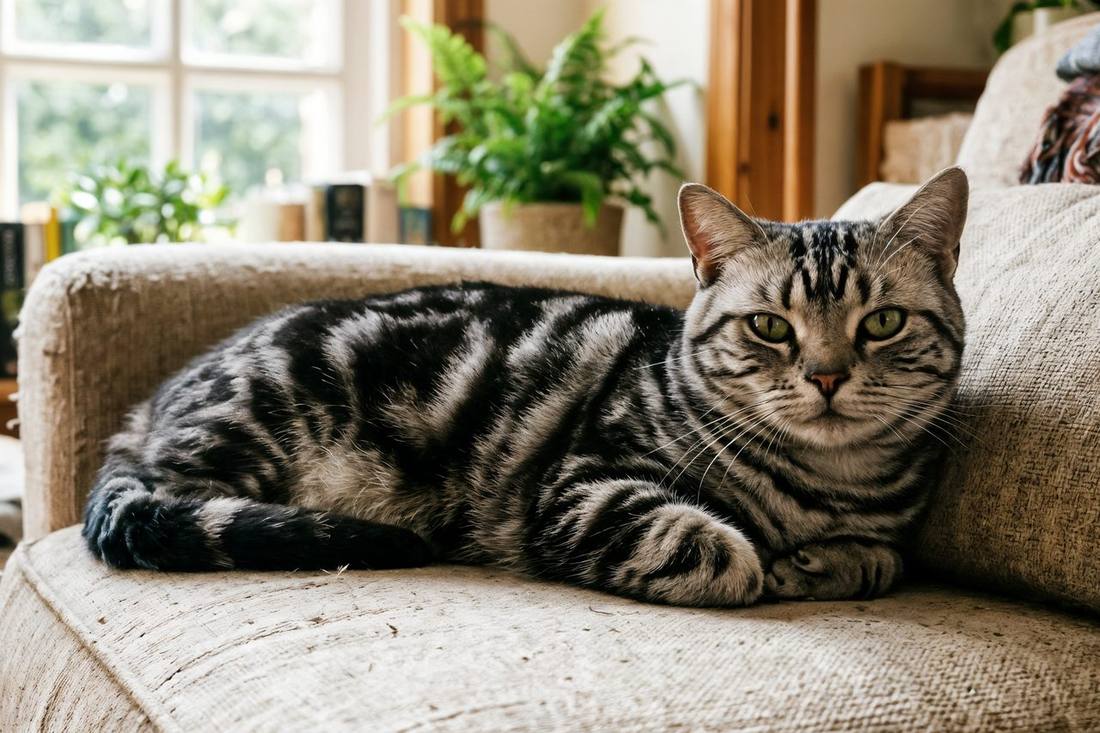
The classic tabby, thick swirling bands, a bullseye on each flank, butterfly markings on the shoulders, shows up in Maine Coons and British Shorthairs. But it is also common in mixed-breed cats, so do not stop here. Tabby alone means nothing. Tabby plus body type? That is where the signal gets stronger.
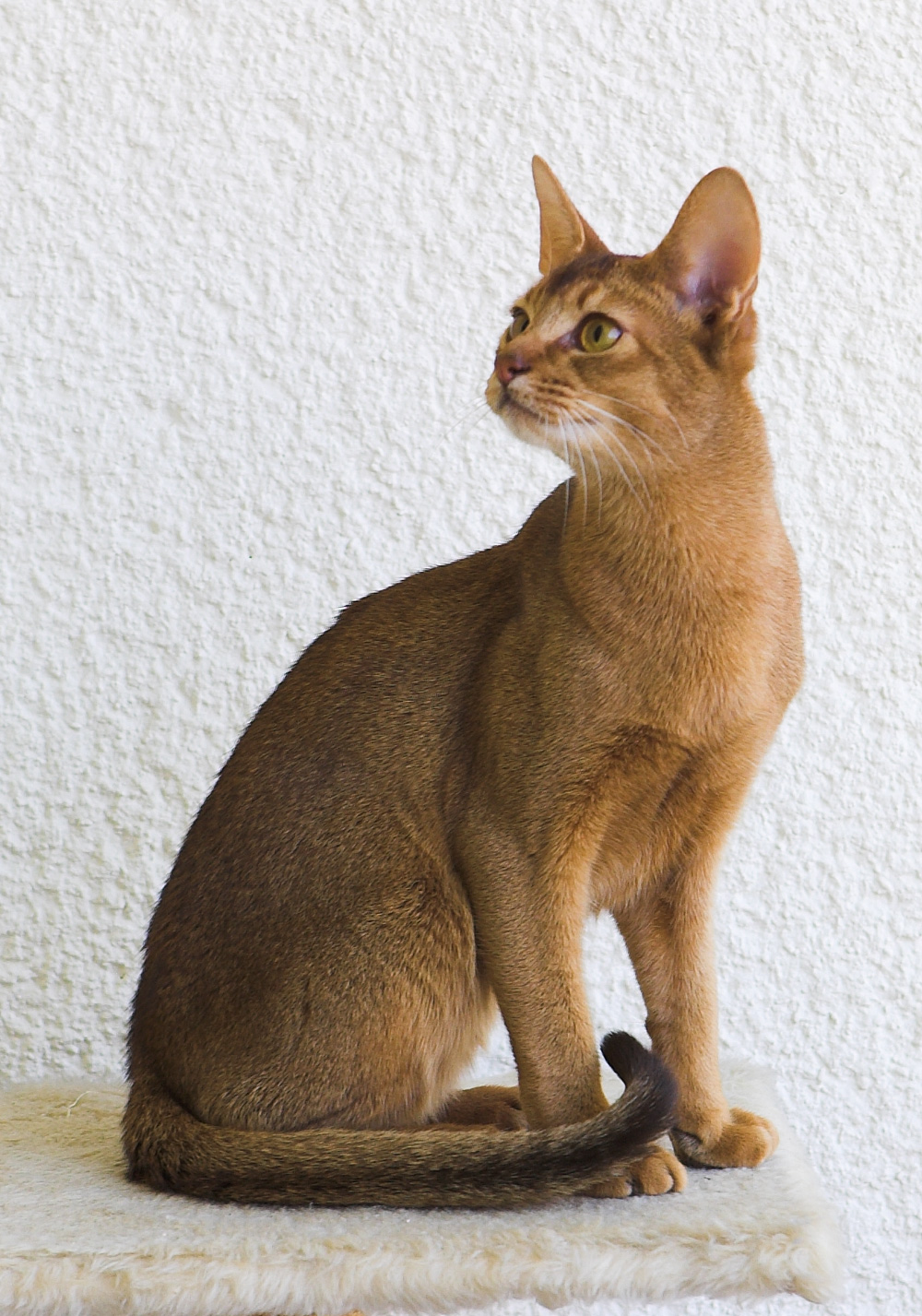
The ticked tabby, each hair banded with alternating colors, no stripes on the body, just a faint M on the forehead, is the hallmark of Abyssinians. If your cat has a warm, agouti-ticked coat with no body stripes, the odds tilt heavily toward Abyssinian ancestry.
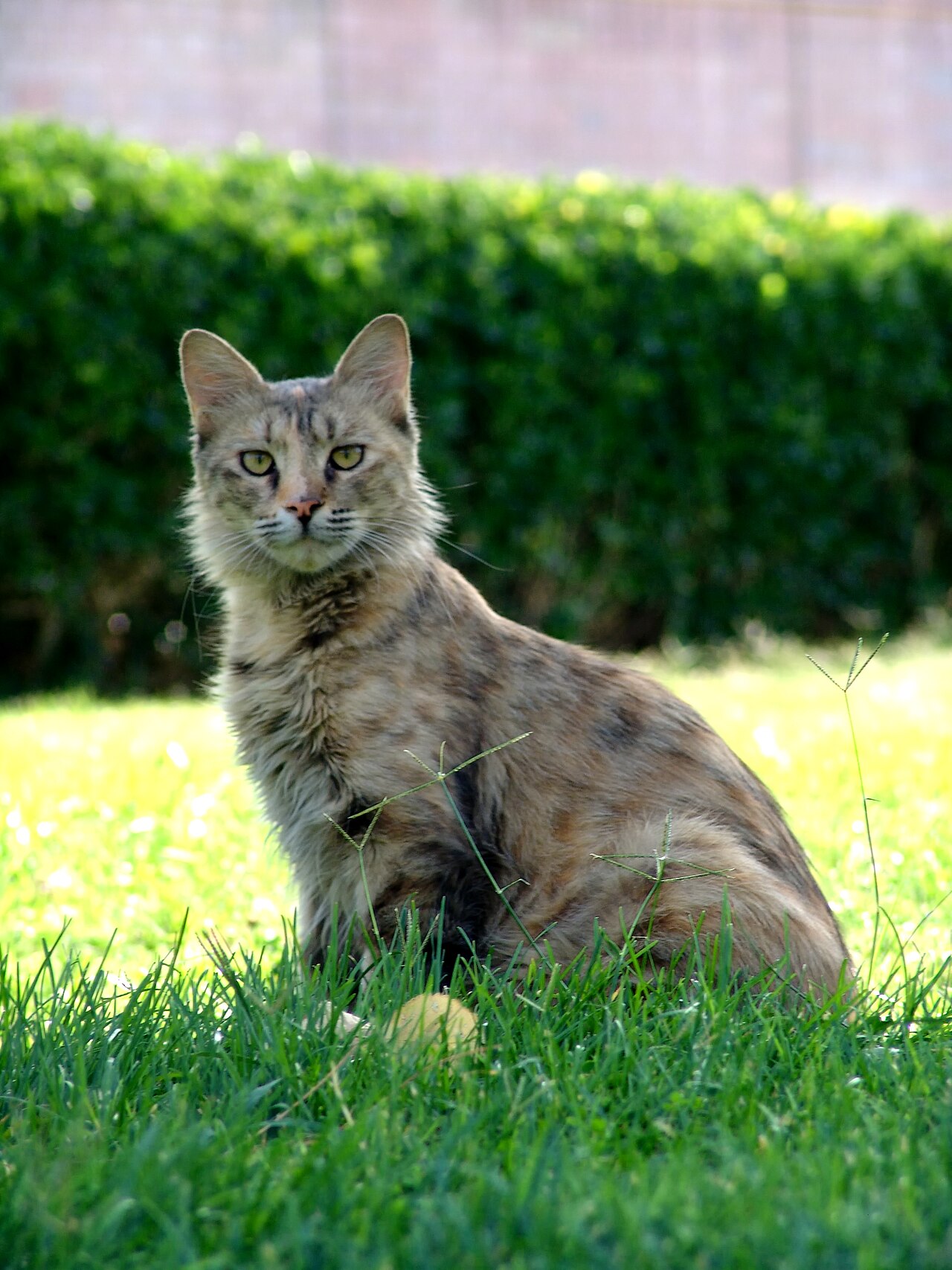
Calico and tortoiseshell, patches of orange, black, and white, are not breed-specific. Almost any breed can produce these patterns in females. The pattern tells you the cat is almost certainly female (the genetics require two X chromosomes). It does not tell you breed.
Read our full cat coat patterns guide for a deeper dive on tabby, calico, tortoiseshell, bicolor, pointed, and solid coats.
2. Face Shape
Face shape is the second strongest signal. Cat breeds fall into three face categories.
Round face (brachycephalic). Flat profile, short nose, prominent cheeks. Think Persian, Exotic Shorthair, British Shorthair. These cats look like they walked into a wall. Their nose is pushed in and their face is nearly as wide as it is long. If your cat has this face shape, you are in brachycephalic territory: a narrow set of breeds.
Key signal
A visible "stop" (dip between the eyes) seen in profile = brachycephalic or semi-brachycephalic. No stop, just a long straight line from forehead to nose = Oriental. This one trick cuts the breed field in half.
Triangular face (wedge-shaped). Long straight nose, high cheekbones, large ears set wide. This is the Siamese family: Siamese, Oriental Shorthair, Oriental Longhair, Balinese. Also the Norwegian Forest Cat and Cornish Rex. A triangular face often comes with a lean body and long legs. The combination is a strong signal.
Square face (modified wedge). Broad muzzle, strong chin, face slightly longer than wide. The Maine Coon is the poster cat for this shape. The muzzle is distinctly squared off: not pointed like a Siamese, not flat like a Persian. Ragdolls and Siberians also fall here but with softer lines.
3. Ears
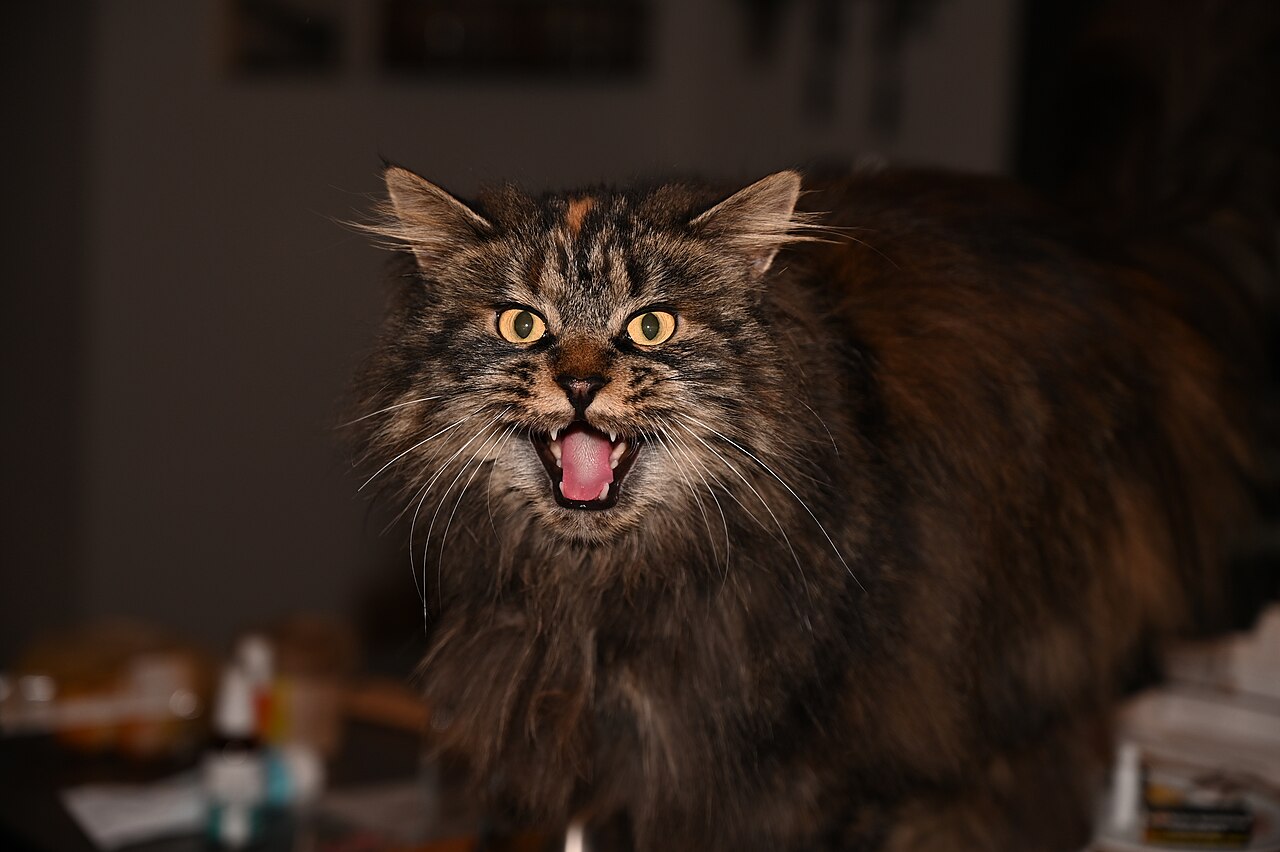
Ears are an underrated signal. Most people ignore them and jump straight to coat color. Mistake.
Ear tufts. Not the normal fur inside the ear. Actual lynx-like tufts sprouting from the tips. This is a Maine Coon and Norwegian Forest Cat signature. If your cat has them, the breed shortlist is about three names long.
Key signal
Folded ears = Scottish Fold (single gene, one breed). Curled ears = American Curl (single gene, one breed). If your cat has either, you are done. No other breed has these traits.
Folded ears. Ears that bend forward and downward. This is the Scottish Fold, a single gene mutation. No other breed has it. If your cat has folded ears, you have your answer. (But know this: the gene that folds the ears also causes cartilage problems throughout the body. It is not a harmless trait.)
Curled ears. Ears that curl backward. American Curl. Also a single-gene trait, also breed-specific.
Large, bat-like ears. Disproportionately big, wide at the base. Sphynx, Devon Rex, Cornish Rex, Oriental Shorthair. Large ears paired with a triangular face and lean body is a strong signal for the Oriental group.
4. Body Type
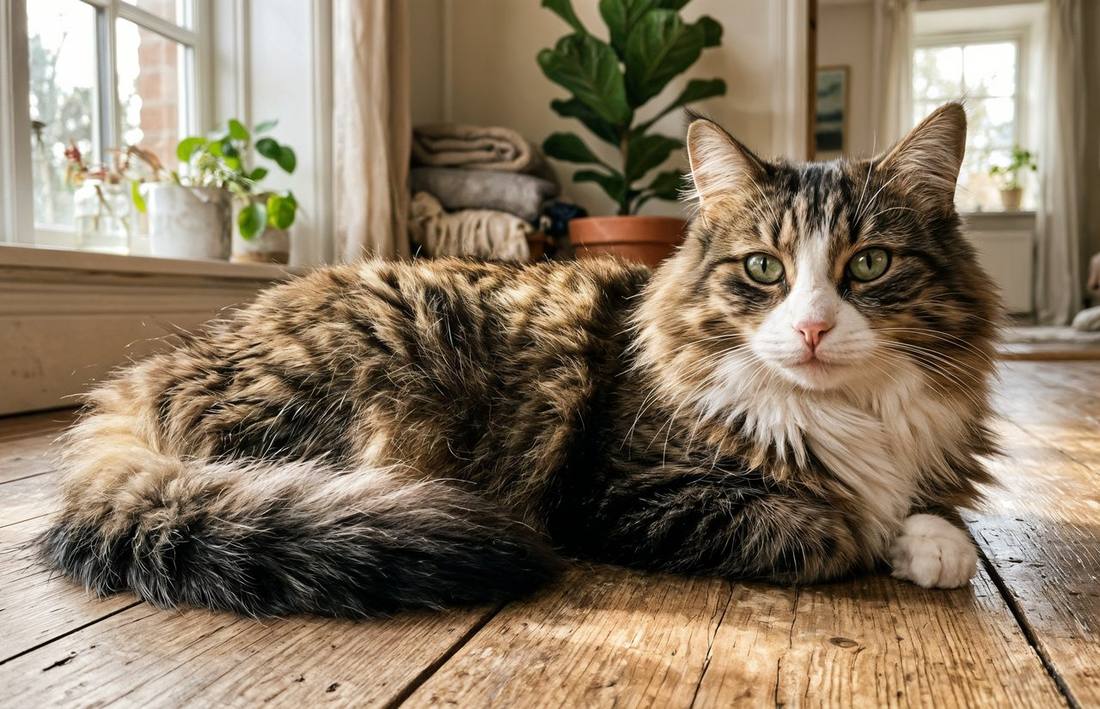
Body type is harder for mixed-breed cats. Purebreds are selected for specific builds. Mixed breeds average out. But if your cat has an extreme body type, it is a clue.
Large, rectangular, heavy-boned. Maine Coon males hit 18 to 25 pounds. They are the largest domestic cat breed. Not fat. Just built like a small lynx. The body is long and rectangular, the chest is broad, and the legs are substantial. A cat under 12 pounds is almost certainly not a purebred Maine Coon, no matter how fluffy. At the opposite end of the scale, the Singapura is one of the smallest recognized breeds, topping out around 4 to 8 pounds.
Key signal
Under 12 lbs? Not a Maine Coon. Over 18 lbs? Almost certainly Maine Coon or Maine Coon mix. Weight is the hardest visual check: it either rules breeds in or rules them out.
5. Tail
Most cats have a standard-length tail. The extremes are what matter.
Bushy, plume-like tail. Maine Coon, Norwegian Forest Cat, Siberian. These northern breeds use their tails as face-warmers in winter. The tail is as long as the body and thick enough to wrap around like a scarf.
Key signal
No tail (smooth end, not jagged) = Manx. Short pom-pom tail = Japanese Bobtail. These are breed-defining traits. A cat with one of these tails is not a mixed breed with a tail injury: it is a genetic variant. The longhaired Cymric is tailless too, while the American Bobtail, the Kurilian Bobtail, and the Pixie-Bob carry short tails as a breed standard.
Putting It All Together
One feature alone is a guess. Three features together is a hypothesis. Five features that all point the same direction? That is a strong case.
Here is a side-by-side comparison of the two most commonly confused large fluffy breeds:
| Feature | Maine Coon | Norwegian Forest |
|---|---|---|
| Face | Square muzzle, strong chin | Triangular, straight profile |
| Body | Long rectangular, 15-25 lbs | Shorter body, 9-16 lbs |
| Coat | Silky, uniform length | Shorter on shoulders, longer on belly/britches |
| Ears | Large, tufted, wide-set | Medium-large, tufted |
| Tail | Long, bushy, as long as body | Long, bushy, tapered |
Example: Your cat has ear tufts, a square muzzle, a rectangular body over 15 pounds, a bushy tail, and a tabby coat. That is five out of five for Maine Coon. The odds that a random-bred cat hits all five Maine Coon markers by chance are low.
Counter-example: Your cat has a tabby coat, round eyes, and a medium body. That describes roughly half the domestic shorthair population. No signal here. The cat is probably a mixed breed, and that is fine. Most cats are.
Visual identification works best when a cat inherited a cluster of breed-specific traits. It works worst when a cat inherited one or two, which is the case for most shelter cats. The honest answer is sometimes "domestic shorthair with some breed-like features." That is not a failure of the method. It is an honest result.
Want a second opinion? Upload a photo to our free cat breed identifier and let it check 40+ visual markers against breed data. It will not give you a guarantee. It will give you a probability, which is what visual identification actually is.
Or browse individual breed profiles for side-by-side comparisons: Maine Coon, Siamese, Persian, British Shorthair, Ragdoll, Bengal, Sphynx, and more. Each profile covers visual markers, similar breeds, and how to tell them apart.
Keep reading
All articlesIdentification
How to Identify a Mixed Breed Cat: 7 Common Mixes Explained
Identify your mixed breed cat: Birman, Turkish Angora, Abyssinian, Maine Coon, Siamese, and Ragdoll mixes. What each mix actually looks like and how to count the clues.
9 min read
Identification
Cats That Look Like Bengals: 5 Breeds Compared
Egyptian Mau, Ocicat, or Savannah? Compare 5 breeds that mimic Bengal rosettes, athletic build, and wild expression — side-by-side photos and trait checklists inside.
6 min read
Identification
Cats That Look Like British Shorthairs
Chartreux, Scottish Fold, or Russian Blue? Compare the 4 breeds most often confused with British Shorthairs — differences in face shape, coat texture, eye color, and temperament.
5 min read
Still not sure what your cat is?
Stop guessing from photos and text. Upload one clear photo and the AI checks 40+ visual markers in seconds. Free, no sign-up, and your photo is never stored.
🐱 Free cat breed scan