

Verify your cat's breed from a photo
One clear photo runs a free quality check, then unlocks the full AI report for a one-time €5.99: breed verdict, why-likely reasoning, 40+ visual markers, health notes, and follow-up questions. No subscription, and your photo is never stored.
Quick answer: A pet-quality Bengal kitten from a reputable breeder costs $1,500 to $3,000 in 2026. Show-quality or rare-pattern Bengals run $3,500 to $5,000. Early-generation cats (F1-F2) can reach $10,000 or more. Adoption is cheaper, typically $75 to $300, but finding a Bengal in a shelter is uncommon.
The price swings more than most breeds because Bengals are still a relatively new breed with active breeding programs, and the generation number (how far removed from the Asian leopard cat ancestor) has a direct effect on both price and legality. A fifth-generation Bengal and a first-generation Bengal are priced like different species. If you are shopping, the details below will save you from overpaying or, worse, buying from a bad source.
Kitten Prices by Tier
Bengal pricing follows a three-tier system that most breeders use, though the exact numbers vary by region and breeder reputation.
| Tier | Price range | What you get |
|---|---|---|
| Pet quality | $1,500 - $3,000 | Spayed/neutered, standard patterns, healthy lineage. The cat is a companion, not a breeding animal. |
| Breeder quality | $2,500 - $5,000 | Intact, strong breed standard conformation, full health testing on parents. Sold with breeding rights and a contract. |
| Show quality | $3,500 - $5,000+ | Top conformation to breed standard, rare or highly desirable patterns, champion or grand champion bloodlines. |
Adult Bengals cost less, typically $500 to $1,500 for a retired breeder or a rehomed adult. These are often already spayed or neutered, litter-trained, and past the destructive kitten phase. If you do not specifically need a kitten, an adult Bengal is a better deal.
What a Real Bengal Looks Like vs What an $800 Impersonator Looks Like
The tier table above separates pet from show. In this breed the more important line runs somewhere else: between a real SBT Bengal and a spotted tabby sold as one. Both cats below are brown and spotted. One is a Bengal, and you can tell from four markers in a single photo.
$1,500+ · REAL SBT BENGAL
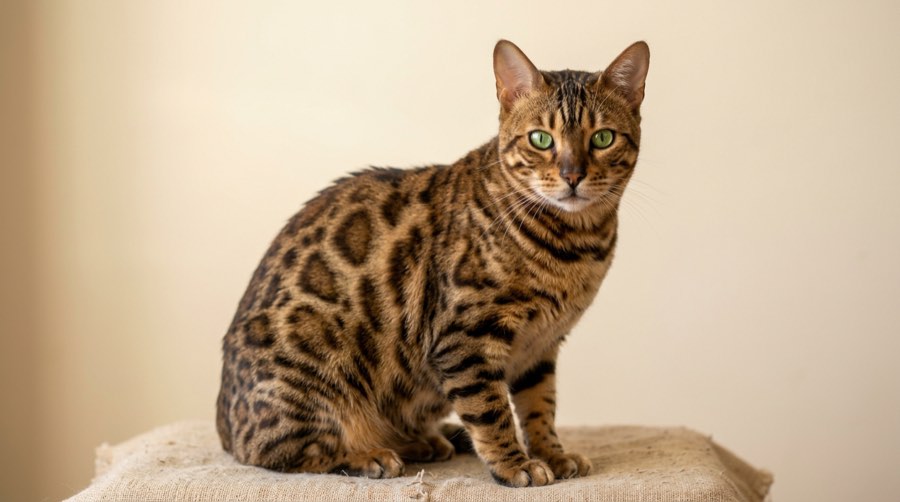
- ✓Two-tone rosettes: dark outlines around lighter centers
- ✓Markings flow horizontally along the body
- ✓Glitter coat: a gold shimmer in sunlight
- ✓Athletic frame, small rounded ears, strong chin
UNDER $800 · SPOTTED TABBY SOLD AS A BENGAL
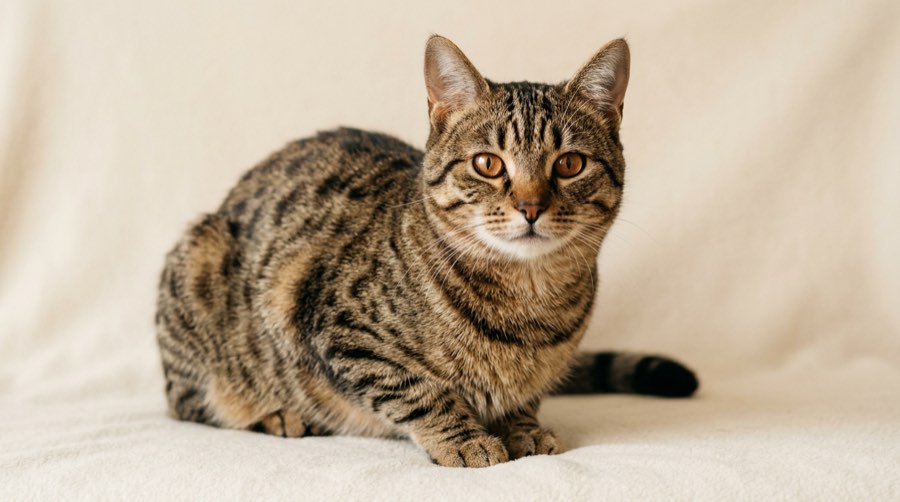
- △Solid dark spots without lighter centers or outlines
- △Broken stripes, not horizontal flow
- △No glitter
- △Rounder face, lighter build
- ✕No verifiable TICA SBT registration
At $800, what you are usually buying is the cat on the right with a Bengal name attached. That is not a discount tier. It is a different animal, and three of the loudest price guides online quote $800 as the bottom of the Bengal market. Their numbers are below, in the comparison table, and now you know what that floor price actually buys.
Every marker above is checkable in one photo. Upload a picture of the kitten you are being offered and Furriq reads 40+ markers like these: the quality check is free, the full report is €5.99. Or check the markers yourself →
Price by Generation (F1-F5)
This is where Bengal pricing gets unusual. The generation number tells you how many generations separate the cat from its Asian leopard cat (ALC) ancestor. It matters for price, temperament, and in some places, legality.
| Generation | ALC ancestry | Price range | Notes |
|---|---|---|---|
| F1 | 50% | $5,000 - $10,000+ | Direct ALC cross. Illegal in some states and countries. High energy, strong wild instincts. Not a typical pet. |
| F2 | 25% | $3,500 - $7,000 | Still high-energy, may retain some wild behaviors. Restricted in certain jurisdictions. |
| F3 | 12.5% | $2,500 - $5,000 | Transitional. Most F3 Bengals are suitable pets but still more active than later generations. |
| F4-F5 (SBT) | 6.25% or less | $1,500 - $3,500 | Stud Book Tradition. These are the standard pet Bengals. Four or more generations from the ALC. Legal everywhere Bengals are allowed. |
Most buyers want F4 or F5 (SBT) Bengals. They look like miniature leopards but behave like domestic cats, just with more energy. The early-generation cats are bred by specialists and sold mostly to experienced breeders, not first-time pet owners.
Price by Pattern and Color
Bengals come in two main pattern types, rosetted and marble, plus several color variations. The pattern affects price because some are harder to breed and more popular on social media.
| Pattern / Color | Price premium | Details |
|---|---|---|
| Brown rosetted | Standard | The classic Bengal look. Large, two-toned rosettes on a warm brown base. Most common and least expensive. |
| Snow (seal lynx point) | +$500 - $1,500 | White or cream base with darker rosettes. Three genetic variants (seal lynx, seal mink, seal sepia). Seal lynx point has blue eyes and commands the highest premium. |
| Silver | +$500 - $1,200 | Cool silver base with black or dark gray rosettes. Popular on Instagram. The inhibitor gene that creates the silver is still relatively new in the breed. |
| Marble | Standard to -$300 | Swirled, flowing patterns instead of spots. Less popular than rosetted but still attractive. Some breeders price marble kittens slightly lower. |
| Melanistic (black) | +$300 - $800 | Solid black with ghost markings visible in certain light. Rare and increasingly sought after. Not the same as a domestic black cat. |
| Charcoal | +$200 - $500 | Darker face mask, cape, and tail tip. A pattern modifier, not a separate color. Growing in popularity. |
The honest take: pattern premiums are driven by social media aesthetics, not by the cat's health or temperament. A brown rosetted Bengal is just as playful, intelligent, and affectionate as a silver one. Pay for pattern only if you genuinely prefer the look, not because Instagram made it seem more valuable.
Before you pay a premium for a pattern, make sure the pattern is real: our pattern vs breed guide shows how coat patterns differ between lookalike breeds, free, no sign-up.
Adoption vs Breeder
| Factor | Adoption | Breeder |
|---|---|---|
| Cost | $75 - $300 | $1,500 - $5,000+ |
| Availability | Rare. Bengals in shelters are uncommon and go fast. | Planned litters, waitlists of 2-6 months. |
| Age | Usually adult, rarely kitten. | Kitten (12-16 weeks) or retired breeder. |
| Health history | Often unknown. Basic vet check at intake. | Full parent health testing (HCM echo, PK-def DNA, PRA-b DNA). |
| Temperament | Varies. May have behavioral issues from prior homes. | Socialized from birth, temperament assessed by breeder. |
| Spay/neuter | Included. | Required for pet-quality, included in price. |
Bengal-specific rescues exist (Bengal Rescue Network, regional Bengal rescues) and are the best source for adoption. General shelters occasionally get Bengals or Bengal mixes, but they are claimed quickly. If you are set on a Bengal and want to adopt, get on a rescue's waitlist and be patient.
Why Every Bengal Price Guide Quotes a Different Number
The Bengal guides do not just disagree on the edges. Two of them publish what they call surveys of breeders, and their tables barely overlap with the other three. Five sources, all checked the same week in October 2026:
Pet-quality kitten from a reputable breeder, as each source states it
| Source | Pet-quality range | Show / breeding |
|---|---|---|
| Petful | $1,500 - $2,500 | $3,500 - $6,000 |
| GoodCattery | $1,500 - $3,500 | $4,000 - $8,000 |
| UrbanPetLovers | $1,500 - $3,000 | $3,000 - $10,000+ |
| TelectronicHub | $800 - $1,650 | $2,200 - $3,800 |
| ProGradeList | $1,800 - $2,600 | $2,700 - $3,500 |
TelectronicHub says its table is a "verified snapshot" of 32 active TICA-registered breeders; ProGradeList says 47 catteries were surveyed. Neither shows the survey data, and the two disagree by more than $1,000 on the same tier. Both, plus a third guide, carry a near-identical buyer testimonial: a software engineer named Maya with a kitten named Kai or Kavi. Read the tables as opinions with numbers attached.
Our range: $1,500 to $3,000 for a pet-quality SBT kitten, matching the tier table above. Every number on this page is checkable on the linked pages, and the source tiers are our own. When a breeder quotes you inside this range with papers and test results in hand, the price is doing its job.
How we priced this page. Every price range on this page was collected from named catteries and rescue listings the same week in October 2026, with each source linked and dated in the comparison table above. Compiled by the Furriq content team. Medical facts link to their original sources. Not reviewed by a veterinarian: for a medical decision, talk to your vet. Our methodology page explains how we verify listings.
What a Fair Bengal Price Includes
Breeder pages love to list what comes with their kittens. Here is the market-level version: if any of these are missing from a quote, the price is not as fair as it looks.
- TICA, CFA, or FIFe registration papers: the individual certificate, not just a claim that the cattery is registered.
- Full vaccine series: three rounds, not "first shots done".
- Spay or neuter: included in pet-quality prices at most catteries.
- Microchip: with lifetime registration.
- Written HCM guarantee: a contract clause, not a verbal promise. Ask what it covers and for how long.
- Vet health certificate: issued within 10 days of pickup or travel.
- Parent health testing proof: For Bengals that means the parents' HCM echocardiogram plus DNA tests for PRA-b and PK deficiency, two eye and blood conditions the breed carries. A breeder who cannot show them is charging show-tier money for pet-tier diligence. If you are not sure what a test can and cannot prove, our bengal health guide walks through it.
What Drives the Price Up or Down
Several factors push a Bengal kitten's price above or below the typical range:
Breeder reputation and health testing. Breeders who run annual HCM echocardiograms, DNA panels for PK-def and PRA-b, and FIV/FeLV testing on all breeding cats charge more because those tests cost $300 to $800 per cat per year. A breeder selling kittens for $800 is almost certainly skipping these tests.
Location. Bengals cost more in areas with fewer breeders. Urban areas with multiple catteries tend to have more competitive pricing. Shipping adds $300 to $600 for domestic flights, and international shipping can add $1,000 or more.
Color and pattern. As covered above, snow, silver, and melanistic Bengals carry premiums. Brown rosetted is the baseline.
Sex. Female Bengals often cost $200 to $500 more than males because they are in higher demand for breeding programs. For pet-quality cats that are already spayed or neutered, sex does not affect price.
Season. Bengal kittens are born year-round, but demand peaks in spring and around the holidays. Prices do not drop much in off-season because supply is limited by litter size (typically three to five kittens).
Getting the Kitten Home: Shipping Costs
Most bengal breeders ship, and the trip is priced separately from the cat. Three options cover most situations.
| Option | Typical cost | When it makes sense |
|---|---|---|
| Ground transport | $300 - $800 | Same region, van or courier, least stress on the kitten. |
| Air cargo | $400 - $1,200 | Cross-country. Includes crate, airfare, and the health certificate. |
| Flight nanny | $500 - $1,500 | A person accompanies the kitten in the cabin. Priciest, gentlest option. |
Some breeders drive the kitten themselves for $200 to $500. One rule before you pay any of this: if a breeder quotes shipping before you have done a live video call, stop and read the red flags section.
Ongoing Annual Costs
The purchase price is a one-time event. The real cost of a Bengal is the annual subscription, and Bengals are not a cheap breed to keep.
| Category | Annual cost | Notes |
|---|---|---|
| Food | $600 - $1,200 | High-protein wet food is essential. Bengals are active and burn calories faster than most breeds. Cheap kibble leads to weight loss and coat problems. |
| Litter | $200 - $400 | Bengals are particular about litter boxes. Many owners need two boxes. Some Bengals refuse covered boxes entirely. |
| Routine vet | $300 - $600 | Annual exam, vaccines, flea/tick prevention. Bengals are generally healthy but need regular cardiac screening starting at age 3. |
| Pet insurance | $300 - $600 | Recommended. Bengals can develop HCM (hypertrophic cardiomyopathy), which costs $3,000 to $8,000 to diagnose and manage. |
| Enrichment | $100 - $300 | Cat trees, puzzle feeders, interactive toys. Bengals need mental stimulation or they destroy things. This is not optional. |
| Grooming | $50 - $150 | Minimal. Bengals have short, dense coats that mostly self-maintain. Occasional brushing and nail trims. |
First-year total: $2,500 to $5,500 (including purchase price, supplies, and initial vet visits).
Lifetime total (12-16 years): $18,000 to $40,000, depending on health events and insurance coverage.
Red Flags and Scams
Bengal scams are common because the breed is expensive and in high demand. Four things to watch for:
Price too low. A Bengal kitten for $500 to $800 is almost certainly from a backyard breeder or a scam. Health testing alone costs more than that per kitten. Walk away.
Shipping-only breeders. A breeder who refuses to let you visit, does a video call only once, and insists on shipping before you see the kitten in person is a red flag. Legitimate breeders welcome visits or at minimum do multiple live video calls showing the kitten with its mother.
No health testing documentation. Ask for the parents' HCM echocardiogram results, PK-def DNA test, and PRA-b DNA test. If the breeder cannot produce these in writing, the kitten's health is a gamble.
Early-generation cats sold as pets without disclosure. F1 and F2 Bengals are not typical pets. They have strong wild instincts, are illegal in some jurisdictions, and require experienced handling. A breeder selling an F1 to a first-time owner without explaining this is irresponsible.
Before you pay: verify the cat, not just the breeder
- ✓TICA or CFA papers in the breeder's name, not "available later"
- ✓Kitten at least 12 weeks old at pickup
- ✓HCM echo and DNA results for both parents, in writing
- ✕Under $800 for an "SBT" Bengal means somebody skipped the health testing
Papers can be faked. The cat itself cannot. Upload a photo of the kitten or its parents and Furriq checks 40+ visual markers: the two-tone rosettes with dark outlines, the glitter coat, and the athletic frame that separate a real Bengal from a spotted tabby, plus the F1-F2 wild ancestry that changes legality in some states. The photo quality check is free; the full breed report costs €5.99, well under 1% of what you are about to pay the breeder. No sign-up needed.
Check the breed before you pay →FAQ
Why are Bengal cats so expensive?
Three reasons. Health testing on breeding cats costs $300 to $800 per cat per year. Litters are small, typically three to five kittens. And demand consistently outstrips supply because Bengals look like miniature leopards and have a playful, dog-like personality that most cat breeds do not match. The combination of high breeding costs, small litters, and strong demand keeps prices high.
Can I adopt a Bengal cat instead of buying from a breeder?
Yes, but it takes patience. Bengal-specific rescues like the Bengal Rescue Network and regional Bengal rescues are the best source. General shelters occasionally get Bengals or Bengal mixes, but they are claimed quickly. Expect to pay $75 to $300 for adoption, and expect the cat to be an adult, not a kitten. Get on a rescue's waitlist if you are serious about adopting.
What is the difference between F1 and F5 Bengals?
The number tells you how many generations the cat is from its Asian leopard cat ancestor. An F1 is 50% wild, costs $5,000 to $10,000+, and is illegal in some places. An F5 (SBT) is 6.25% or less wild, costs $1,500 to $3,500, and behaves like a high-energy domestic cat. Most buyers want F4 or F5 Bengals because they look exotic but live like normal pets.
Do Bengal cats cost more to maintain than other cats?
Yes, slightly. Bengals eat more than average because they are active and muscular. They need high-protein food, which costs more than generic kibble. They also need more enrichment, cat trees, puzzle feeders, and interactive toys, because a bored Bengal will destroy your furniture. Budget $1,500 to $2,500 per year for ongoing costs, which is $300 to $500 more than a typical domestic cat.
Are Bengal cats legal everywhere?
No. F1-F3 Bengals are restricted or banned in some US states (New York City, Hawaii, Connecticut) and some countries. F4+ (SBT) Bengals are legal in most places, but always check your local laws before buying. Some landlords and HOAs also restrict Bengals specifically, so verify your housing allows the breed.
What color Bengal is the most expensive?
Snow seal lynx point with blue eyes and silver rosetted Bengals are the most expensive, typically carrying a $500 to $1,500 premium over the standard brown rosetted. Melanistic (black) Bengals are also increasingly expensive because they are rare. But price is driven by social media aesthetics, not by the cat's health or temperament. A brown rosetted Bengal is just as good a pet.
More Breed Price Guides
Still comparing breeds? These guides break down kitten prices, adoption fees, and yearly costs for each one.
- Maine Coon price: $1,800 to $3,500 kitten cost breakdown
- Ragdoll cat price: what breeders charge per tier
- Persian cat price: doll-face vs peke-face costs
Before You Pay: Verify the Kitten Is the Real Breed
Scam listings reuse photos of cats that are not the breed being sold. Before you send a deposit, run the listing photos through Furriq's free identifier: it checks 40+ visual markers (coat pattern, body structure, facial features) against the breed standard in seconds. No sign-up, no storage.
Want to learn more about the breed? Read the full Bengal breed profile for size, temperament, and health basics, or check the Bengal personality guide for what living with one is actually like. If you are comparing breeds, our cat breed identification guide covers the most common lookalikes. For a closer head-to-head, see our guide to cats similar to bengals.
Related breeds
All breedsKeep reading
All articlesCat Breeds
Sphynx Cat Price 2026: $2,000-$5,000 Kitten Cost Guide
Sphynx kittens cost $2,000-$5,000 from a named US cattery in 2026. Flat prices, eye-color premiums, adoption vs breeder, yearly costs, and scam checks.
10 min read
Cat Breeds
Siamese Cat Price 2026: $1,000-$3,500 Kitten Cost Guide
Siamese kittens cost $1,000-$3,500 at named US catteries in 2026, flat priced. Point colors do not change the price. Rescue fees, yearly costs, red flags.
10 min read
Cat Breeds
British Shorthair Price 2026: $1,100-$4,000 Kitten Cost
British Shorthair kittens cost $1,100-$4,000 from named US catteries in 2026. Why blue is cheapest, what golden adds, adoption fees, and yearly costs.
11 min read
Still not sure what your cat is?
Stop guessing from photos and text. Upload one clear photo and the AI checks 40+ visual markers in seconds. The quality check is free; the full AI report is €5.99, one-time. Your photo is never stored.
Scan your cat's photo