

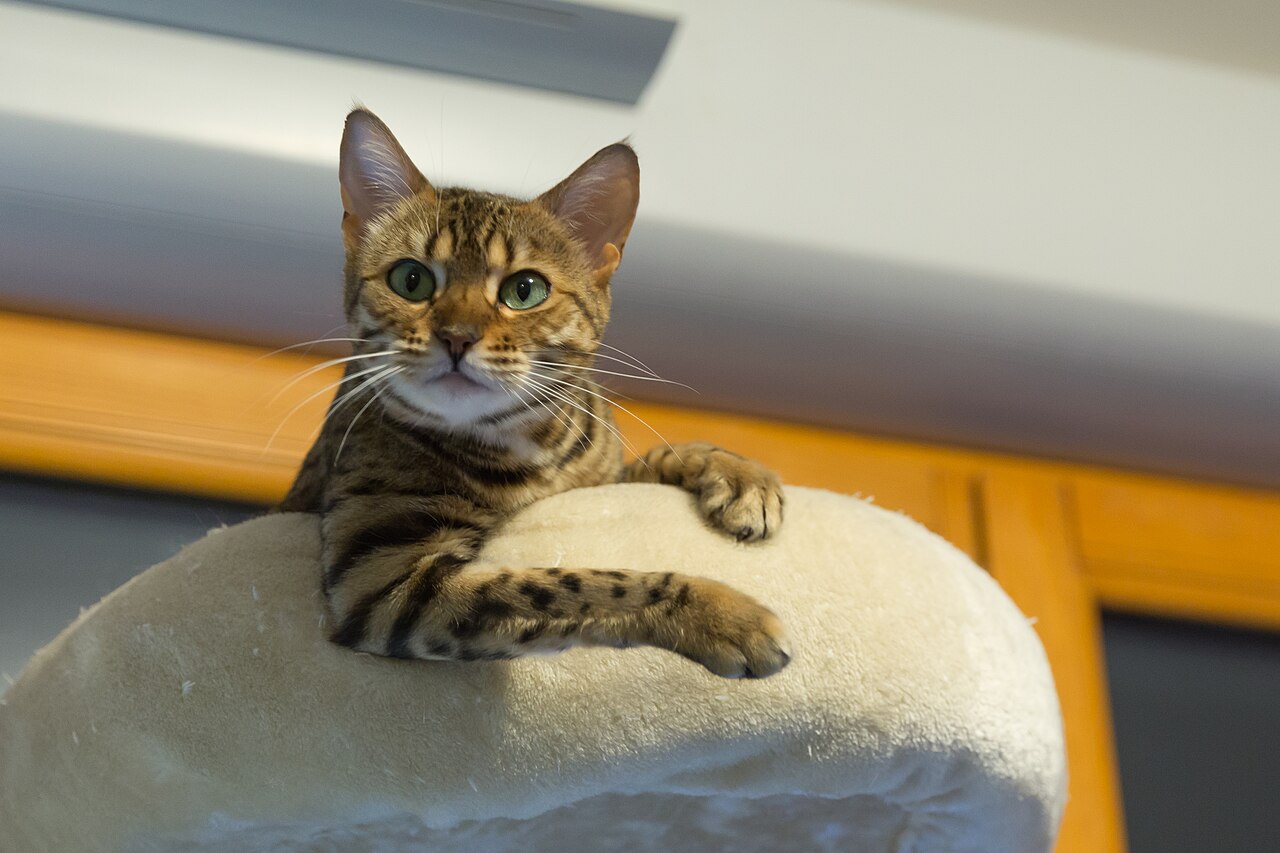
The Bengal looks like a small leopard and acts like one too. Spotted or marbled rosettes, a glittered coat that catches light, and a muscular body built for climbing, jumping, and outsmarting its owner. The breed was developed from Asian leopard cats, and that wild heritage gives it energy levels most cats never approach. It also gives it a health profile worth knowing before you commit to a decade or more of daily play.
The honest framing first: Bengals are generally healthy cats, and the breed's wild look does not make it sickly. But several conditions appear with enough regularity that breeders screen for them, and owners should know the signs. PRA and FIP are the two that get the most attention, while the behavioral items on this list, separation anxiety in particular, shape day-to-day life more than any disease.
1. Progressive Retinal Atrophy
Progressive retinal atrophy slowly destroys the light-sensing cells in the retina, and it ends in blindness. A Bengal-specific genetic variant has been identified, which means the disease is not a distant risk but a testable one. Onset varies, and some affected cats lose vision by middle age while others decline more slowly.
A DNA test identifies the variant, and responsible breeders screen before breeding. There is no cure, but cats adapt remarkably well to blindness when their environment stays stable. Signs of vision loss, bumping into furniture, hesitating before jumps, and dilated pupils in bright light, warrant an eye exam and an honest conversation with your breeder about their screening.
2. Feline Infectious Peritonitis
Feline infectious peritonitis starts as a coronavirus infection that most cats clear without trouble. In a small share of cats the virus mutates inside the body and triggers an inflammatory disease that is almost always fatal. Bengal lines have reported a higher incidence than the general cat population, though it remains a minority of cats.
The wet form causes fluid buildup in the belly or chest, while the dry form causes fever, weight loss, and organ inflammation. Treatment has advanced in recent years with antiviral drugs, but it is expensive and demanding. Keep litter boxes clean, reduce stress, and buy from breeders who quarantine and test. Fever that will not break plus a belly that swells deserves immediate veterinary attention.
3. Flat-Chested Kitten Syndrome
Flat-chested kitten syndrome is a developmental condition where the chest fails to round out properly in young kittens, compressing the heart and lungs. It appears in several breeds, Bengals among them, and can range from mild to life-threatening. Mild cases often resolve as the kitten grows; severe ones struggle to breathe and feed.
There is no DNA test, so it is a breeder-awareness issue: kittens should be checked daily in the first weeks, and breathing effort monitored. A kitten with a visibly flat chest, open-mouth breathing, or poor weight gain needs a vet immediately. Most affected litters lose some kittens, which is why breeders track the condition closely.
4. Separation Anxiety
Bengals form intense bonds with their people, and some develop real separation anxiety when left alone for long stretches. The signs go beyond normal meowing: destructive scratching, inappropriate elimination, excessive grooming, and howling that starts as soon as you leave. It is one of the most common reasons Bengals end up rehomed.
Prevention starts before the problem: leave enrichment out (puzzle feeders, window perches, climbing trees), establish calm departures, and consider a second cat as company. If destructive behavior is already happening, work with a vet or behaviorist rather than guessing. This breed does not do well in empty apartments for twelve hours a day.
5. Skin Sensitivity
Bengals are more prone to skin sensitivity than many breeds, showing up as itching, dry flaky skin, and reactions to foods or environmental allergens. The short, tight coat makes skin problems visible quickly, which at least means owners notice them early. Over-grooming from anxiety makes the picture worse.
Start with food: a high-quality protein diet and omega-3 supplements help many sensitive-skinned cats. Rule out parasites first, then allergens, and keep a skin diary of flare-ups. Persistent itching, bald patches, or redness deserves a vet visit rather than endless over-the-counter products.
Bengal health issues at a glance
| Issue | Why It Matters | Key Sign |
|---|---|---|
| PRA | Retina degrades to blindness | Bumping, hesitant jumps |
| FIP | Coronavirus mutation | Fever, swollen belly |
| Flat chest | Kitten development issue | Breathing effort, poor gain |
| Anxiety | Intense owner bond | Howling, destructive scratching |
| Skin sensitivity | Allergies, dry skin | Itching, flaking |
Is your cat actually a Bengal?
A true Bengal carries rosette or marbled markings on a glittered coat, a muscular athletic body, large rounded ears, and a thick brick-shaped tail carried low. The personality is the giveaway too: an energy level and love of water that most cats never show. Plenty of spotted domestic cats are not Bengals at all, so the whole package matters.
If your cat has that wild rosette look, our cat breed identifier can compare the visual markers against the Bengal breed profile. And because the Bengal is often compared with other spotted breeds, the Abyssinian guide covers a different wild-looking cat with its own health notes.
⚕️ Furriq Health Screen is a visual observation tool, not a veterinary diagnosis. This analysis does not replace professional veterinary advice. Always consult a licensed veterinarian for any health concerns about your cat.
Related breeds
All breedsKeep reading
All articlesHealth
Sphynx Cat Health Problems: 6 Issues
Sphynx cats face real health risks: HCM, myasthenia, skin oil buildup, dental disease, sunburn, and temperature issues. Here is what to watch.
6 min read
Health
Maine Coon Cat Health Problems: 4 Issues
Maine Coons carry HCM, hip dysplasia, spinal muscular atrophy, and obesity risk. Here is what to watch in the gentle giant.
5 min read
Health
Ragdoll Cat Health Problems: 4 Issues
Ragdolls face HCM, FLUTD, obesity, and thrombopathia. Here is what to watch in this relaxed blue-eyed breed.
5 min read
Still not sure what your cat is?
Stop guessing from photos and text. Upload one clear photo and the AI checks 40+ visual markers in seconds. Free, no sign-up, and your photo is never stored.
Free cat breed scan