

Verify your cat's breed from a photo
One clear photo runs a free quality check, then unlocks the full AI report for a one-time €5.99: breed verdict, why-likely reasoning, 40+ visual markers, health notes, and follow-up questions. No subscription, and your photo is never stored.
Quick answer: a British Shorthair kitten from a named US cattery costs $1,100 to $4,000 in 2026, with the middle of the market around $2,400. Show-quality kittens run $2,800 to $3,500, and the high-end catteries publish tiers up to $8,000-plus. Golden and silver tipped coats carry the biggest premium in the breed, sometimes $1,000 or more. Adoption is cheap at $75 to $200, and genuinely available, because this is one of the few purebreds that reaches general shelters.
Two things trip buyers up. The first is color: the British Blue is the most famous look and also the cheapest, because it is the most common. The second is that this cat keeps growing until it is four or five years old, so a 9-pound kitten becomes a 14-pound adult, and the food bill follows.
Before anything else, rule out the two lookalikes. A Scottish Fold is the same round face and stocky body with folded ears. A Chartreux is the same blue-gray with a narrower muzzle and gold eyes. The British Shorthair breed profile covers the standard, and British Shorthair vs Russian Blue handles the rest.
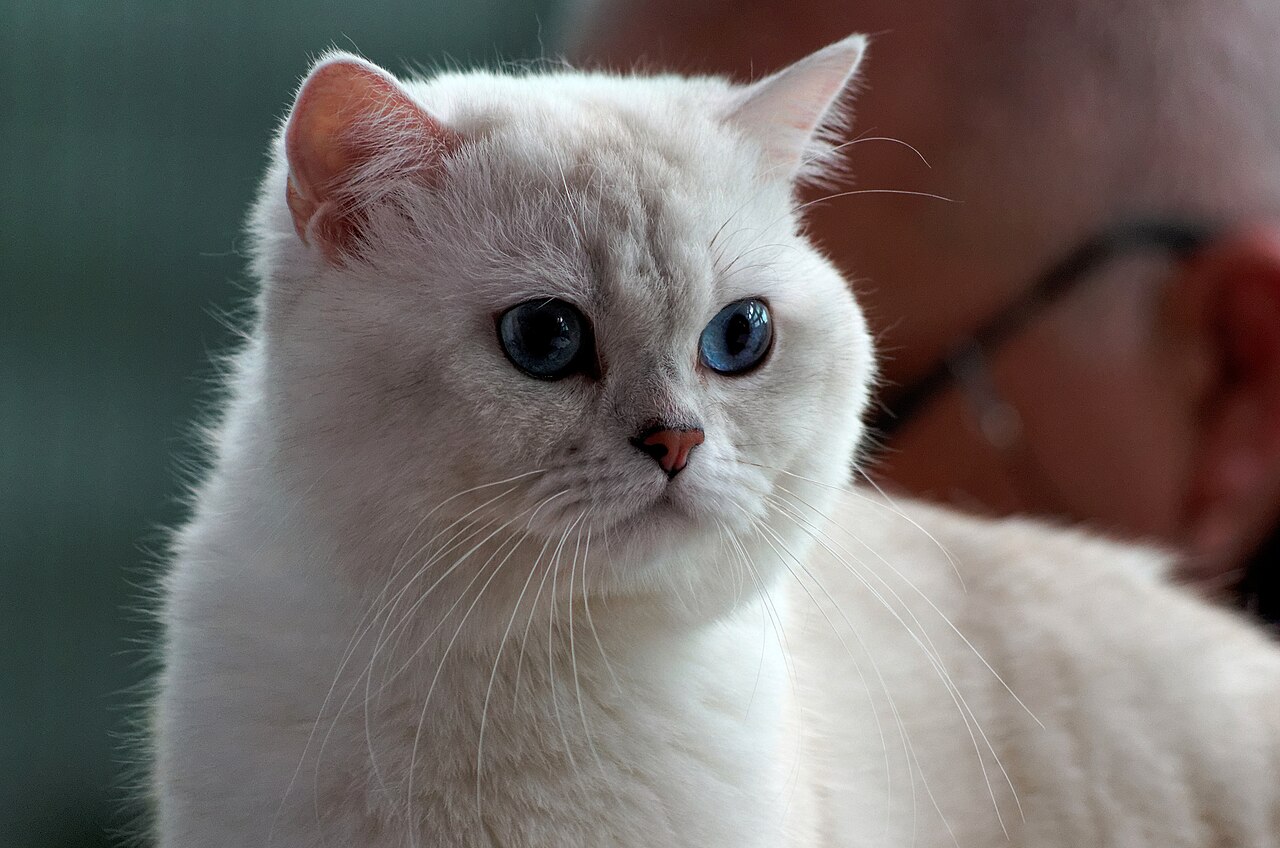
British Shorthair Kitten Price in 2026
Pink Paws Cattery in Jacksonville publishes $1,200 to $3,000 as its typical range, with show quality at $2,800 to $3,500-plus, and it lists named kittens on its own storefront at $2,450 and $2,799. GoldenBrit Cattery lists kittens individually at $1,100 to $1,700. PrettyBrity prices silvers at $2,200 and goldens $200 above that. Blue Brits Cattery in Houston sits at the top, and its own two pages disagree: a flat $3,950 on one, $3,950 to $8,000-plus tiers on the other.
Read together, pet-quality kittens from named US breeders run $1,100 to $4,000. That is a wide band, and the width is the point. Two catteries can both be reputable and be $2,000 apart, because one is a small home program with two queens and the other has a show record and a waiting list.
The tiers, as catteries publish them:
- $1,100 to $1,800: pet kitten from a smaller program, usually blue or another classic color, spay/neuter contract.
- $1,800 to $3,000: the market middle. Health-tested parents, registered lines, a proper contract.
- $3,000 to $4,000: top-tier pet pricing at established catteries, often with a golden or silver coat and a longer health guarantee.
- $4,000 to $8,000-plus: breeding rights and show prospects. TLC Brits sits at $2,900 for classic colors and $3,200 for rare ones, with a $1,600 deposit, which tells you how much of the upper tier is about rights rather than the cat.
My honest read: $1,800 to $2,800 is the fair band for a pet British Shorthair with tested parents. Below $1,100, you are buying an unregistered kitten or a different breed with a round face. Above $4,000 for a pet on a neuter contract, the money is buying color or a cattery's reputation, and neither will be visible in your living room.
What $1,100 Buys vs What $4,000 Buys
Same breed, same calm temperament, same wool-thick coat. The gap is in the head, the coat density, and the paperwork, and all three are visible in a photo.
$1,100 to $1,800 · PET QUALITY
- ✓Same round head and easygoing temperament
- ✓Same HCM and PKD screening on both parents
- ✓Same adult weight, 9 to 18 lbs
- △Cheeks fill in later; a leaner face at eight weeks
- △Lighter bone, slightly shorter coat, plainer eye color
$3,000 to $4,000 · SHOW QUALITY
- ✓Full cheeks and a broad, round head at an early age
- ✓Large round copper or gold eyes, wide set
- ✓Coat so dense it stands away from the body
- ✓Champion line and a contract with a written health window
One marker is worth knowing before you judge a kitten photo. British Shorthairs mature slowly, three to five years to full physical and emotional development, and the cheeks fill out last. A pet-quality eight-week kitten and a show-quality eight-week kitten look more alike than their adult versions will. That cuts both ways: you cannot fully judge a baby, and a breeder charging $4,000 for a baby should be showing you the parents.
Head shape, cheek fullness, and coat density are all checkable in one photo. Upload the kitten's picture and Furriq reads 40+ markers like these: the quality check is free, the full report is €5.99. Or check the markers yourself →
Adult and Retired Breeder Prices
Retired British Shorthair queens are placed for $400 to $1,200, and this breed handles the transition better than most. They are calm, low-drive, and adaptable, so a four-year-old cat that moves to a quiet house usually settles within a month. You also skip the two-year wait for the cat to look like an adult.
One caution specific to this breed: a retired queen has been fed for reproduction, and British Shorthairs gain weight easily. Ask what she weighs, ask what she is fed, and weigh her yourself in week one. Obesity is the breed's most common health problem and the easiest to inherit from a cattery.
Adults from private owners run $200 to $800, most often after a move or an allergy. Get the records, and ask specifically about a heart murmur and PKD testing. Both are inherited, both are silent for years, and both are things a private seller will not mention.
Adoption vs Breeder
Adoption is a genuinely good option in this breed, and that is unusual. British Shorthairs and British Blue mixes turn up in general shelters at ordinary-cat fees, because the look is common enough that shelters do not price it as a purebred. Expect $75 to $200 in the US. In the UK, Cats Protection publishes £80 to £120 for an adult and £100 to £120 for a kitten.
What you will not find is a breed-specific rescue with a waiting list, because no British Shorthair rescue with published fees surfaced in our research. Patience is the strategy here, not a schedule. Set alerts at three or four shelters within driving distance and check weekly.
| Source | Typical cost | What you get | Main risk |
|---|---|---|---|
| Pet kitten, named cattery | $1,100-$4,000 | Screened parents, registration, contract, neuter agreement | Waiting lists and a wide price spread for similar cats |
| Show or breeding quality | $2,800-$8,000+ | Top conformation, rights if purchased | Paying for a rosette you will never chase |
| Retired breeder | $400-$1,200 | Adult, often spayed, full size, known temperament | Weight already established; ask what she eats |
| General shelter | $75-$200 | Neuter, vaccines, microchip included | Often mixes; health history unknown |
| Listing site, no papers | $400-$1,000 | A round-faced kitten, no registry behind it | HCM, PKD, hemophilia B, no recourse |
| Guide-site storefront | $800-$1,100 | Whatever the ad says today | Prices that contradict the site's own guide articles |
The last row is not hypothetical. A North Carolina cattery domain runs a live storefront selling kittens at $800 to $1,100 while publishing "how much does a British Shorthair cost" guides with customer quotes and a US, UK, Canada price table that matches nothing on its own storefront. Same domain, same week, two sets of numbers.
Why Every British Shorthair Price Guide Quotes a Different Number
This breed has more price-guide pages than any other cat breed we looked at, and they disagree by a factor of ten. Five sources, all read in October 2026:
Pet-quality kitten, as each source states it
| Source | Pet-quality range | Show or breeding |
|---|---|---|
| Petful | $1,200 - $2,500 | $2,500 - $3,500 |
| Good Cattery | $1,800 - $3,500 | $4,000 - $7,500 |
| Cats.com | $300 - $5,000 | not stated |
| TLC Brits Cattery | $2,900 classic, $3,200 rare | not sold |
| Named cattery sample | $1,100 - $4,000 | $3,950 - $8,000+ |
Cats.com prints a $300 floor and a $5,000 ceiling, a range so wide it describes no actual transaction. Good Cattery's pet band starts $600 above Petful's, and its show band starts $1,500 above Petful's. Neither publishes where the numbers come from. Meanwhile TLC Brits, a cattery with a deposit policy, prices every pet kitten at $2,900 or $3,200 depending on color, which is a single data point worth more than either range.
Our range, $1,100 to $4,000 for a pet kitten, comes from named catteries with published prices: GoldenBrit $1,100 to $1,700, Pink Paws $1,200 to $3,000 typical, PrettyBrity $2,200 silvers, TLC Brits $2,900 to $3,200, Blue Brits $3,950. Collected 17 August 2026 and compiled by feedmehooman, which links every seller. When a source publishes its numbers, we link it. When it does not, we say so.
What Drives the Price Up or Down
Color. The biggest single lever in this breed, and the next section covers it in detail. Short version: blue is the cheapest because it is the most common, and golden, silver, and colorpoint coats carry premiums that can reach $1,000.
Health testing. HCM screening means annual echocardiograms on breeding cats. PKD is a DNA test. Hemophilia B is a DNA test in some lines. A cattery doing all three spends real money per cat per year, and a cattery skipping them can undercut everyone. Genetic panels run $200 to $400 per cat and a cardiac echo $250 to $400, which is why unregistered kittens exist at $600.
Registration and rights. TICA and CFA publish breeder directories and no prices. A registered litter with a contract costs more than an unregistered one for the obvious reason: there is a paper trail. Breeding rights add $1,000 to $4,000 on their own, which explains most of the $8,000 listings.
Geography. UK registered litters cluster at £700 to £1,500 in live listings, and the biggest marketplace's own FAQ estimates £1,500 to £3,300 for reputable breeders. Ontario catteries publish CA$2,800 to CA$4,200-plus. Australia runs AUD 2,000 to 6,000-plus across quality tiers, the highest of the four markets. Imports add $1,000 to $2,000 in transport and paperwork.
Age at pickup. British Shorthair kittens should leave at 12 to 13 weeks, and good breeders hold them longer because the breed matures slowly. Every extra week is food, litter, and vaccine money, and it also means a kitten that handles change better.
British Shorthair Price by Color
Here is the thing worth saying plainly: color has nothing to do with how good the cat is. It has a lot to do with what people pay, and breeders price accordingly. The British Blue is the breed's most recognized look and its least expensive color, because it is the one every cattery produces.
| Color | Typical pet price 2026 | Notes |
|---|---|---|
| Blue (British Blue) | $1,100-$2,400 | The base color and the best value. Most common, easiest to find, no premium |
| Black, cream, red | $1,200-$2,500 | Solid colors, standard pricing, usually available without a long wait |
| Bicolor and tabby | $1,400-$2,800 | Pattern adds a small premium. Symmetry in a bicolor face matters to judges, not to cats |
| Lilac and chocolate | $2,000-$3,500 | Recessive colors, genuinely rarer in litters. TLC Brits prices these as rare at $3,200 |
| Silver shaded or tipped | $2,200-$3,800 | Photographs beautifully, which is most of the demand. PrettyBrity prices silvers at $2,200 |
| Golden (ticked) | $2,400-$5,500 | The breed's fashion color. One named cattery prices golden just $200 over its silver, which tells you where the real premium sits |
| Colorpoint | $2,000-$3,500 | The Siamese-patterned variant. Some registries treat it as a separate breed, which changes paperwork more than price |
Look at the golden row twice. Petful puts rare colors up to $5,500. PrettyBrity, an actual cattery, charges $200 more for a golden than a silver. Both can be true because the $5,500 figure describes a specific show-line kitten, not a color. If a breeder quotes you $4,800 for a golden pet on a neuter contract, ask what else is in the price besides the coat.
If you have a round-faced gray cat at home and no papers, the question of which blue breed it actually is comes up constantly. British Shorthair vs Russian Blue settles it with eye color and head shape in about a minute.
Ongoing Costs: What You Pay Every Year
British Shorthairs are the calmest cat on this list and the heaviest. A 9 to 18 pound body eats accordingly, and the breed's famous low activity level means the weight goes on and stays on.
| Expense | Monthly | Yearly | Notes for British Shorthairs specifically |
|---|---|---|---|
| Food | $40-$75 | $480-$900 | Heavy frame, low activity. Measure portions and resist free-feeding, obesity is the number one issue |
| Litter | $20-$35 | $240-$420 | Standard box is fine. A large cat appreciates a larger one |
| Vet and preventive care | $25-$50 | $300-$600 | Exam, vaccines, and dental. The short face crowds teeth, so cleanings start early |
| Pet insurance | $25-$55 | $300-$660 | HCM and PKD are both inherited and both expensive. This is the breed to insure |
| Grooming | $0-$40 | $0-$480 | Dense double coat sheds hard twice a year. Brush two to three times a week, no groomer needed |
| Toys and furniture | $10-$20 | $120-$240 | Low jumpers. Buy sturdy low perches, not tall towers it will never climb |
First year runs $2,200 to $4,000 including starter gear, the neuter, and vaccines. Steady-state years settle at $1,400 to $3,000. Over a 12 to 17 year life, total cost lands between $20,000 and $45,000 including the purchase.
The weight conversation is not optional with this breed. A British Shorthair that gains three pounds is a cat with a real diabetes and joint risk, and the fix is portion control plus two short play sessions a day. The care guide has the details, and get the HCM and PKD screening results from the breeder in writing.
Red Flags: When a Cheap British Shorthair Is Not a Deal
A British Shorthair under $800 is either a mix, an unregistered kitten from an untested litter, or a listing built to take a deposit and disappear. There is no fourth option at that price.
- A price-guide page with a storefront attached. Check the seller's own kitten listings against their guide table. If the numbers disagree, believe the storefront and then leave anyway.
- No PKD DNA test. It is a cheek swab, it costs little, and it is the one inherited disease in this breed that is completely preventable by testing before breeding.
- No echo dates, or "the vet says the heart is fine." A stethoscope cannot rule out HCM. You need a cardiologist's report, with a date.
- Round head sold hard at $600. A Scottish Fold mix, a Chartreux mix, and a domestic shorthair can all be sold as a British Blue to someone who has only seen photos. Check the eye color and the muzzle.
- Kittens gone at eight weeks. This breed matures slowly and needs the extra month with its mother more than most.
- No health guarantee and no return clause. A real breeder wants the cat back rather than in a shelter. A seller who does not care where it goes is not a breeder.
And the inverse mistake, which costs more: paying $6,000 for a "rare golden" kitten with no pedigree numbers you can look up. Registration is checkable. TICA and CFA both let you verify a cattery and a litter. Five minutes on a registry site protects a four-figure payment.
Is a British Shorthair Worth the Money?
Yes, and this is the breed on this list I would recommend to the most people. Calm, quiet, good with children and dogs, happy to share a room without demanding your lap. The trade-off is that you get a cat that watches rather than participates, and some people find that dull. Know which person you are before you spend $2,500.
The price I would pay: $1,800 to $2,800 for a blue or black pet kitten from a cattery that publishes PKD results and echo dates. Or $500 to $1,000 for a retired queen, which is the best value in the breed and gets you an adult cat with a settled personality. I would not pay a golden premium unless the golden look is the reason I want the cat, and I would not buy anything unregistered above $800.
What you are buying, at any of those prices, is the least demanding purebred cat you can own. It will not talk your ear off like a Siamese, it will not need weekly baths like a Sphynx, and it will not follow you into the bathroom. If that sounds like a relief, this is your breed.
Is that round-faced kitten really a British Shorthair?
Upload a photo to our cat breed identifier: 40+ visual markers, side-by-side breed scores, a plain-English breakdown. No sign-up, photo never stored. Cheaper than a $2,500 mistake.
🐱 Scan the listing photosBefore you pay: verify the cat, not just the breeder
- ✓TICA or CFA papers you can look up by cattery name
- ✓PKD DNA results and HCM echo dates for both parents
- ✓Kitten at least 12 weeks old, and photos of the parents
- ✕A guide page whose prices do not match its own storefront
Papers can be faked. The cat itself cannot. Upload a photo of the kitten or its parents and Furriq checks 40+ visual markers: the round head, full cheeks, the stop between forehead and nose, and the dense coat that separates a real British Shorthair from a Scottish Fold mix or a gray domestic. The photo quality check is free; the full breed report costs €5.99, well under 1% of what you are about to pay. No sign-up needed.
Check the breed before you pay →Frequently Asked Questions
How much does a British Shorthair kitten cost in 2026?
From $1,100 to $4,000 at named US catteries, with most pet kittens landing near $2,400. Show quality runs $2,800 to $3,500, and the highest published tiers reach $8,000-plus for breeding rights. Anything under $800 is unregistered, a mix, or a scam.
Is a British Blue more expensive than other colors?
No, and this surprises people. Blue is the breed's most common color, so it is the cheapest. Premiums attach to golden, silver shaded, lilac, and chocolate coats, which are rarer in litters and more photographed on social media. The British Blue is the value buy.
Why are golden British Shorthairs so expensive?
Fashion and genetics. The golden ticked coat is recessive enough that a cattery needs specific pairings to produce it, and demand spiked because the color photographs well. One named cattery prices golden just $200 above its silver, while guide sites quote $3,000 to $5,500. The truth sits between them, and it depends on the cat, not the color.
How much does a British Shorthair cost per month?
About $120 to $230 in steady state for food, litter, insurance, vet care, grooming, and toys. The first year runs $2,200 to $4,000 all-in because of the neuter, vaccines, and starter gear. Food is the line that grows, since a full-grown male can weigh 18 pounds.
Can you adopt a British Shorthair?
Yes. They reach general shelters at ordinary-cat fees, $75 to $200 in the US and £80 to £120 at Cats Protection in the UK. No breed-specific rescue with published fees turned up in our research, so the practical route is shelter alerts and patience, expecting an adult or a mix.
What health tests should the parents have?
Three. PKD is a DNA test for polycystic kidney disease. HCM requires a cardiologist's echocardiogram, repeated annually. Hemophilia B is a DNA test relevant to some lines. Ask for dates and documents, not assurances. A breeder who tests will send them before you ask.
What is the total lifetime cost of a British Shorthair?
Plan on $20,000 to $40,000 over a 12 to 17 year life, purchase included. Most owners land near $26,000. Weight management is the variable you control, and it is the difference between a cat with joint and diabetes bills and one without.
How do I avoid British Shorthair scams online?
Compare the seller's guide pages against their storefront prices, then check the cattery name on the TICA or CFA registry. Ask for a live video call, refuse any fee requested after the deposit, and reverse image search the kitten photo. Guide-site sellers with no live listings are the most common trap in this breed.
More Breed Price Guides
Every breed prices differently. If you are weighing a British Shorthair against another cat, these guides break down kitten prices, adoption fees, and yearly costs for each one.
- Sphynx cat price: flat cattery rates and the eye-color premium
- Siamese cat price: why the floor is low and where it is not
- Russian Blue cat price: flat rates and the guides that undersell them
- Maine Coon price: $1,800 to $3,500 kitten cost breakdown
- Ragdoll cat price: what breeders charge per tier
Before You Pay: Verify the Kitten Is the Real Breed
Round-faced gray kittens are sold as British Blues every day, and Scottish Fold mixes are the usual substitute. Before you send a deposit, run the listing photos through Furriq's free identifier: it checks 40+ visual markers (head shape, cheek fullness, ear set, coat density) against the British Shorthair standard in seconds. No sign-up, no storage.
Want more on the breed? Read the British Shorthair breed profile for size, coat, and health basics, the personality guide for what daily life is actually like, or the care guide before you commit. If you are deciding between the two blue breeds, British Shorthair vs Russian Blue covers every marker.
Related breeds
All breedsKeep reading
All articlesCat Breeds
Sphynx Cat Price 2026: $2,000-$5,000 Kitten Cost Guide
Sphynx kittens cost $2,000-$5,000 from a named US cattery in 2026. Flat prices, eye-color premiums, adoption vs breeder, yearly costs, and scam checks.
10 min read
Cat Breeds
Siamese Cat Price 2026: $1,000-$3,500 Kitten Cost Guide
Siamese kittens cost $1,000-$3,500 at named US catteries in 2026, flat priced. Point colors do not change the price. Rescue fees, yearly costs, red flags.
10 min read
Cat Breeds
Russian Blue Cat Price 2026: $2,500-$4,000 Kitten Cost
Russian Blue kittens cost $2,500-$4,000 at named TICA catteries in 2026, not the $500 the big guides still print. Adoption, yearly costs, gray-cat checks.
10 min read
Still not sure what your cat is?
Stop guessing from photos and text. Upload one clear photo and the AI checks 40+ visual markers in seconds. The quality check is free; the full AI report is €5.99, one-time. Your photo is never stored.
Scan your cat's photo