
People search "cats similar to Bengals" for one of two reasons. They own a spotted, athletic, wild-looking cat and want to know if it is a Bengal. Or they want the exotic look without the Bengal energy level and are comparing alternatives. Either way, the answer is the same short list: Egyptian Mau, Ocicat, Savannah, Abyssinian, and the Serengeti. Each shares part of the Bengal look, and each differs in a way you can see.
The Bengal Baseline
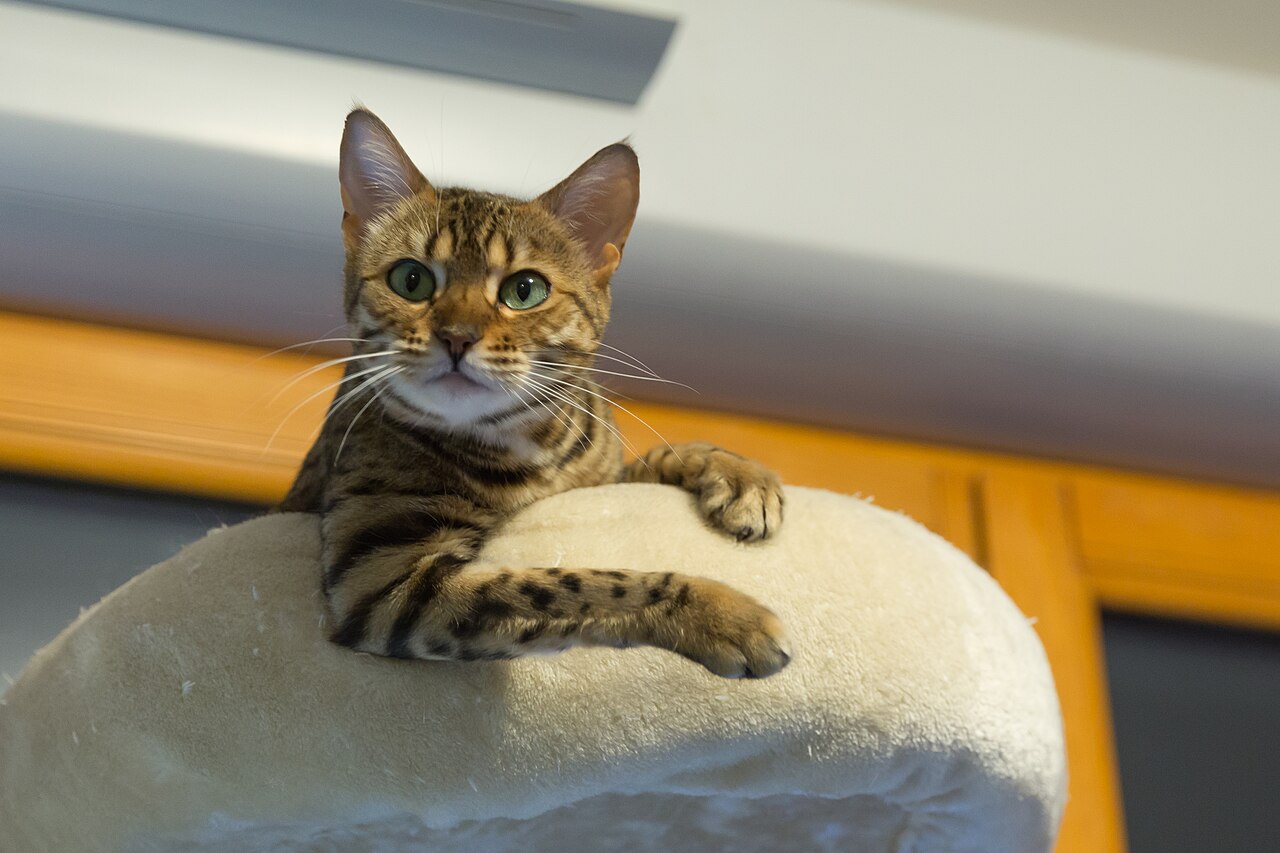
Pin down the Bengal first, or the comparison has no anchor. Medium to large, 8 to 15 lbs. A muscular, athletic body with a sleek, wild appearance that screams "miniature leopard." The coat is the giveaway: spotted or marbled rosettes on a golden, brown, or silver background, often with a glittered sheen that catches the light. The head is broad with rounded ears, wide-set eyes, and a strong chin. The tail is thick and brick-shaped, often carried low. The personality is high-octane: extremely active, intelligent, water-curious, and vocal with chirps and trills. Any cat that matches most of those points is worth comparing. One that misses on the rosette pattern and the athletic build is probably something else.
Egyptian Mau: The Natural Spotted Cat
The Egyptian Mau is the only naturally spotted domestic breed, meaning its spots are not bred in but inherited from wild ancestors. The overlap with Bengals is real: both have spotted coats, both are athletic, both are intelligent. The differences sit in the build and the pattern. Maus are more moderate in size, 6 to 14 lbs, with a longer hind legs that give them a distinctive "tiptoe" stance. Their spots are random and naturally occurring, not the large rosettes Bengals carry. Maus also have a "scarab" marking on the forehead, an M-shaped tabby line that Bengals lack. Eye color is green, always, against the Bengal's gold or green. Personality-wise, Maus are loyal and gentle with their family but more reserved with strangers than the outgoing Bengal.
Ocicat: The Domestic Wild Look
The Ocicat is the trickiest comparison because it was bred to look wild without any wild ancestry. It has a spotted coat on a muscular, athletic frame, which puts it in the same visual category as the Bengal. The differences are structural. Ocicats have a more rounded face with a broader muzzle, where Bengals carry a longer, more wedge-shaped head. The Ocicat spots are thumbprint-shaped and evenly distributed, not the large rosettes of the Bengal. The coat lies flat and sleek, without the Bengal's glittered sheen. Ocicats are also more outgoing and less intense than Bengals, described as dog-like in their trainability but calmer in daily life. If your cat looks wild but is relaxed and round-faced, think Ocicat.
Savannah: The Tallest Look-Alike
The Savannah is the breed that most often gets confused with the Bengal from a distance, because both carry spotted coats and a wild expression. The differences are dramatic up close. Savannahs are taller and thinner, with long legs, a long neck, and large ears set high on the head, giving them a more upright, alert posture. Their spots are solid or elongated, not rosettes. The Savannah also has serval ancestry, not Asian leopard cat, which produces a different body type: taller, leaner, and more rangy. Personality is intense in both breeds, but Savannahs are more demanding of space and stimulation. If your cat is tall, spotted, and looks like it could jump six feet from a standstill, think Savannah.
Abyssinian: The Subtle Wild Card
The Abyssinian does not have spots, which is why it surprises people on this list. The overlap is in the build and the energy. Abyssinians are muscular, athletic, and constantly moving, with a ticked tabby coat that shimmers in the light, similar to the Bengal's glitter. They are smaller, 6 to 10 lbs, and their coat pattern is entirely different: agouti ticking instead of rosettes. But the personality match is close: both are high-energy, intelligent, and demand interaction. If your cat is athletic and wild-acting but has a solid or ticked coat instead of spots, the Abyssinian is the better guess.
Side-by-Side Comparison
| Breed | Size | Coat | Eyes | Pattern | Personality |
|---|---|---|---|---|---|
| Bengal | 8-15 lbs | Short, glittered | Gold/Green | Rosettes or marbled | High-energy, vocal, water-curious |
| Egyptian Mau | 6-14 lbs | Short, fine | Green | Natural random spots | Loyal, gentle, reserved with strangers |
| Ocicat | 6-14 lbs | Short, sleek | Gold/Copper | Thumbprint spots | Outgoing, trainable, calmer |
| Savannah | 12-25 lbs | Short, dense | Gold/Green | Solid or elongated spots | Intense, demanding, tall |
| Abyssinian | 6-10 lbs | Short, ticked | Gold/Green | Agouti ticking | High-energy, playful, social |
Still Not Sure?
Random spots and a tiptoe stance: Egyptian Mau. Round face and thumbprint spots: Ocicat. Tall, rangy, and high-set ears: Savannah. Ticked coat and non-stop energy: Abyssinian.
Still not sure after reading all that?
You just spent five minutes learning what makes each breed different. A photo scan does the same check in 10 seconds, 40+ visual markers, side-by-side breed scores, and a plain-English breakdown. No sign-up, photo never stored.
🐱 Scan a photo nowFAQ
What cat breed looks most like a Bengal?
The Egyptian Mau. Both have spotted coats and athletic builds, but the Mau's spots are naturally occurring and random, while the Bengal carries large rosettes bred from Asian leopard cat ancestry. The Mau also has a distinctive tiptoe stance from longer hind legs.
Are Bengals related to Savannah cats?
No. Bengals descend from the Asian leopard cat (Prionailurus bengalensis), while Savannahs descend from the African serval (Leptailurus serval). They look similar because both were bred for a wild appearance, but the body types differ: Bengals are muscular and compact, Savannahs are tall and rangy.
Is an Ocicat a mix of wild cat?
No. The Ocicat has entirely domestic ancestry. It was created by crossing Siamese, Abyssinian, and American Shorthair lines to produce a spotted coat pattern without any wild cat genes. The Bengal, by contrast, carries Asian leopard cat DNA in its foundation lines.
Keep reading
All articlesIdentification
How to Identify a Mixed Breed Cat: 7 Mixes
Identify your mixed breed cat: Birman, Turkish Angora, Abyssinian, Maine Coon, Siamese, and Ragdoll mixes. What each looks like and how to count clues.
9 min read
Identification
Cats That Look Like Russian Blues
Chartreux, British Shorthair, or Korat? Compare the 4 blue-gray breeds confused with Russian Blues: eye color, coat sheen, body type, and temperament.
5 min read
Identification
Cats That Look Like Maine Coons: 4 Breeds Compared
Is it a Maine Coon or a look-alike? 4 breeds match the size, tufts, and shaggy coat. See the tells that give each one away.
5 min read
Still not sure what your cat is?
Stop guessing from photos and text. Upload one clear photo and the AI checks 40+ visual markers in seconds. Free, no sign-up, and your photo is never stored.
Free cat breed scan