

Verify your cat's breed from a photo
One clear photo runs a free quality check, then unlocks the full AI report for a one-time €5.99: breed verdict, why-likely reasoning, 40+ visual markers, health notes, and follow-up questions. No subscription, and your photo is never stored.
Quick answer: a Maine Coon kitten from a reputable breeder costs $1,800 to $3,500 in 2026. Show-quality kittens and rare colors push $4,500 to $8,000. Adults and retired breeders run $500 to $1,500. Adoption through a rescue costs $100 to $400, though genuinely purebred Maine Coons in shelters are rare. And then there is everything after the purchase, which over 12 to 15 years adds up to $20,000 to $30,000.
That last number is the one most people skip. You will see "$2,500 Maine Coon kitten" in a listing and think the decision is a one-time expense. It is not. A cat this size eats like a cat this size, and the vet bills are bigger too. This guide walks through the full picture: what you pay up front, what drives the price up or down, and how to spot the $600 "bargain" that turns into a $6,000 heart problem.
Before you spend anything, make sure the cat in the listing is actually a Maine Coon. Half the "Maine Coons" for sale online are ordinary domestic longhairs with a fluffy tail. Compare the cat against the Maine Coon breed profile, or read how to tell a Maine Coon mix from the real thing.
Maine Coon Kitten Price in 2026
A pet-quality Maine Coon kitten from a registered breeder costs between $1,800 and $3,500 in the United States in 2026. That is the range where most of the market sits, and it has climbed roughly 15 to 20 percent since 2022 as demand for large, friendly breeds keeps outpacing the number of ethical breeders.
The word "pet-quality" is doing real work in that price. It does not mean flawed or unhealthy. It means the kitten has some cosmetic deviation from the breed standard, a kink in the tail, a muzzle that is slightly narrow, coat texture a judge would deduct for, and it comes with a spay/neuter contract so you cannot breed it. Most families should buy exactly this cat. You are getting the same size, the same health screening, and the same personality for the lowest legitimate price.
Prices climb from there:
- $2,500 to $4,500: kittens from breeders with champion lines or extensive health testing, common in coastal metros where demand is highest.
- $4,500 to $8,000: show-quality kittens with near-perfect conformation, or kittens from imported European lines (the so-called "European" Maine Coons with wider muzzles and heavier bone).
- $8,000 and up: breeding rights or genuinely exceptional show prospects. Almost nobody buying a family cat needs this tier.
My honest take: the jump from $2,500 to $6,000 buys you bragging rights, not a better pet. Health testing and a caring breeder matter enormously. A rosette in the lineage does not change how the cat sleeps on your chest. If a breeder quotes $6,000 for a pet kitten on the same contract as their $2,500 kittens, ask what specifically you are paying for. "European lines" is not an answer by itself.
What $1,800 Buys vs What $4,500 Buys
The tier table above uses adjectives. Here is what those adjectives look like on the cat. Both are healthy, registered Maine Coons. The price difference is mostly in four markers you can check yourself before you pay.
$1,800 - $3,500 · PET QUALITY
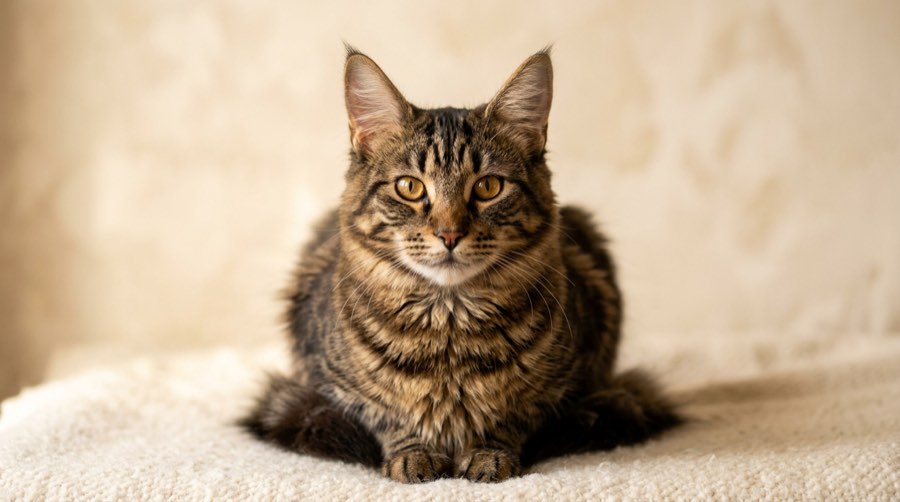
- ✓Same adult size: 15 to 25 lbs
- ✓Same health screening: HCM echo and DNA, both parents
- ✓Same personality: the gentle-giant trait is not priced in
- △Slightly narrower muzzle
- △Shorter ear tufts, lighter bone
$4,500+ · SHOW QUALITY
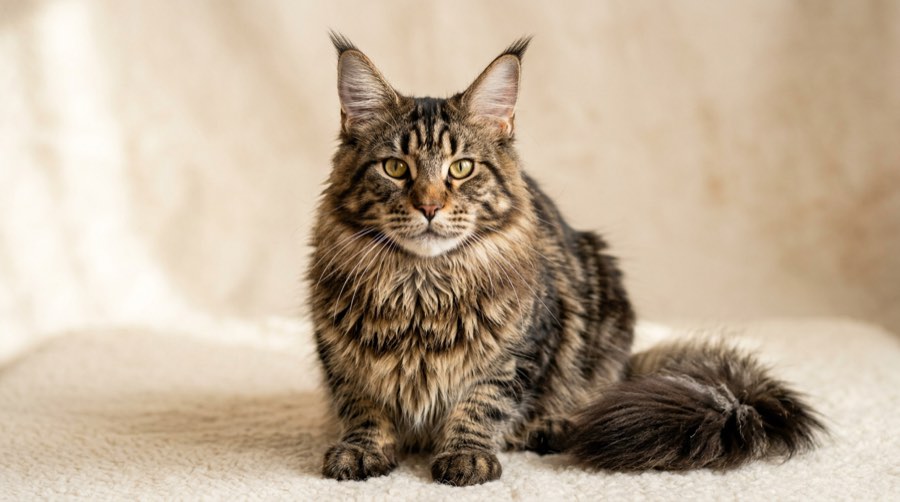
- ✓Wide square muzzle
- ✓Large lynx-tip ear tufts
- ✓Heavier bone, thick ruff, long tail plume
- ✓Near-perfect conformation for the ring
A pet kitten is the same cat with a judge's deductions. Those deductions are cosmetic and visible: count them in a photo, then decide whether they are worth $2,000 to you. Papers prove lineage. The photo proves the rest.
Every marker above is checkable in one photo. Upload the kitten's picture and Furriq reads 40+ markers like these: the quality check is free, the full report is €5.99. Or check the markers yourself →
Adult and Retired Breeder Prices
The smartest deal in the Maine Coon world is the cat nobody advertises: the retired breeding queen. Breeders retire their females at four to six years old and place them in pet homes for $300 to $1,000, sometimes free to the right home. These cats are health-tested, screened for temperament, often already spayed, and fully grown so there are no surprises about size.
The trade-offs are real. You skip the kitten stage, which some people count as a loss and others count as a mercy. Retired queens may need months to decompress in a new home. And you inherit whatever habits four years of cattery life built, a fear of vacuum cleaners, a hatred of carriers. But for $800 against $2,800, most families come out far ahead.
Adults from private owners rehoming for job moves or divorces cost $200 to $800 and appear on breed rescue sites and reputable rehoming platforms. Here the risk flips: no breeder is vetting the cat, so verify the health records yourself and budget for a full vet workup in week one.
Adoption vs Breeder: The Real Cost Comparison
Adoption is the answer everyone wants to be right, so let me be precise about what it actually gets you. Maine Coons and Maine Coon mixes do land in shelters and breed-specific rescues, and adoption fees run $75 to $400 depending on the organization, the cat's age, and whether vaccines and neuter are included. Breed rescues like dedicated Maine Coon networks charge $150 to $350 for adults and know their cats' personalities.
The catch is supply. Purebred Maine Coons are a tiny fraction of shelter cats. If you are set on a purebred kitten with papers and health-tested parents, waiting for a rescue match means waiting months or years, and you will likely be offered mixes instead. That is a fine outcome for most people, a 15-pound shelter longhair can be indistinguishable from a Maine Coon in every way that matters, but you should walk in knowing it.
| Source | Typical cost | What you get | Main risk |
|---|---|---|---|
| Pet-quality kitten, breeder | $1,800-$3,500 | Health-tested parents, pedigree, contract, support | You may wait 3-9 months for a kitten |
| Show/breeding quality | $4,500-$8,000+ | Top conformation, breeding rights if purchased | Paying for trophies you will never chase |
| Retired breeder | $300-$1,000 | Adult cat, fully grown, often spayed | Established habits, slower adjustment |
| Breed rescue adoption | $150-$350 | Vetted adult or older kitten, usually neutered | Often mixes, unknown early history |
| General shelter | $50-$200 | Vaccines, microchip, neuter included | Purebreds are scarce; "Maine Coon" labels are guesses |
| Backyard breeder / listing site | $500-$1,200 | A kitten, usually with no paperwork | HCM, SMA, hip dysplasia, scammers |
Notice the bottom row. The $700 kitten is not a discount. It is the market pricing in everything the breeder skipped, and you will pay the difference to a cardiologist later. More on that in the red flags section.
Why Every Maine Coon Price Guide Quotes a Different Number
Search three price guides and you will find three answers for the same cat. Same tier, same label, ranges that barely touch. Five of the most visible guides, all checked the same week in October 2026:
Pet-quality kitten from a reputable breeder, as each source states it
| Source | Pet-quality range | Show / breeding |
|---|---|---|
| Petful | $1,000 - $2,500 | $2,500 - $6,500 |
| Petzooie | $800 - $2,500 | $2,500 - $5,000+ |
| MaineCoonOwner | $2,200 - $4,000 | $3,000 - $6,000 |
| BreedCost | $1,500 - $4,000 | not stated |
| CoonLovers | $1,500 - $3,000 | $3,000 - $8,000 |
Petful's floor is $1,000. MaineCoonOwner's is $2,200, more than double, for the same tier from the same kind of breeder. MaineCoonOwner's own price calculator returns $800 to $1,200 with default inputs, under the floor of its own table (both checked October 16, 2026). None of the five publishes where its numbers come from.
Our range: $1,800 to $3,500 for a pet-quality kitten. It comes from three named catteries with published prices (checked August 2026, compiled by feedmehooman): Freedom Mountain $2,500 to $5,500 pet, LM Coon Cattery (CA) $3,000 to $4,200, Sweet Giants (TX) from $3,900. When a source publishes its numbers, we link it. When it does not, we say so.
How we priced this page. Every price range on this page was collected from named catteries and rescue listings the same week in October 2026, with each source linked and dated in the comparison table above. Compiled by the Furriq content team. Medical facts link to their original sources. Not reviewed by a veterinarian: for a medical decision, talk to your vet. Our methodology page explains how we verify listings.
What a Fair Maine Coon Price Includes
Breeder pages love to list what comes with their kittens. Here is the market-level version: if any of these are missing from a quote, the price is not as fair as it looks.
- TICA, CFA, or FIFe registration papers: the individual certificate, not just a claim that the cattery is registered.
- Full vaccine series: three rounds, not "first shots done".
- Spay or neuter: included in pet-quality prices at most catteries.
- Microchip: with lifetime registration.
- Written HCM guarantee: a contract clause, not a verbal promise. Ask what it covers and for how long.
- Vet health certificate: issued within 10 days of pickup or travel.
- Parent health testing proof: For Maine Coons that means the parents' HCM echocardiogram and MyBPC3 DNA result, an SMA DNA test, and ideally a hip evaluation. A breeder who cannot show them is charging show-tier money for pet-tier diligence. If you are not sure what a test can and cannot prove, our maine coon health guide walks through it.
What Drives the Price Up or Down
Four things move a Maine Coon's price more than anything else.
Lineage and health testing. Parents screened for hypertrophic cardiomyopathy (HCM), spinal muscular atrophy (SMA), and hip dysplasia through echocardiograms and DNA panels cost the breeder $1,000 to $2,000 per breeding cat per year. That cost has to land somewhere, so it lands in the kitten price. Breeders who skip it can undercut everyone, which is precisely why cheap kittens exist.
Color and rarity. Details in the next section, but the short version: most colors cost about the same, and a few patterns command a premium mostly because demand spikes on social media.
Location. The same kitten costs $2,200 in rural Ohio and $3,500 in the San Francisco Bay Area or New York. European imports add $1,000 to $2,500 in transport, permits, and quarantine paperwork. If you live near a breeder, you also skip the $400 to $600 flight nanny fee.
Age and season. Kittens go home at 12 to 16 weeks. Demand peaks in summer and before holidays, and some breeders quietly price surges around Christmas. A kitten reserved in February often costs the same as one reserved in November, but a retired adult in November may be discounted because nobody is shopping for cats then.
Maine Coon Price by Color
Here is the part where I push back on the listings. Color does not change a Maine Coon's health, size, or temperament one bit. But it changes what people will pay, so it changes what breeders charge. Silver came back into fashion partly because it photographs beautifully, and smoke coats hide tabby ghosting that some buyers dislike. Brown tabby, the classic look, is the most common and therefore the cheapest tier.
| Color | Typical pet price 2026 | Notes |
|---|---|---|
| Brown tabby | $1,800-$2,800 | Classic look, most common, easiest to find |
| Silver / shaded tabby | $2,500-$4,000 | Social-media premium; waiting lists are longest |
| Black smoke | $2,500-$4,200 | Striking, rarer, priced accordingly |
| Solid black | $1,600-$2,600 | Underrated value; often priced under tabbies |
| Orange / red tabby | $1,800-$3,000 | Almost always male (like all orange cats) |
| White | $2,200-$3,800 | Rare; ask about deafness testing for blue-eyed cats |
| Calico / tortoiseshell | $2,000-$3,500 | Always female; supply is genuinely limited |
One more color note: pay for health, not hue. A $4,000 silver kitten from untested parents is a worse buy than a $2,000 brown tabby from an echocardiogram-documented cattery. If you already brought home a big fluffy cat and cannot tell what it is, our cat breed identifier scores a photo against 40-plus visual markers in seconds.
Before you pay a premium for a pattern, make sure the pattern is real: our pattern vs breed guide shows how coat patterns differ between lookalike breeds, free, no sign-up.
Getting the Kitten Home: Shipping Costs
Most maine coon breeders ship, and the trip is priced separately from the cat. Three options cover most situations.
| Option | Typical cost | When it makes sense |
|---|---|---|
| Ground transport | $300 - $800 | Same region, van or courier, least stress on the kitten. |
| Air cargo | $400 - $1,200 | Cross-country. Includes crate, airfare, and the health certificate. |
| Flight nanny | $500 - $1,500 | A person accompanies the kitten in the cabin. Priciest, gentlest option. |
Some breeders drive the kitten themselves for $200 to $500. One rule before you pay any of this: if a breeder quotes shipping before you have done a live video call, stop and read the red flags section.
Ongoing Costs: What You Pay Every Year
The purchase price is a one-time event. The ownership cost is a 12-to-15-year subscription, and Maine Coons are a premium plan. The single biggest driver is size: a 16-pound cat eats roughly 1.5 times what a normal cat eats, and medications are often dosed by weight.
| Expense | Monthly | Yearly | Notes for Maine Coons specifically |
|---|---|---|---|
| Food | $50-$90 | $600-$1,100 | High-protein diet for a large frame; measure portions, obesity is the #1 health issue |
| Litter | $25-$40 | $300-$480 | You need jumbo boxes; a Maine Coon fills a standard one fast |
| Vet / preventive care | $20-$50 | $250-$600 | Exams, vaccines, dental; big cats need annual HCM screening discussion |
| Pet insurance | $30-$60 | $360-$720 | Worth it here: HCM treatment and hip surgery run $3,000-$6,000 |
| Grooming | $0-$60 | $0-$720 | DIY brushing is free; professional deshedding every 6-8 weeks if you will not |
| Toys / scratching posts | $10-$25 | $120-$300 | Buy tall, weighted posts; a 15-pound cat destroys flimsy ones |
Add it up and the first year after purchase runs $3,000 to $5,000 including starter gear, because that year also carries the neuter surgery, initial vaccines, a cat tree rated for actual weight, and every toy the internet convinced you to buy. Steady-state years then run $1,600 to $3,900. Over a 13-year life, the total lands between $22,000 and $45,000 depending on health luck. Most owners sit near the lower-middle of that band.
The grooming math deserves its own note. The coat is a thick double coat and it mats. Brush two to three times a week with a comb that reaches the undercoat and you will never pay a groomer. Skip it for two months and you are booking a $90 to $150 deshedding session, or worse, a $200 vet visit to remove mats near the skin. The personality guide covers how patient these cats are on a table, which helps, but do not test it.
Red Flags: When a Cheap Maine Coon Is Not a Deal
Now the section that saves people the most money. A Maine Coon kitten advertised under $800 is either not a Maine Coon, not healthy, or not a real cat at all. Those are the three options. Here is how each one presents:
- No health testing, or testing you cannot verify. Ask for the parents' HCM echocardiogram dates and the SMA and PK-deficiency DNA results. Real breeders send these documents before you ask. Evasive answers ("the vet said they're healthy") mean the tests were never done.
- Kittens always available, multiple litters, any color. Ethical Maine Coon breeders produce a few litters a year and have waiting lists. A site with eight litters of every color ready to ship today is a kitten mill or a scam.
- Shipping-only, no visits. If you cannot meet the mother cat, see the cattery, or even get an unedited live video call, assume fraud. Scam listings for Maine Coons are among the most common pet scams, often with stolen photos and a $400 "flight crate fee" due at the last minute.
- Age under 12 weeks. Kittens leaving at 8 weeks or younger signal a breeder cutting costs on food and socialization. The breed standard practice is 12 to 16 weeks, and the extra month matters for temperament.
- No contract. Legitimate breeders require spay/neuter for pet kittens and include a health guarantee, commonly 12 months against genetic disease, with a clause that you return the cat to them rather than a shelter if things fail.
- "Maine Coon" label on a cat that fails the look. No ear tufts, small size, fine bones, no undercoat? You are probably looking at a domestic longhair, which can be a lovely cat, but should cost shelter money, not $900. Verify against the breed profile before paying.
And the expensive version of the same mistake: some buyers pay premium prices for a "European Maine Coon" from importers with no pedigree paperwork from FIFe or WCF. Imported lines can be excellent, many are, but "European" is a marketing word in the US. Ask for the pedigree certificate with registration numbers, then look those numbers up. Five minutes of checking protects a four-figure payment.
Is a Maine Coon Worth the Money?
Since you asked for a stance: yes, at the right price, from the right breeder, and the price I would personally pay is $2,000 to $3,000 for a pet-quality kitten from health-tested parents, or under $1,000 for a retired adult. Below $800 for a kitten, I would not touch. Above $5,000 for a pet on a neuter contract, I would walk, because the premium is buying show-ring cosmetics that have zero effect on the next 14 years of your life.
What you are genuinely buying is the breed itself: a 15-pound cat with a dog's loyalty, a quiet chirp instead of a scream, patience with children, and the calm confidence that makes the breed famous. That combination is real and it is not available in every shelter cat, whatever the internet tells you. If that is the cat you want and the budget works, pay a good breeder fairly. If the budget does not work, adopt a big fluffy mix and spend the difference on a great cat tree. Either decision is defensible. Paying a stranger $700 for an untested kitten labeled Maine Coon is not.
Not sure the cat in the listing is a real Maine Coon?
Upload a photo to our cat breed identifier: 40+ visual markers, side-by-side breed scores, a plain-English breakdown. No sign-up, photo never stored. Cheaper than a $2,500 mistake.
🐱 Try the cat breed identifierBefore you pay: verify the cat, not just the breeder
- ✓TICA or CFA papers in the breeder's name, not "available later"
- ✓Kitten at least 12 weeks old at pickup
- ✓HCM echo and DNA results for both parents, in writing
- ✕Under $800 "with papers included" is the oldest scam in the breed
Papers can be faked. The cat itself cannot. Upload a photo of the kitten or its parents and Furriq checks 40+ visual markers: the square muzzle, ear tufts, and heavy bone that separate a real Maine Coon from an $800 lookalike mix. The photo quality check is free; the full breed report costs €5.99, well under 1% of what you are about to pay the breeder. No sign-up needed.
Check the breed before you pay →Frequently Asked Questions
How much does a Maine Coon kitten cost in 2026?
Expect $1,800 to $3,500 for a pet-quality kitten from a reputable US breeder. Show-quality kittens and rare colors run $4,500 to $8,000. Anything under $800 should make you suspicious: it usually means no health testing, a mixed-breed cat labeled as purebred, or an outright scam.
Why are Maine Coons so expensive?
Three compounding reasons. Ethical breeders run health testing that costs $1,000 to $2,000 per breeding cat per year, including heart echocardiograms and DNA panels. Litters are small, typically three to five kittens, and the breed's popularity keeps demand far above supply. Add in the 12-to-16-week weaning and socialization window that good breeders insist on, and the per-kitten cost is genuinely high before any profit margin.
How much does a Maine Coon cost per month?
Budget $135 to $325 per month in steady state: food at $50 to $90 for a large cat, litter at $25 to $40, insurance at $30 to $60, and vet, toys, and grooming making up the rest. The first year after buying runs higher, $3,000 to $5,000 all-in, because of starter gear, neuter surgery, and initial vaccines.
Is it cheaper to adopt a Maine Coon?
Dramatically, when you can find one. Adoption fees run $75 to $400 against $1,800 to $3,500 from a breeder. The catch is availability: purebred Maine Coons rarely reach shelters, and breed rescues usually have adult cats or mixes. If you specifically want a purebred kitten with health-tested parents, adoption is not really on the menu.
Do Maine Coon colors affect the price?
Yes, though it is purely about demand, not quality. Brown tabbies, the classic and most common look, cost the least. Silver and smoke coats carry a $500 to $1,200 premium because social media made them fashionable. Solid black Maine Coons are often the best value, priced below tabbies despite being rarer. Health and lineage matter far more than color, so never pay a color premium at the expense of health testing.
What is the total lifetime cost of a Maine Coon?
Plan for $22,000 to $45,000 over a 12-to-15-year life, with most owners landing between $25,000 and $35,000. That includes the purchase price, food, litter, insurance, routine vet care, and grooming. Major health events like HCM treatment or hip surgery add $3,000 to $6,000 per incident, which is exactly why pet insurance is worth it for this breed.
How can I avoid Maine Coon scams online?
Four checks before any money moves. Ask for the parents' HCM echo and DNA test results in writing. Insist on a live video call where you see the kitten with its mother. Refuse any "flight crate fee" or "insurance deposit" requested after you have paid. And verify the cattery's registration with TICA, CFA, or FIFe by looking up the cattery name on the registry site. Scam listings copy photos and hide behind shipping-only policies; real breeders welcome scrutiny.
More Breed Price Guides
Each breed prices differently. If you are weighing a Maine Coon against another breed, these guides break down kitten prices, adoption fees, and yearly costs for each one.
- Bengal cat price: kitten cost by generation and pattern
- Ragdoll cat price: what breeders charge per tier
- Persian cat price: doll-face vs peke-face costs
Before You Pay: Verify the Kitten Is the Real Breed
Half the "Maine Coons" for sale online are ordinary domestic longhairs with a fluffy tail. Before you send a deposit, run the listing photos through Furriq's free identifier: it checks 40+ visual markers (coat pattern, body structure, facial features) against the Maine Coon standard in seconds. No sign-up, no storage.
Want more on the breed? Read the full Maine Coon breed profile for size, temperament, and health basics, learn how to spot a Maine Coon mix before you pay purebred prices in how to tell a Maine Coon mix, or see what daily life with the breed is like in Maine Coon personality guide. And if you already have a big fluffy cat at home, our free cat breed identifier will tell you in seconds what you are actually living with. Curious about lookalikes? We put the Maine Coon next to the breeds it gets confused with in our guide to cats similar to maine coons.
Related breeds
All breedsKeep reading
All articlesCat Breeds
Sphynx Cat Price 2026: $2,000-$5,000 Kitten Cost Guide
Sphynx kittens cost $2,000-$5,000 from a named US cattery in 2026. Flat prices, eye-color premiums, adoption vs breeder, yearly costs, and scam checks.
10 min read
Cat Breeds
Siamese Cat Price 2026: $1,000-$3,500 Kitten Cost Guide
Siamese kittens cost $1,000-$3,500 at named US catteries in 2026, flat priced. Point colors do not change the price. Rescue fees, yearly costs, red flags.
10 min read
Cat Breeds
British Shorthair Price 2026: $1,100-$4,000 Kitten Cost
British Shorthair kittens cost $1,100-$4,000 from named US catteries in 2026. Why blue is cheapest, what golden adds, adoption fees, and yearly costs.
11 min read
Still not sure what your cat is?
Stop guessing from photos and text. Upload one clear photo and the AI checks 40+ visual markers in seconds. The quality check is free; the full AI report is €5.99, one-time. Your photo is never stored.
Scan your cat's photo