

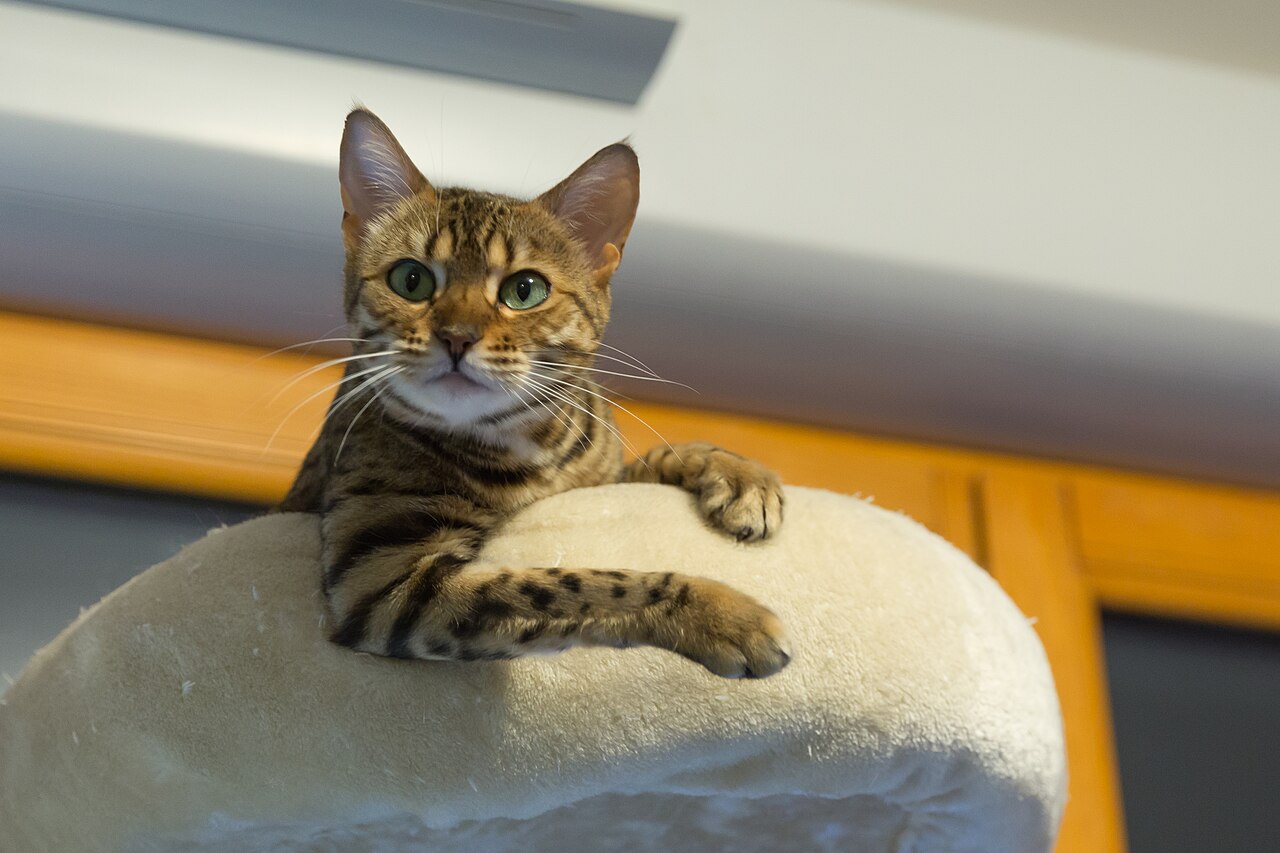
The Toyger looks like a miniature tiger, and that is the point. Breeders started with striped domestic cats in the 1980s and selected for bold, dark markings on a warm orange base. The result is a cat that carries its stripes like a wildcat. The breed is new, and that matters for health. Newer breeds have shorter health histories. We know less about what they inherit.
Most of what follows is not Toyger-specific. Heart disease, kidney disease, and dental problems hit every breed. Here is the honest version: Toygers are healthy so far, with one thing that keeps showing up in health discussions: heart murmurs. Below are the seven issues, each with the symptoms that mean a vet visit.
1. Heart Murmur
A heart murmur is an abnormal sound in the heartbeat, caused by turbulent blood flow. It is the one finding that keeps coming up in Toyger health discussions. Murmurs are not a diagnosis on their own. They point to an underlying condition, and in cats that condition is often hypertrophic cardiomyopathy, a thickening of the heart muscle. A vet has to run tests to find the root cause.
Cats hide heart problems well. A murmur can exist for years without visible signs. When symptoms do appear, they look like this: poor appetite, weight loss, pale gums, difficulty breathing, lethargy, and weakness.
Regular checkups are the only reliable way to catch this. The murmur is often found at a routine visit, not because the cat looked sick.
2. Heart Disease
Heart disease is not a Toyger problem. It affects roughly 1 in 10 domestic cats worldwide, according to the AVMA. But it matters here because the breed already shows heart murmurs, and a murmur can be the early signal of cardiomyopathy.
There are two forms. Congenital heart disease is present at birth, the result of inherited defects. Acquired heart disease develops over time, common in older cats, and can come from structural damage, diet, or environmental factors.
Warning signs: lethargy, weakness, shortness of breath, sudden paralysis of the hind legs, fast breathing while resting, fainting, a chronic cough, a persistently fast heartbeat. Two or three of these together is a same-day vet visit.
3. Feline Lower Urinary Tract Disease (FLUTD)
FLUTD is an umbrella term for urinary disorders, from mild inflammation to a full blockage. Common causes include inflammation, infection, urinary obstruction, and poor diet. It is not an inherited Toyger condition, and it affects domestic cats broadly.
Signs to take seriously: straining to urinate, urinating small amounts, frequent or prolonged trips to the box, crying while urinating, excessive licking of the genital area, urinating outside the litter box, and blood in the urine. A complete blockage is an emergency. If your cat cannot urinate at all, that is a same-day vet visit.
4. Hyperthyroidism
Hyperthyroidism is an overproduction of thyroid hormone, most common in middle-aged and senior cats. It speeds up the metabolism and, left untreated, can trigger secondary conditions. Early diagnosis matters.
The classic signs are weight loss despite a good appetite, increased thirst, more urination, restlessness, crankiness, an unkempt coat, and more vocalizing. Treatment options include medication, dietary change, radioactive iodine therapy, and surgery. With treatment, the prognosis is generally good.
5. Diabetes
Diabetes means the body can no longer regulate blood sugar. It is far more common in adult and senior cats, and in males more than females. Obesity is a major risk factor, so keeping a Toyger lean is a real health move, not a cosmetic one.
Signs include increased urination, increased thirst, increased appetite, lethargy, dehydration, and sometimes diarrhea or vomiting. Treatment depends on the type and severity, and usually combines insulin therapy with dietary management under vet supervision.
6. Chronic Kidney Disease (CKD)
Chronic kidney disease is damage to the kidneys that builds up over time. It is much more common in older cats, because the kidneys accumulate damage with age. Toygers have not shown a breed predisposition, but the disease hits every breed eventually.
Symptoms develop gradually: weight loss, a brittle coat, bad breath, lethargy, depression, changes in appetite, increased thirst, increased urination, vomiting, diarrhea, and anemia. There is no cure, but early detection plus treatment can extend both lifespan and quality of life. Blood and urine tests are how vets find it.
7. Dental Disease
Dental disease is the most common health condition in domestic cats. Studies show 50 to 90 percent of cats aged 4 and older have some form of it: gingivitis, periodontitis, or tooth resorption. All of these are painful and can interfere with chewing and eating.
Watch for head shaking, pawing at the mouth, dropping food, trouble swallowing, and excessive drooling. Dental disease is largely preventable with regular oral care, and treatable with a professional cleaning and, if needed, extractions.
Toyger health issues at a glance
| Issue | Toyger-Specific? | Key Early Sign |
|---|---|---|
| Heart murmur | Yes, observed in breed | Usually none until a vet visit |
| Heart disease | No, all cats | Lethargy, fast breathing at rest |
| FLUTD | No, all cats | Straining in the litter box |
| Hyperthyroidism | No, middle-aged cats | Weight loss, big appetite |
| Diabetes | No, obesity-linked | Drinking and urinating more |
| Chronic kidney disease | No, older cats | Weight loss, dull coat |
| Dental disease | No, most common cat issue | Bad breath, pawing at mouth |
Is your cat actually a Toyger?
Here is the catch: a striped cat is not automatically a Toyger. Classic and mackerel tabby patterns are everywhere in the domestic cat population. What separates a Toyger is the combination of bold, continuous, vertical stripes, a muscular but not heavy body, small rounded ears, and a face with a distinct square muzzle. Most striped cats are simply striped domestic shorthairs.
If your cat has strong tiger-like markings and you want a second opinion, our cat breed identifier compares visual markers against breed profiles and tells you honestly when a match is likely versus when the cat is probably a handsome tabby. You can also check the Toyger breed profile for the full visual breakdown, or read the visual identification guide for the method that works on any cat.
⚕️ Furriq Health Screen is a visual observation tool, not a veterinary diagnosis. This analysis does not replace professional veterinary advice. Always consult a licensed veterinarian for any health concerns about your cat.
Related breeds
All breedsKeep reading
All articlesHealth
Sphynx Cat Health Problems: 6 Issues
Sphynx cats face real health risks: HCM, myasthenia, skin oil buildup, dental disease, sunburn, and temperature issues. Here is what to watch.
6 min read
Health
British Shorthair Cat Health Problems: 5 Issues
British Shorthairs carry real inherited risks: HCM, polycystic kidney disease, obesity, dental crowding, and hemophilia B. Here is what to watch.
5 min read
Health
Bengal Cat Health Problems: 5 Issues
Bengals face PRA, FIP, flat-chested kitten syndrome, separation anxiety, and skin sensitivity. Here is what to watch in this high-energy breed.
5 min read
Still not sure what your cat is?
Stop guessing from photos and text. Upload one clear photo and the AI checks 40+ visual markers in seconds. Free, no sign-up, and your photo is never stored.
🐱 Free cat breed scan