

The Maine Coon is the gentle giant of the cat world: a massive, rectangular body, lynx-tipped ears, a plumed tail that wraps around the body like a blanket, and a dog-like loyalty that follows owners from room to room. Males can reach 13 to 18 pounds and stretch 40 inches nose to tail. Big cats carry big-breed health risks, and the Maine Coon's list is well documented because the breed is so popular that researchers study it closely.
Maine Coons are hardy farm cats at heart, and many live 12 to 15 years without serious illness. But this breed tops the list for HCM research for a reason: the disease is common enough that every serious breeder screens for it, and DNA tests exist for the variant seen in the breed. The good news is that screening works, and informed owners catch problems years earlier than the average cat owner.
1. Hypertrophic Cardiomyopathy
Hypertrophic cardiomyopathy is the most common heart disease in Maine Coons and the breed's most studied health problem. The heart muscle thickens, becomes stiff, and eventually struggles to pump. Some cats live years with mild disease; others develop heart failure or blood clots suddenly. The tricky part is that early stages are silent.
Screening is the answer. A DNA test identifies the known Maine Coon HCM variant, and an echocardiogram by a cardiologist detects thickening directly. Reputable breeders test and share results. At home, watch for faster breathing at rest, hind-leg weakness, or collapse, all emergencies. Annual vet checkups that include a careful heart listen catch some cases before symptoms appear.
2. Hip Dysplasia
Hip dysplasia, where the hip joint does not fit together properly, is a known problem in large-breed cats, and Maine Coons are the classic example. The misaligned joint grinds over time, leading to arthritis and pain. It is more common in this breed partly because the heavy bone structure puts real load on the joints.
Signs include a bunny-hop gait, reluctance to jump, stiffness after rest, and hind-leg lameness. Keeping the cat lean is the single most effective management tool, since every extra pound multiplies joint wear. Joint supplements, pain management, and in severe cases surgery help. If your Maine Coon slows down on stairs or hesitates before jumps, ask your vet about hip evaluation.
3. Spinal Muscular Atrophy
Spinal muscular atrophy is a neuromuscular disorder that affects the spinal cord's motor neurons, causing muscle weakness and wasting, especially in the hind legs. It shows up in kittens and young cats. The condition does not cause pain, and affected cats often live normal lifespans, but they move with an unsteady, bunny-hopping gait and may struggle to climb.
A DNA test identifies the mutation, and breeders who test can avoid producing affected kittens. There is no cure, and management focuses on keeping affected cats safe: low furniture, soft landings, and preventing obesity that would stress already-weak muscles. If a young Maine Coon wobbles or drags its hind legs, ask your vet about SMA testing before assuming injury.
4. Obesity Risk
A Maine Coon's appetite matches its size, and that is where the trouble starts. The breed loves food, and a laid-back indoor lifestyle can quietly turn a 15-pound cat into a 22-pound cat. Excess weight hits this breed twice: it worsens hip dysplasia and stresses the heart, both already on the watch list.
Feed measured portions on a schedule instead of free-feeding, and keep treats to a small share of calories. Interactive feeders slow down fast eaters. Because the breed matures slowly, over 3 to 5 years, weight habits set early tend to stick. A body condition check at every vet visit keeps the trend visible before it becomes a health problem. Between visits, the cat weight calculator shows where your cat's weight sits against the breed range.
Maine Coon health issues at a glance
| Issue | Why It Matters | Key Sign |
|---|---|---|
| HCM | Thickened heart muscle | Silent, then breathing changes |
| Hip dysplasia | Poor joint fit, arthritis | Bunny-hop gait |
| SMA | Motor neuron loss | Wobble, hind-leg weakness |
| Obesity | Big appetite, indoor life | Visible weight gain |
Is your cat actually a Maine Coon?
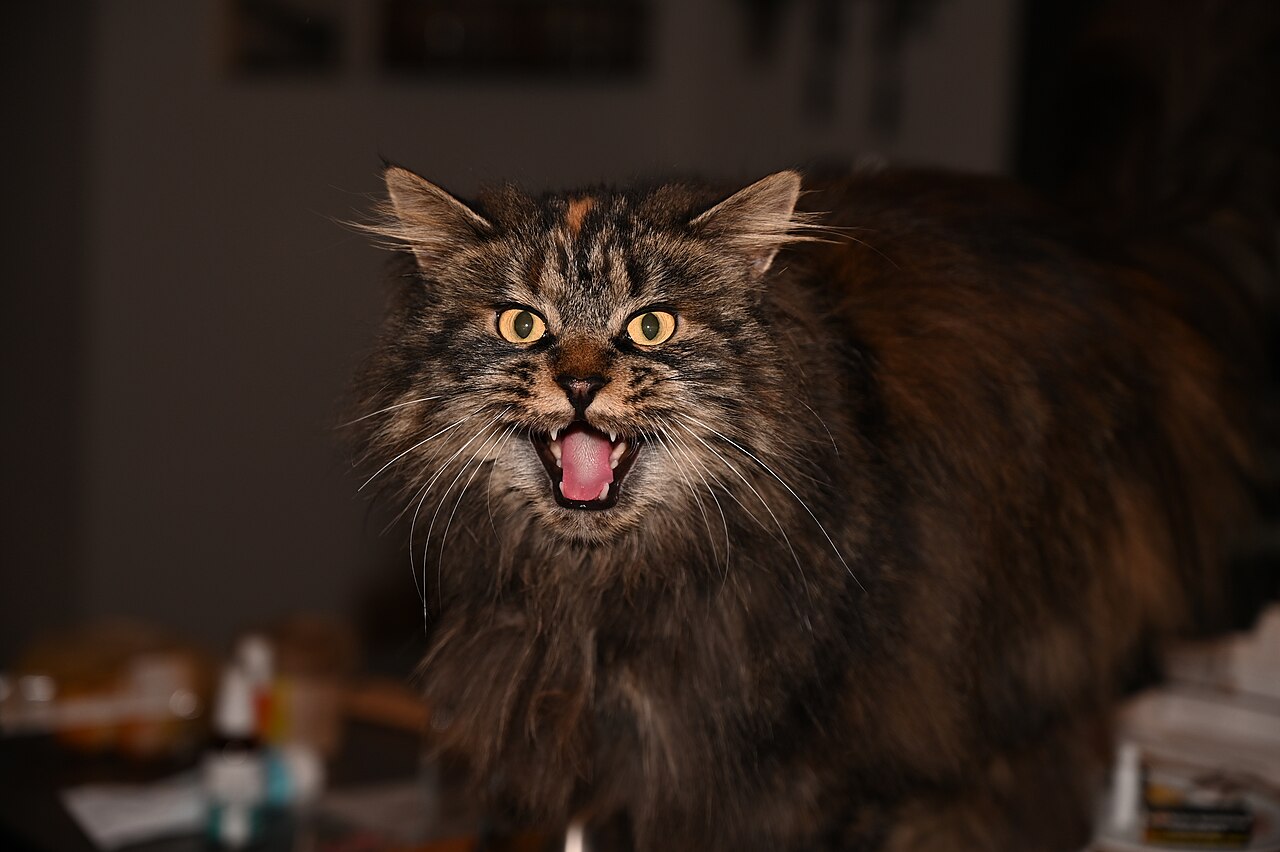
A Maine Coon shows lynx-tip ear tufts, a massive rectangular body, a long plumed tail, tufted paws, a square muzzle with high cheekbones, and a semi-long silky coat. The personality is just as telling: gentle, dog-like, playful into old age. Many big fluffy cats are not Maine Coons, so look for the full package of markers.
If your cat has that rugged giant look, our cat breed identifier can compare the visual markers against the Maine Coon breed profile. And because this breed is so often confused with other large cats, the Maine Coon mix guide breaks down the lookalikes.
⚕️ Furriq Health Screen is a visual observation tool, not a veterinary diagnosis. This analysis does not replace professional veterinary advice. Always consult a licensed veterinarian for any health concerns about your cat.
Related breeds
All breedsKeep reading
All articlesHealth
Sphynx Cat Health Problems: 6 Issues
Sphynx cats face real health risks: HCM, myasthenia, skin oil buildup, dental disease, sunburn, and temperature issues. Here is what to watch.
6 min read
Health
Bengal Cat Health Problems: 5 Issues
Bengals face PRA, FIP, flat-chested kitten syndrome, separation anxiety, and skin sensitivity. Here is what to watch in this high-energy breed.
5 min read
Health
Ragdoll Cat Health Problems: 4 Issues
Ragdolls face HCM, FLUTD, obesity, and thrombopathia. Here is what to watch in this relaxed blue-eyed breed.
5 min read
Still not sure what your cat is?
Stop guessing from photos and text. Upload one clear photo and the AI checks 40+ visual markers in seconds. Free, no sign-up, and your photo is never stored.
Free cat breed scan