

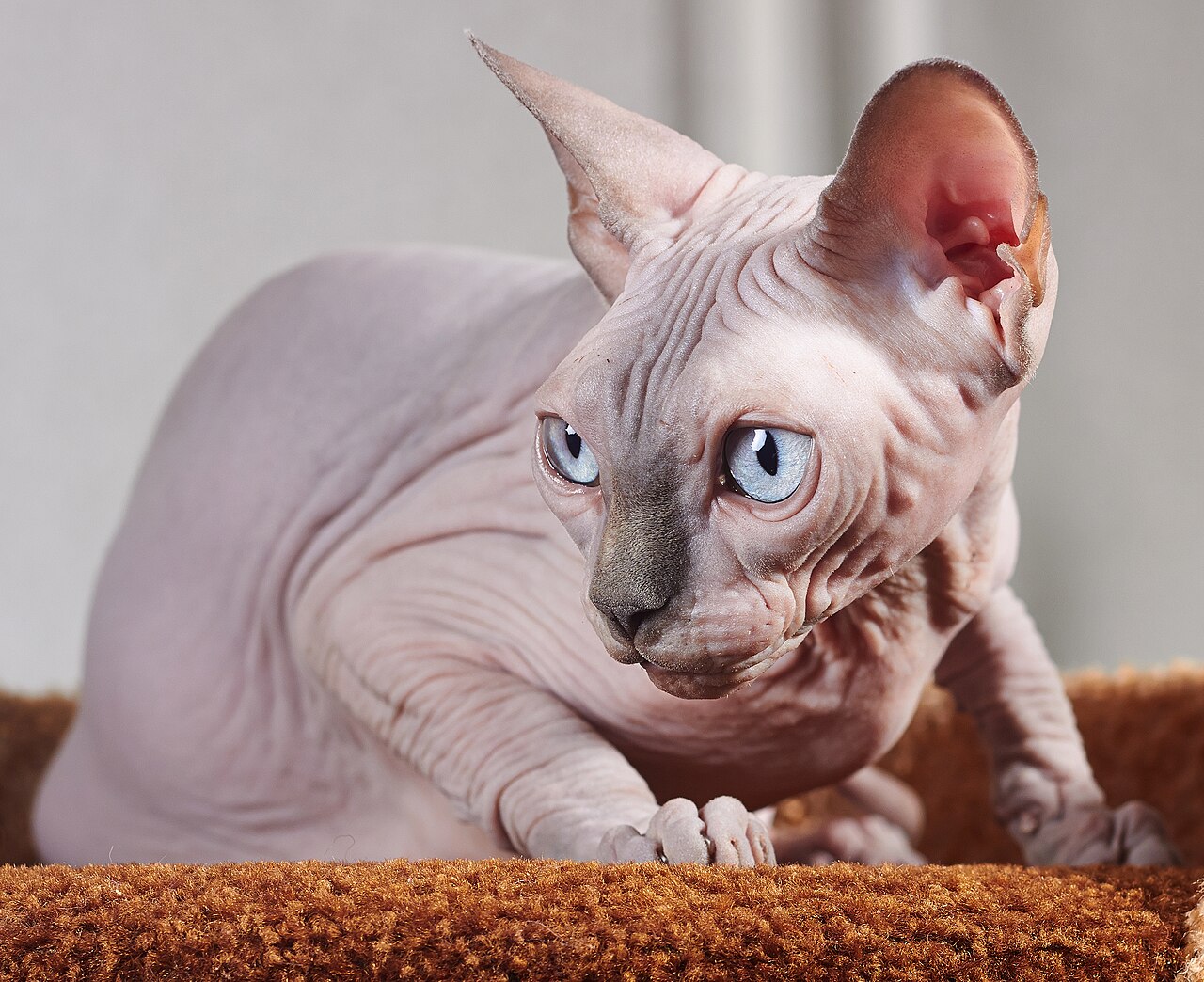
The Sphynx looks like a cat drawn from memory: no fur, big bat ears, skin wrinkled at the forehead and shoulders. Underneath the look is a warm, people-hungry cat that follows owners from room to room and sleeps under the covers. That same lack of coat drives most of the breed's health picture. Skin that other cats protect with fur sits exposed, and the genetics behind hairlessness come with their own risks.
Sphynxes are not fragile cats. Most live long, active lives and the breed has a devoted following for a reason. But the health list is real, and two items on it deserve serious attention from breeders and owners alike. HCM in particular appears at one of the highest rates of any breed, with veterinary cardiologists estimating affected cats at 14 to 40 percent depending on the study. Knowing what to screen for turns a scare into a plan.
1. Hypertrophic Cardiomyopathy
Hypertrophic cardiomyopathy thickens the heart muscle and is the most common inherited heart disease in cats. In Sphynxes the rates are high enough that veterinary cardiologists recommend regular screening, and studies put the affected share at 14 to 40 percent. The thickening makes the heart stiff and, over time, can lead to heart failure or blood clots.
Early disease often shows no symptoms at all, which is why screening matters. An echocardiogram, ideally through a cardiologist, is the reliable test, and DNA testing for known Sphynx variants exists through UC Davis VGL. Buy from breeders who screen their breeding cats, and ask for the results. If your Sphynx starts breathing faster at rest, collapsing, or showing hind-leg weakness, that is a same-day vet visit.
2. Congenital Myasthenic Syndrome
Congenital myasthenic syndrome is a neuromuscular disorder seen in Sphynx kittens. The nerve signals to muscles weaken, and the result is generalized muscle weakness, a bobbing head, and fatigue after very little activity. Some kittens struggle to hold their heads up or tire during feeding.
A DNA test through UC Davis VGL can identify the genetic variant, and responsible breeders test their cats before breeding. Kittens affected early may improve with veterinary care and medication, though severity varies. If a Sphynx kitten seems unusually weak, wobbly, or exhausts quickly, get it checked rather than waiting for it to outgrow the problem.
3. Skin Oil Buildup and Yeast Infections
Fur absorbs oil. A Sphynx has no fur, so the skin's natural oils sit on the surface and build up into a greasy film. Without regular washing that film turns into a breeding ground for Malassezia yeast and other skin problems, and acne on the chin and tail is common. What looks like dirt on a Sphynx is often oil and debris.
Weekly bathing with a gentle cat shampoo is the standard routine, and ears need regular cleaning since they produce more wax without fur to wick it away. If the skin turns red, scaly, or smells yeasty, a vet can confirm whether an infection needs treatment. The routine is a commitment, and it is part of why the breed is not for everyone.
4. Dental Disease
Lack of fur does not protect the mouth. Sphynx cats are prone to early-onset dental disease, with gingivitis and tooth resorption showing up by early adulthood in many cats. The gums can be visibly red and sore while the cat eats normally, which is why owners miss it.
Start brushing teeth early, ideally when the kitten is still small, and schedule annual dental checks. Tooth resorption is painful and often needs extraction, so early detection saves both discomfort and money. A Sphynx with a sudden food-preference change, drooling, or pawing at the mouth should see a vet.
5. Sunburn and Temperature Sensitivity
Without fur, a Sphynx sunburns the way a human with fair skin does. Ear tips, nose, and the pale belly are the first to burn, and repeated sun exposure raises the risk of skin cancer. Cold is the other side of the same coin: no insulation means the cat loses heat fast and gets genuinely uncomfortable in a cool room.
The standard advice is strict indoor living. For sunny windows, offer shade or apply pet-safe sunscreen to exposed skin. In winter, a sweater, warm beds, and a heated pad make a real difference. A Sphynx that feels cold to the touch and is lethargic or shivering needs gradual warming and a vet check if it does not recover.
6. Urticaria Pigmentosa
Urticaria pigmentosa is a skin condition where mast cells accumulate under the skin and produce raised, crusty lesions, often on the body and legs. It appears in many breeds but is reported more often in Sphynxes than any other. The lesions can itch, and scratching makes them worse.
A vet diagnoses it by appearance and sometimes a skin biopsy. Treatment focuses on managing itching and flare-ups, and many cats live comfortably with it under control. Any new crusty spot that does not heal, spreads, or seems painful deserves a professional look rather than a home remedy.
Sphynx health issues at a glance
| Issue | Why It Matters | Key Sign |
|---|---|---|
| HCM | Thickened heart muscle, common here | Often silent, fast breathing |
| Myasthenic syndrome | Weak muscles, kitten onset | Head bobbing, easy fatigue |
| Skin oil buildup | No fur to absorb oil | Greasy film, chin acne |
| Dental disease | Juvenile gingivitis, resorption | Red gums, eating changes |
| Sunburn | No UV filter | Pink ears, nose tip |
| Urticaria pigmentosa | Mast cell skin lesions | Crusty raised spots |
Is your cat actually a Sphynx?
True Sphynxes are hairless with fine peach-fuzz down, oversized bat ears, lemon-shaped eyes, thick paw pads, and wrinkled skin at the forehead, shoulders, and ear base. Most hairless-looking cats you meet are mixes or other breeds with thin coats, so the details matter more than the first impression.
If your cat has that bare, wrinkled look, our cat breed identifier can compare the visual markers against the Sphynx breed profile. And because skin care is central to hairless breeds, the Lykoi health guide covers the same territory from a different angle.
⚕️ Furriq Health Screen is a visual observation tool, not a veterinary diagnosis. This analysis does not replace professional veterinary advice. Always consult a licensed veterinarian for any health concerns about your cat.
Related breeds
All breedsKeep reading
All articlesHealth
Bengal Cat Health Problems: 5 Issues
Bengals face PRA, FIP, flat-chested kitten syndrome, separation anxiety, and skin sensitivity. Here is what to watch in this high-energy breed.
5 min read
Health
Maine Coon Cat Health Problems: 4 Issues
Maine Coons carry HCM, hip dysplasia, spinal muscular atrophy, and obesity risk. Here is what to watch in the gentle giant.
5 min read
Health
Ragdoll Cat Health Problems: 4 Issues
Ragdolls face HCM, FLUTD, obesity, and thrombopathia. Here is what to watch in this relaxed blue-eyed breed.
5 min read
Still not sure what your cat is?
Stop guessing from photos and text. Upload one clear photo and the AI checks 40+ visual markers in seconds. Free, no sign-up, and your photo is never stored.
Free cat breed scan