

Hold a Ragdoll the way the breed prefers and something strange happens. The cat relaxes so completely that it goes limp in your arms, legs dangling, head lolling, like a doll with the stuffing softened. That is the floppy response, the behavior the Ragdoll is named for, and it is the best introduction to the ragdoll cat personality you will ever get.
The short version: Ragdolls are large, gentle, deeply affectionate cats that bond hard to their people. They are not loners and they are not guard cats. They are soft, trusting companions with a quiet voice, a silky coat, and a slow four-year climb to full size. If that sounds right, the details below will confirm it. For the physical side of the breed, start with the Ragdoll breed profile.
The Floppy Response
Pick a Ragdoll up with one hand under the chest and one under the hindquarters, and the body often gives in completely. Muscles loosen, the tail hangs, the head tips back. Ann Baker, who created the breed in the 1960s, named these cats Ragdolls for exactly this reaction. Owners describe it the same way today: the cat turns to liquid the moment it feels safe.
One honest caveat: not every Ragdoll flops. Individuals vary, and a frightened Ragdoll will stiffen like any other cat. The tendency is real. The guarantee is not. Treat the floppy response as a sign of trust, not a trick every cat performs on cue.
Deeply Affectionate
If the Ragdoll temperament had a one-line summary, it would be this: a cat that wants to be near you. Ragdolls follow their people from room to room, greet them at the door, and settle onto laps for hours. Owners routinely compare them to dogs, not because they fetch, but because they treat their human as the center of the day.
That affection reaches strangers too. Ragdolls are friendly with visitors, curious about new people, and almost never aggressive toward a guest. Do not expect a watchdog. Expect a cat that assumes everyone is a friend and is usually right. Households that host often love this about the breed.
Laid-Back Energy
Ragdolls are calm without being lazy. They enjoy a solid play session, chasing wands and fetching toys, then they switch off and nap for hours. You will not find one scaling the curtains or sprinting the hallway at 3 a.m. The default Ragdoll state is sprawled on the nearest soft surface, watching the room through half-closed eyes.
Plan for slow maturity. A Ragdoll keeps growing until about four years old, and the kitten phase stretches with it. You get extra years of kitten energy, then a big, muscular, surprisingly heavy cat. Males usually land between 15 and 20 pounds. Females run smaller, roughly 10 to 15.
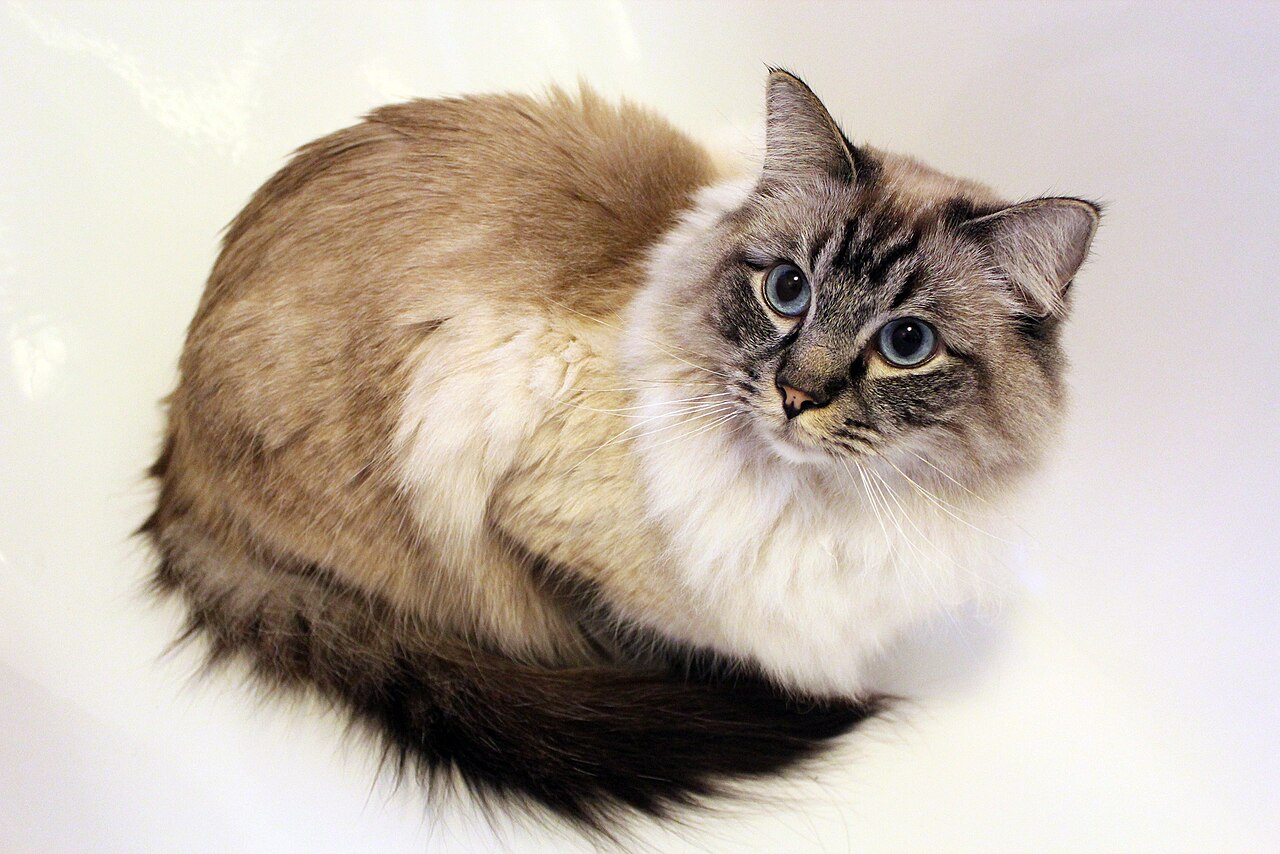
With Kids and Other Pets
The Ragdoll temperament makes the breed a popular choice for families. Ragdolls are patient, tolerant, and slow to scratch or bite in frustration. A child who handles one roughly gets a quiet retreat, not a swipe. Docility needs supervision from the other side too: a relaxed Ragdoll can be dropped, so teach children to support the hindquarters and never lift by the front legs.
Other pets rarely cause drama. Ragdolls generally accept dogs, other cats, and even small animals when introductions happen gradually. They are not territorial by nature. A multi-pet home usually works out, and many owners find that a Ragdoll with a feline roommate is simply happier.
Separation and Company Needs
Here is the honest part of the ragdoll cat personality: this is not a breed for someone gone twelve hours a day, every day. Ragdolls handle a normal workday without drama, but they are social animals and they notice an empty house. They show it quietly, with a soft meow at the door, not with destruction or yowling.
If you are away often, consider a companion cat. Two Ragdolls, or a Ragdoll and a friendly mixed breed, keep each other company and reduce the loneliness. Their voices stay gentle either way. The breed produces a small, sweet meow rather than the long, loud calls of a Siamese, which makes them excellent apartment cats.
Ragdoll vs Birman vs Siberian: temperament at a glance
| Trait | Ragdoll | Birman | Siberian |
|---|---|---|---|
| Affection | Extreme, follows you everywhere | High, devoted to one person | Warm but independent |
| Size | Large, males 15-20 lbs | Medium-large, males 10-15 lbs | Large, males 15-20 lbs |
| Temperament | Docile and floppy | Calm and gentle | Playful and adventurous |
| Vocalization | Soft, sweet meows | Quiet, infrequent | Chirps and trills |
| Maturity | About 4 years | About 2 to 3 years | About 5 years |
| Coat | Long and silky | Long and silky | Triple coat, plush |
Is a Ragdoll Right for You?
Add up the pros and the Ragdoll looks close to ideal: gentle, affectionate, quiet, and good with children. The cons are real but smaller. The long coat needs brushing two to three times a week, though it mats less than a double coat. The cat needs company, yours or a feline roommate's. And the full personality, like the full body, takes about four years to arrive.
For most owners the trade is easy to accept. A Ragdoll gives you twelve to fifteen years of a soft, trusting companion that greets you at the door and goes limp in your arms. Few breeds deliver that package so consistently.
Still sorting out which fluffy cat you live with? Work through the Ragdoll breed profile, read the guide to telling a Ragdoll mix from a domestic longhair, or compare your cat against the cat breed identification guide. When a photo is faster, run it through our cat breed identifier and see what it finds.
Related breeds
All breedsKeep reading
All articlesBreed Guides
Maine Coon Personality & Characteristics
Maine Coon traits go beyond size: calm, friendly temperament, soft chirps instead of meows, and a slow climb to maturity. Life with a gentle giant.
7 min read
Breed Guides
Siamese Cat Personality & Behavior: What to Expect
Siamese cats are loud, clingy, and brilliant. The Siamese personality means constant meowing, intense attachment, and daily play. Is that your cat?
7 min read
Breed Guides
Sphynx Personality & Temperament: What to Expect
The Sphynx temperament is more dog than cat: clingy, playful, smart, and prone to separation anxiety. What to expect before you adopt one.
7 min read
Still not sure what your cat is?
Stop guessing from photos and text. Upload one clear photo and the AI checks 40+ visual markers in seconds. Free, no sign-up, and your photo is never stored.
Free cat breed scan