

Ask anyone who lives with one and you will hear the same phrase: it does not act like a cat. Sphynx owners compare them to dogs, to toddlers, to small needy roommates that happen to purr. The reputation is earned. The Sphynx temperament is genuinely different from most breeds, and it is the reason these cats either delight you or drain you.
The short version: Sphynx cats are extremely social, extremely attached to their people, and terrible at being left alone. They want to be on you, near you, or at least watching you. If that sounds like your kind of companion, keep reading. If you want a cat that naps on a shelf and checks in twice a day, pick a different breed.
1. The Need for Attention
Call the Sphynx a velcro cat and you undersell it. Velcro holds things together. A Sphynx holds your entire schedule together. These cats follow owners from room to room, supervise bathroom visits, and settle directly on a laptop the moment it opens. Physical contact is the baseline. Many owners report the cat wedged under a blanket, draped over a shoulder, or tucked inside a hoodie while they work.
This is not spoiled behavior. It is the breed's social wiring. The Sphynx was developed as a companion, and the hairlessness reinforces the bond: with no fur, the cat needs human body heat, so curling up on a person is comfort and survival at once. The cat is not clingy by accident. It is clingy by design.
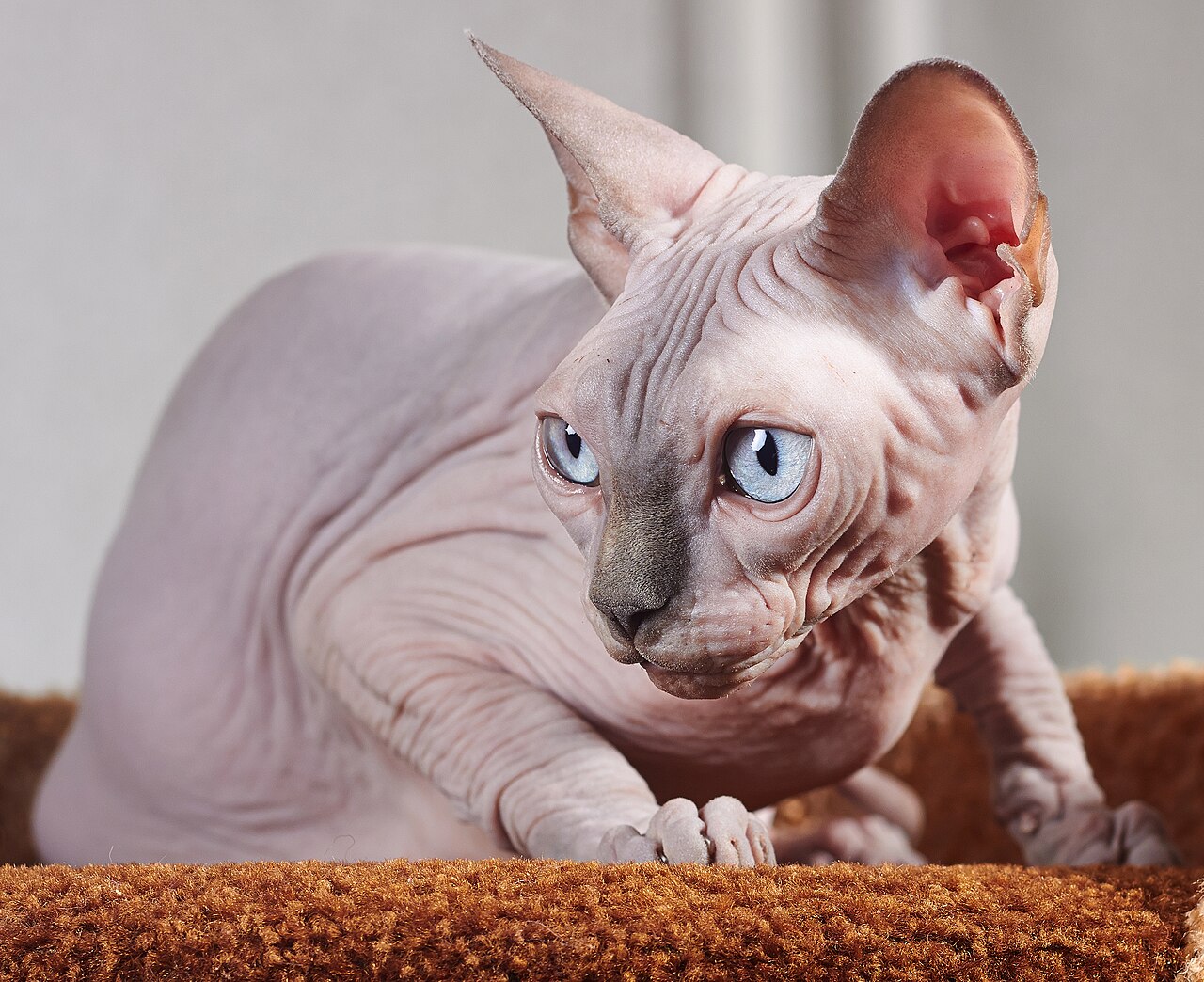
2. Friends With Everyone
Here is the surprise for people who expect cats to hide from guests. The Sphynx usually greets strangers at the door like an old friend. New visitors get sniffed, rubbed against, and shown every toy in the house. A Sphynx that hides from company is the exception, and often a sign that something is off.
That outgoing streak makes the breed a poor guard cat and a great conversation starter. It also means affection is not rationed. Guests, delivery people, the neighbor's kid: everyone is a potential warm lap.
3. Kids and Other Pets
Because the Sphynx craves company, it slots into a busy household better than most breeds. Kids get a playmate that never tires of fetch, and the cat's energy matches theirs. The breed is generally tolerant and rarely aggressive, though it still prefers respectful handling. Teach children to support the body, especially since there is no fur to soften a clumsy grab.
Other pets usually work too. Sphynx cats are known for getting along with dogs, other cats, and even small animals when introductions are gradual. The cat wants a warm body to sleep against, and it does not care much which species that body belongs to. That said, every cat is an individual, so watch the first meetings closely.
4. Playfulness and Energy
Expect a cat that stays kittenish into adulthood. Sphynx cats are playful, acrobatic, and strong. They jump high, climb everything, and open cabinets that were never meant to be opened. Owners learn to cat-proof like they have a toddler, because in many ways they do.
They are also smart, which cuts both ways. A bored Sphynx invents games: knocking things off shelves, unrolling toilet paper, figuring out drawers. Puzzle feeders, interactive toys, and daily play sessions are not optional extras. They are how you keep a clever, energetic cat out of trouble.
5. Separation Anxiety Is Real
Here is the hard truth about the breed. Sphynx cats bond so tightly that long stretches alone can tip into separation anxiety. Owners report depression, destructive scratching, inappropriate peeing, and loud crying when the routine breaks. A Sphynx left alone twelve hours a day, five days a week, is a Sphynx in distress.
If you work long hours, this matters. A second cat can help. So can a sitter, or simply choosing the breed only when someone is usually home. The neediness is not a flaw to train away. It is the price of the bond, and most owners will tell you it is worth paying.
6. Care Implications: Baths, Warmth, Sun
Personality drives care here more than in any other breed. Without fur, the oils the skin produces have nowhere to go, so they build up on the body. Most owners bathe their Sphynx weekly with a gentle cat shampoo. Skip it and the skin turns greasy, and the cat's own oil leaves marks on furniture and clothes.
Temperature is the second job. A Sphynx runs hot: normal body temperature is about 101 to 102.5 degrees Fahrenheit, 38 to 39 degrees Celsius, roughly four degrees above the average cat. That warmth is why they love laps and blankets, and it is also why they get cold fast. Heated beds, sweaters, and warm rooms help. The breed seeks out heat sources on its own, sometimes dangerously, so watch the stove.
Sun is the third factor. Hairless skin burns. A long nap in a sunny window can still cause sunburn on a pale Sphynx, and direct outdoor sun is risky without protection. Keep exposure limited and ask your vet before using any sunscreen, since many products for people and dogs are toxic to cats.
Sphynx vs. the Average Cat
One table says more than paragraphs here. Put a Sphynx next to a typical domestic shorthair and the differences jump out.
Sphynx vs. typical domestic cat
| Trait | Sphynx | Typical cat |
|---|---|---|
| Attention demand | Constant, wants contact | On its own terms |
| Reaction to strangers | Friendly and curious | Often shy or wary |
| Time alone | Stressed, prone to anxiety | Usually fine, sleeps |
| Energy and play | Very high, stays kittenish | Moderate |
| Body temperature | 101-102.5 F, runs hot | A few degrees cooler |
| Bathing | Weekly, oily skin | Self-grooms, rare baths |
The Bottom Line
A Sphynx is not a low-maintenance pet. It is a high-attention one. The trade-off is a cat that greets you at the door, sleeps under the blanket, and follows you like a shadow for fifteen years. Few breeds deliver that kind of companionship, and none of them deliver it fur-free.
If the Sphynx personality sounds like home, read the full Sphynx breed profile for history, looks, and the complete care list. The Devon Rex is the closest cousin worth comparing, a curly-coated cat with similar energy and less of the maintenance. The Selkirk Rex and the LaPerm curl their coats with a fuller, softer look, and the American Wirehair adds a crimped texture instead. And if you think your own cat might carry Sphynx traits, run a photo through our cat breed identifier or work through the cat breed identification guide to see how the pieces fit.
Related breeds
All breedsKeep reading
All articlesBreed Guides
Maine Coon Personality & Characteristics
Maine Coon traits go beyond size: calm, friendly temperament, soft chirps instead of meows, and a slow climb to maturity. Life with a gentle giant.
7 min read
Breed Guides
Siamese Cat Personality & Behavior: What to Expect
Siamese cats are loud, clingy, and brilliant. The Siamese personality means constant meowing, intense attachment, and daily play. Is that your cat?
7 min read
Breed Guides
Birman Cat: Personality, Care & History
Deep blue eyes, white gloves, a pointed coat. Birman personality: calm, quiet, devoted. Care routine, health notes, and the Sacred Cat of Burma legend.
8 min read
Still not sure what your cat is?
Stop guessing from photos and text. Upload one clear photo and the AI checks 40+ visual markers in seconds. Free, no sign-up, and your photo is never stored.
Free cat breed scan