

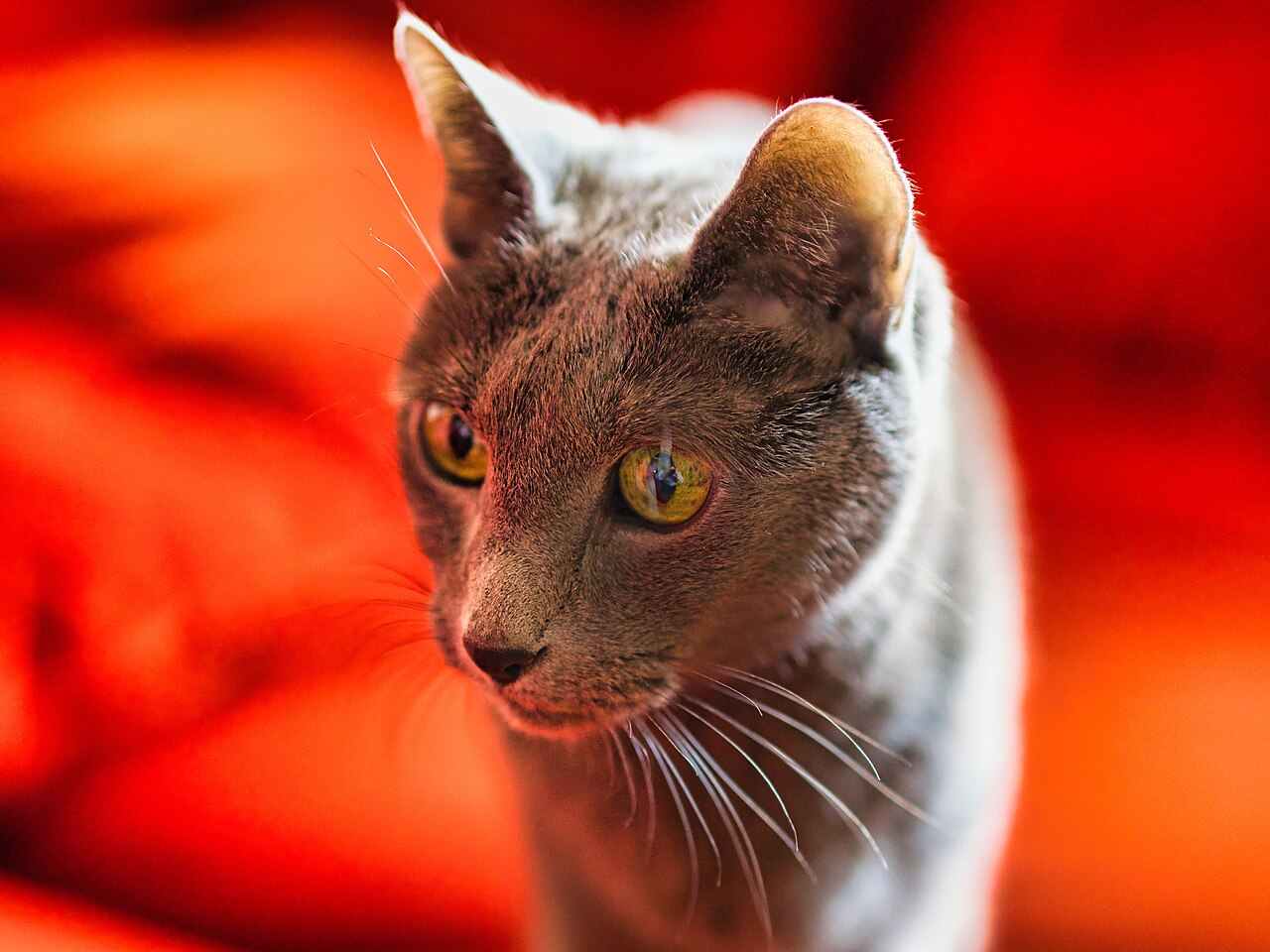
The Nebelung is a long-haired Russian Blue. Same blue-gray coat, same green eyes, plus a full double coat that makes the cat look like it stepped out of a misty forest. The breed is young: Nebelungs have only existed since the 1980s, and they are still rare. That short history means less data on what they inherit. What we do know is the genetic link. A Russian Blue was used to create the breed, so Nebelungs share DNA with a cat that carries its own list of health problems.
None of this is a doom scroll. Nebelungs are healthy cats overall, and lifespans can reach 18 years. But shared DNA is shared risk. The problems below are the ones that show up in Russian Blue relatives, and most of them are treatable when caught early. Early is the operative word.
1. Bladder Stones
Bladder stones are mineral formations that develop in the bladder and make urination painful. In the worst case they block it entirely. Urinary tract disease shows up often in Russian Blues, and Nebelungs share that family line.
Two signs matter most: blood in the urine, and straining to urinate. A complete obstruction is an emergency. If your Nebelung cannot urinate at all, that is a same-day vet visit, not a wait-and-see situation.
2. Dental Disease
Dental disease is the most common health problem in cats, no breed exempt. More than half of cats over 3 years old have some form of it: gingivitis, periodontal disease, or tooth resorption.
Here is the tricky part. You usually cannot see it by looking at your cat. A vet confirms dental disease during a physical exam. Some cats show signs, bad breath, trouble chewing, pawing at the mouth, excessive drooling, but how much depends on how far the disease has progressed.
3. Feline Diabetes and Obesity
These two belong together because obesity is a primary risk factor for diabetes. Nebelungs love to eat, a trait they get from the Russian Blue. Overfeed one and you are stacking the deck.
Signs that point toward diabetes: increased thirst, more urination, and weight loss even though the cat eats normally. Treatment means insulin plus a special diet under vet supervision. Keeping a Nebelung lean also lowers the odds of arthritis, heart disease, and a shorter lifespan.
4. Kidney Disease
Kidney disease hits older cats far more often than young ones, and it creeps up. The kidneys filter waste from the body. When they stop working properly, waste accumulates, and the damage can end in kidney failure.
Signs include weight loss, a dull coat, drinking more water, and peeing larger amounts of weaker urine. Causes range from kidney stones to viral infections to tumors. The disease develops slowly, which is why routine blood work matters more as a Nebelung ages.
5. Hyperthyroidism
Hyperthyroidism means the thyroid makes too much hormone, which speeds up the metabolism. It is common in Russian Blues, and it can hit any cat with age.
The classic picture: weight loss despite a bigger appetite, restlessness, irritability, a messy coat, vomiting, diarrhea. The disease can also strain the heart, raising blood pressure and thickening the heart muscle. It is treatable, but it needs a vet diagnosis first.
6. Skin Conditions
Skin conditions come from a long list of causes: allergies, fleas, ticks, mites, bacteria, fungus. The frustrating part is that they all look alike: scabs, patchy fur, redness, inflammation.
Because they look the same, a vet usually has to diagnose what is actually going on before treatment makes sense. If your Nebelung is scratching, losing fur, or developing scabs, do not guess at the cause. Get it checked.
Nebelung health issues at a glance
| Issue | Why It Matters | Key Sign |
|---|---|---|
| Bladder stones | Russian Blue genetic link | Blood in urine, straining |
| Dental disease | Half of cats over 3 | Bad breath, pawing at mouth |
| Diabetes and obesity | Nebelungs love food | Thirst, weight loss while eating |
| Kidney disease | Older cats, slow buildup | Dull coat, drinking more |
| Hyperthyroidism | Common in Russian Blues | Weight loss, big appetite |
| Skin conditions | Many causes, same look | Scabs, patchy fur |
Is your cat actually a Nebelung?
A Nebelung has a specific look: a medium-long blue-gray coat, vivid green eyes, an elegant fine-boned body. The breed is rare, so the odds that any random cat is one are low. Most long-haired gray cats are domestic longhairs with a similar color, not Nebelungs. If the coat is short and the eyes are green, the Korat, another solid blue-gray breed from Thailand, is worth checking instead.
Visual traits are clues, not proof. Coat color and eye color can point toward Russian Blue ancestry, but they cannot confirm a pedigree. If your cat matches the look, our cat breed identifier can compare the visual markers against breed profiles. You can also check the Nebelung breed profile, the Russian Blue profile it descends from, and the visual identification guide for the full method.
⚕️ Furriq Health Screen is a visual observation tool, not a veterinary diagnosis. This analysis does not replace professional veterinary advice. Always consult a licensed veterinarian for any health concerns about your cat.
Related breeds
All breedsKeep reading
All articlesHealth
Sphynx Cat Health Problems: 6 Issues
Sphynx cats face real health risks: HCM, myasthenia, skin oil buildup, dental disease, sunburn, and temperature issues. Here is what to watch.
6 min read
Health
British Shorthair Cat Health Problems: 5 Issues
British Shorthairs carry real inherited risks: HCM, polycystic kidney disease, obesity, dental crowding, and hemophilia B. Here is what to watch.
5 min read
Health
Bengal Cat Health Problems: 5 Issues
Bengals face PRA, FIP, flat-chested kitten syndrome, separation anxiety, and skin sensitivity. Here is what to watch in this high-energy breed.
5 min read
Still not sure what your cat is?
Stop guessing from photos and text. Upload one clear photo and the AI checks 40+ visual markers in seconds. Free, no sign-up, and your photo is never stored.
🐱 Free cat breed scan