
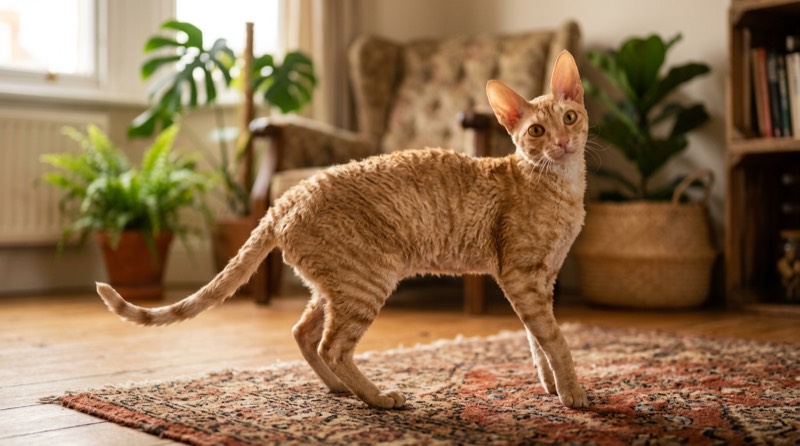

Cat breed identification apps promise a lot. Upload a photo, get a breed name. Simple. But anyone who has tried three different apps and gotten three different answers knows the truth: these tools are hypotheses, not verdicts. Understanding what they can and cannot do is the difference between using them wisely and being misled.
What photo-based apps actually analyze
A photo app looks at pixels. It compares the shape of the ears, the spacing of the eyes, the length of the muzzle, the color distribution, the coat texture to patterns it learned from thousands of labeled cat photos. That is it. It does not sequence DNA. It does not know the cat's parents. It is pattern matching on a visual dataset.
This method works well when a cat has strong breed-specific features. A cat with ear tufts, a square muzzle, and a 16-pound frame will reliably match Maine Coon across multiple apps. The features are pronounced and the breed profile is distinct. The model has a clear signal.
The method falls apart when a cat looks like a generic domestic shorthair. A medium-sized cat with a tabby coat and no extreme features does not match any breed profile strongly. Different apps will return different low-confidence guesses because there is no real answer. The cat is mixed. The honest result is "mixed breed," but many apps are not designed to say that. They are designed to give you a breed name, even when the confidence is low. That is a product decision, not a technical limitation.
How DNA tests compare
DNA tests look at genetic markers. They compare your cat's DNA to reference panels from known breeds and report the percentage of genetic similarity. A result might say "30% Maine Coon, 20% Siamese, 50% mixed." That is more precise than a photo app but still not definitive for most cats.
The catch: most cats are not purebreds. The reference panels are built from pedigreed cats. A mixed-breed cat with no pedigree ancestry will still return breed percentages because the algorithm assigns the closest match, not because the cat has actual breed ancestry. The test is answering "which breeds does this cat's DNA most resemble" rather than "which breeds are in this cat's family tree." The distinction matters.
DNA tests cost $80 to $150 and take two to four weeks. Photo apps are free and take three seconds. They serve different purposes. DNA is for when you need genetic percentages for health screening or breeding decisions. Photo apps are for when you are curious and want a hypothesis to explore.
When photo identification works best
Photo ID works best on purebreds and near-purebreds. The more extreme the breed features, the more consistent the result across apps. It works adequately on cats with one or two strong breed-specific traits (ear tufts, pointed pattern, folded ears) even if the rest is mixed. It works poorly on generic domestic cats and mixed breeds with diluted features.
It also works better with good photos. A clear, well-lit, front-facing photo in natural light will return more consistent results than a blurry, dim photo taken from across the room. The model can only analyze what it can see.
Red flags to watch for
If an app claims 95% accuracy or guarantees a breed match, walk away. No photo-based system can guarantee breed identification because most cats are mixed. The claim itself is the red flag.
If an app returns a single breed name with no confidence score and no alternatives, it is hiding uncertainty. A responsible tool shows you a ranked list with confidence levels, not a single answer delivered as fact.
If an app identifies every photo you upload as a specific breed, even photos of the same cat from different angles that return different breeds, the model is guessing rather than analyzing. Consistency across multiple photos of the same cat is a basic quality check.
Photo apps vs DNA tests
| Feature | Photo Apps | DNA Tests |
|---|---|---|
| Accuracy | Visual resemblance only | Genetic markers |
| Cost | Free | $80-$150 |
| Speed | ~3 seconds | 2-4 weeks |
| Best For | Quick curiosity, hypothesis | Health screening, breeding decisions |
| Limitation | Struggles with mixed breeds | Expensive, still not definitive for non-pedigreed cats |
| Result Type | Breed hypothesis with confidence | Breed percentage breakdown |
How we built Furriq differently
Furriq returns three possible breed matches with confidence labels, not one answer. It shows "likely," "possible," and "less likely" tiers. It explains which visual features drove each match. And it tells you when the result is uncertain.
This is not because the model is weak. It is because visual breed identification has genuine limits. A tool that ignores those limits is not more accurate. It is less honest.
We built Furriq to be the tool we would want to use: fast, free, and clear about what a photo can actually tell you. Try it with your cat. If the result is a confident match to a breed your cat resembles, great. If the result is uncertain, that is useful information too. It means your cat is probably mixed , which is true of most cats, and nothing to be disappointed about. Curious how the whole process works? The visual breed identification guide walks through coat pattern, face shape, ears, and body type in order, and the coat patterns guide digs into the single strongest visual signal.
Keep reading
All articlesBreeds
Cats That Look Like Devon Rex: 3 Curly Cousins Compared
Cornish Rex, Sphynx, or Selkirk Rex? Compare the 3 breeds most often confused with the Devon Rex: curl type, ears, and personality side by side.
5 min read
Breeds
Cats That Look Like Turkish Angoras: 3 Silky Look-Alikes
Birman, Siberian, or Balinese? Compare the 3 longhaired breeds most often confused with the Turkish Angora: coat, eyes, and build side by side.
5 min read
Breeds
Cats That Look Like Birmans: 3 Pointed Look-Alikes
Ragdoll, Himalayan, or Siamese? Compare the 3 pointed breeds most often confused with the Birman: white gloves, coat, and build side by side.
5 min read
Still not sure what your cat is?
Stop guessing from photos and text. Upload one clear photo and the AI checks 40+ visual markers in seconds. Free, no sign-up, and your photo is never stored.
🐱 Free cat breed scan