

Verify your cat's breed from a photo
One clear photo runs a free quality check, then unlocks the full AI report for a one-time €5.99: breed verdict, why-likely reasoning, 40+ visual markers, health notes, and follow-up questions. No subscription, and your photo is never stored.
White cats look like one thing: a white cat. That is the trap. The gene that makes a coat white, the dominant white allele, does not add color. It switches off the cells that produce pigment, and it does that everywhere except the eyes. The result is a coat that hides every trait underneath it, so a white cat's fur carries almost no breed information on its own.
Roughly 5 percent of cats are white, and the vast majority of those are domestic shorthairs or longhairs, not any named breed. That is the honest starting point. The breed question only gets interesting when the other markers line up: coat texture, body shape, ear set, and above all eye color and hearing. This guide goes through those markers breed by breed, starting with the five names white cat owners actually mean.
The five breeds below all accept white, which is not saying much, since dozens of breeds accept white. Each one carries a non-color tell that survives the masking gene. Start with the tell, not the white.
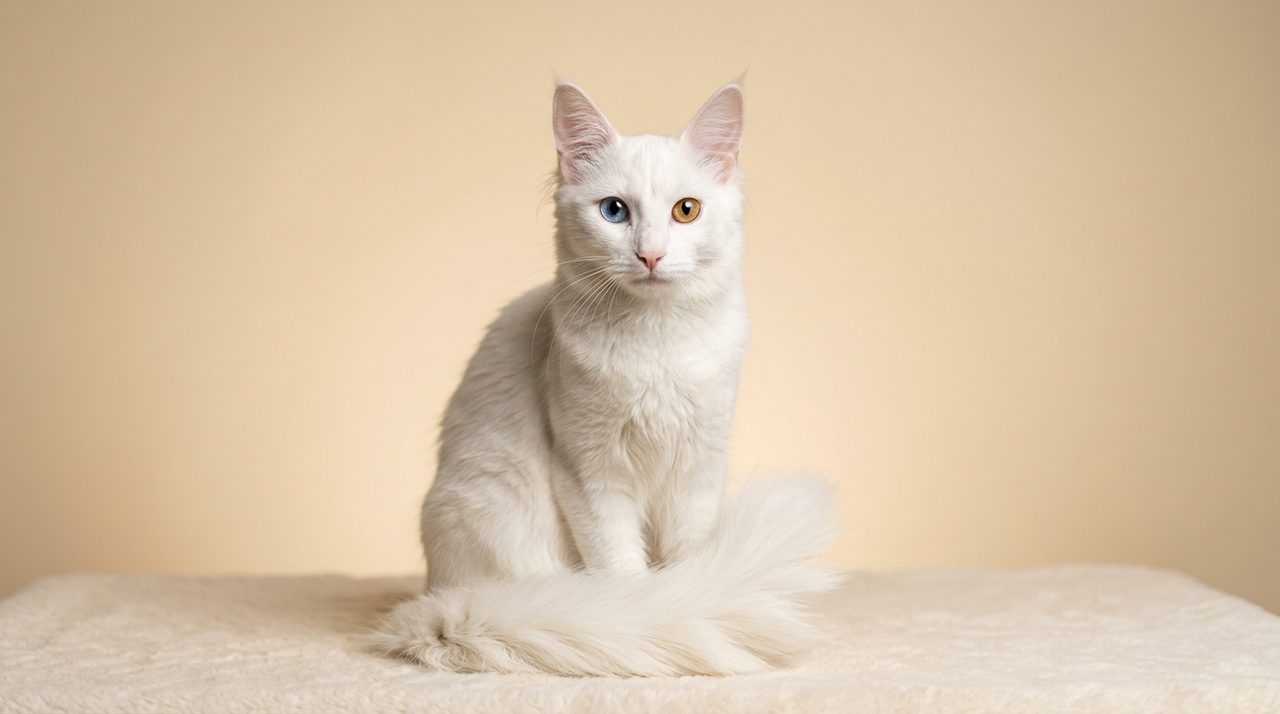
1. Turkish Angora
The Turkish Angora is the white cat people picture first. For once, the picture is right. The breed comes from the Ankara region of Turkey, where white has been the classic color for centuries and the national zoo still keeps a breeding program for the original lines. The Angora differs from a generic white longhair in coat and bone. The fur is fine, silky, and often single-coated, closer to spun silk than wool, over a slender body with a long plume tail. Blue, amber, and odd eyes all occur in the breed, and all are accepted. A white cat with that silk texture and a dancer's build points to the Turkish Angora before any other name. Most fluffy white rescues carry a wool undercoat instead, which is why the Angora guess fails more often than it lands.
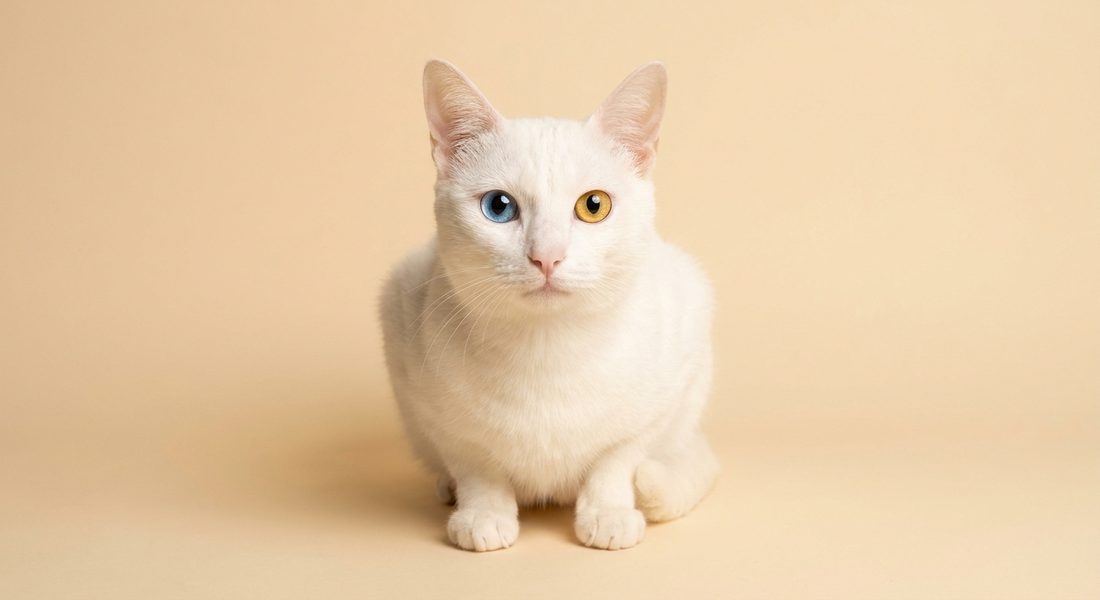
2. Khao Manee
The Khao Manee is the breed that makes white cat owners suspicious of their own cats. It comes from Thailand, the name means "white gem," and the only accepted color is pure white, with a short coat and blue, gold, or odd eyes. Thai breeders have kept the Khao Manee for centuries, and it appears in the ancient Tamra Maew poems as a bringer of luck. Outside Thailand the breed is rare, expensive, and held by a small circle of fanciers. That rarity cuts both ways. A shelter cat labeled Khao Manee is almost never one, because the people who own real ones are not giving them away. If your cat came from a registered breeder, Khao Manee is worth a careful look. If it came from a shelter with a clever name tag, treat the label as a fantasy and judge the cat on structure instead.
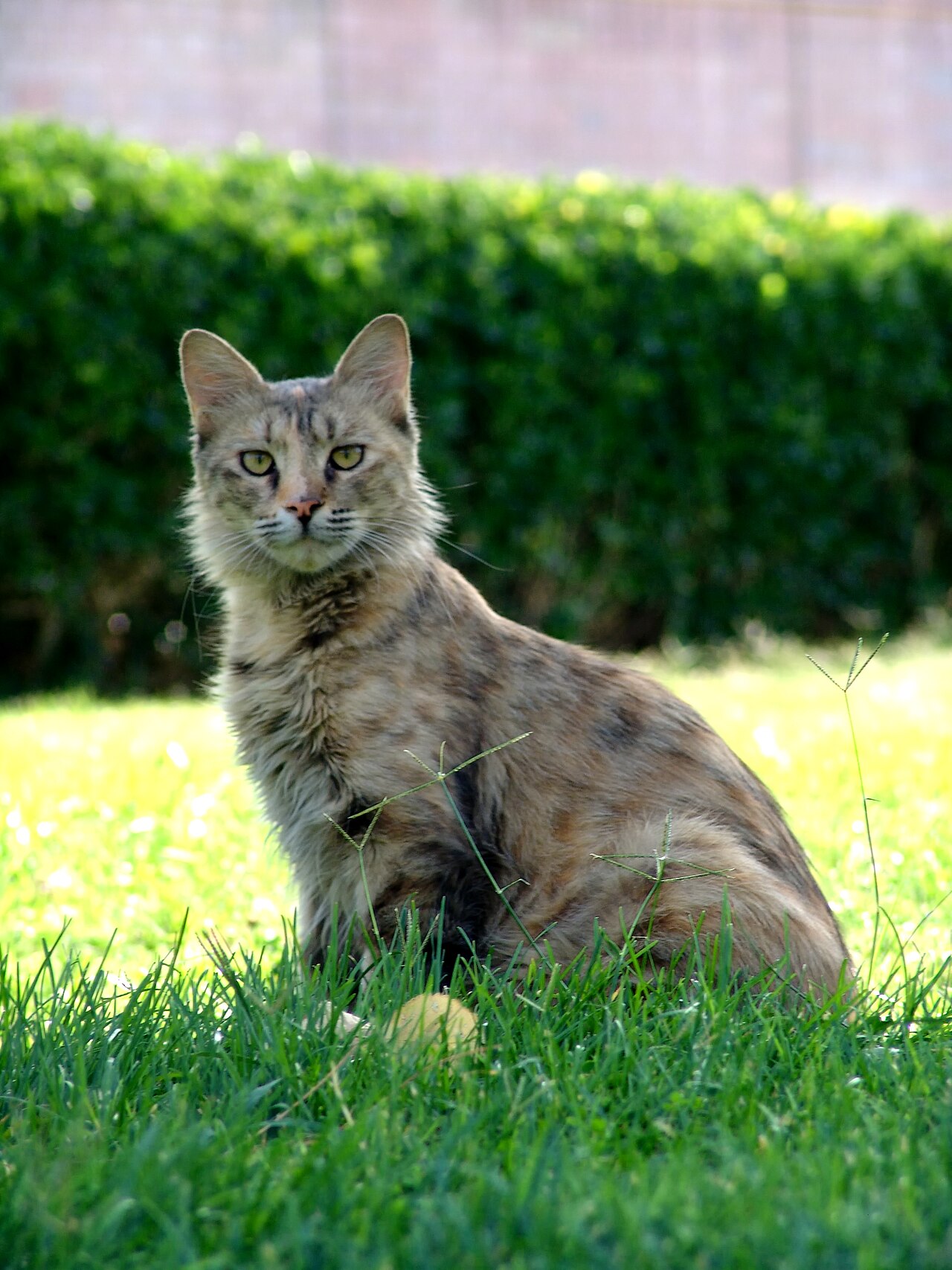
3. Persian
White is one of the most common Persian colors, so the white Persian is not a rarity in the way a white Angora is. Identification runs entirely through the face. The Persian has a flat profile, a short nose, a round head, and small, low-set ears, and the long cottony coat mats within two missed days of brushing. Eye color runs copper or blue, and odd eyes show up in white Persians as well. A white cat with a pushed-in face and wool that needs daily grooming names Persian on its own. The white is incidental there, exactly as it is for black and orange Persians.
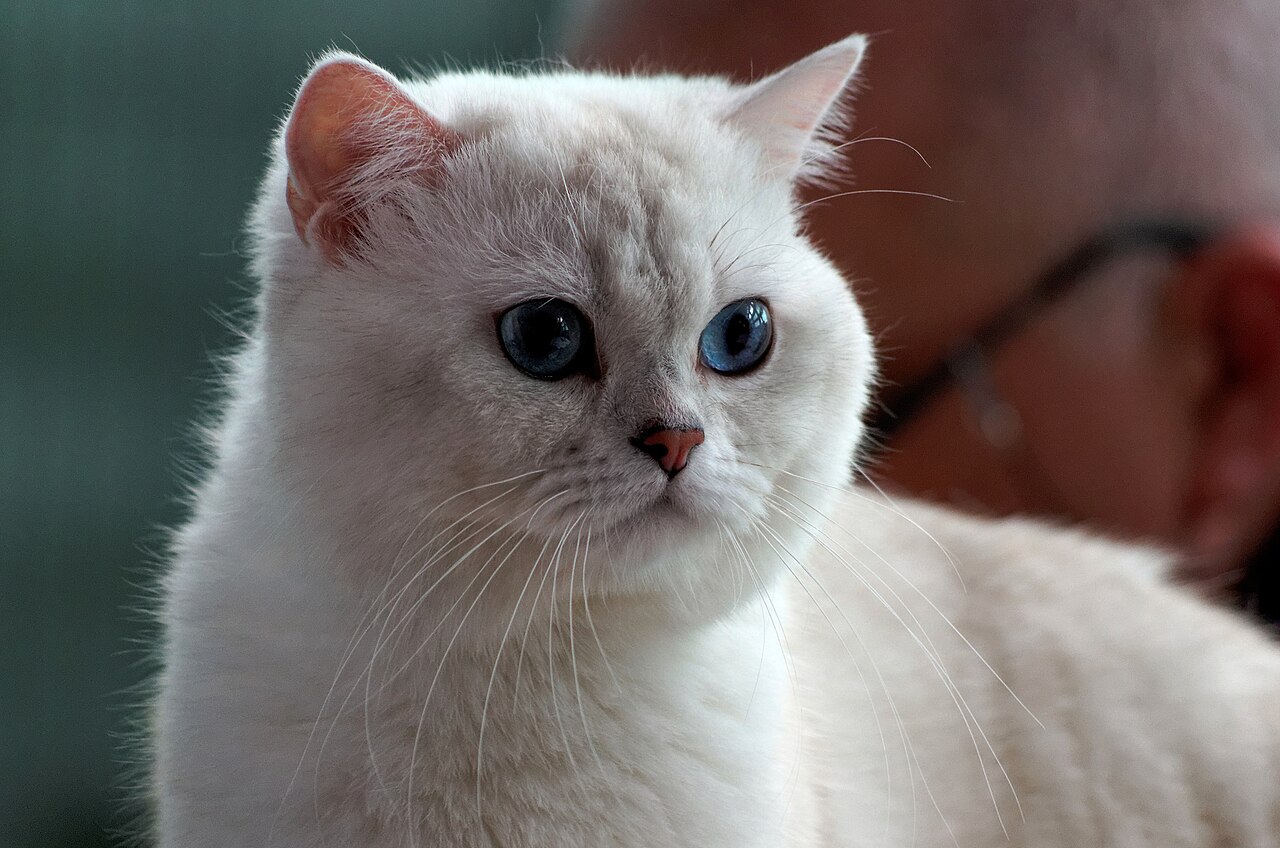
4. British Shorthair
The white British Shorthair answers its own question: what if the cat is white, short-coated, and built like a velvet brick? The head is round, the cheeks are full, and the coat is dense and plush, standing slightly off the body like pile on a teddy bear. Eye color is the sharpest tell here, because white British Shorthairs usually carry copper or gold, and a white coat with copper eyes points back to British ancestry faster than any other clue. The cat should also feel heavy for its size when picked up. Those markers together make British Shorthair a confident answer. If the coat lies flat and the cat feels light, keep looking.
5. Maine Coon
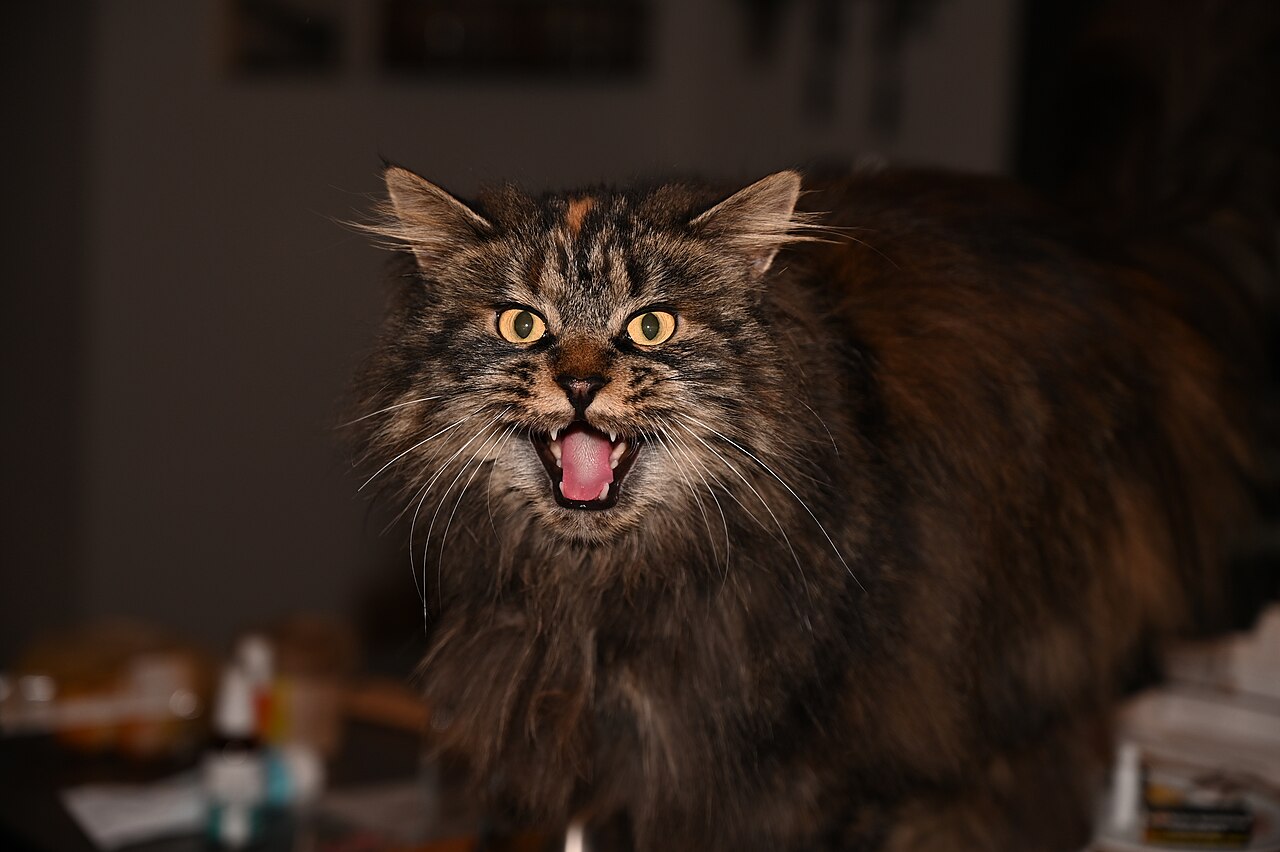
White Maine Coons are less common than tabby or red ones, but the color is accepted, and a big white longhair turns out to be exactly that more often than people expect. The rules are the same as for any Maine Coon: rectangular body, square muzzle, broad chest, ear tufts, and a shaggy double coat. A white Maine Coon over 15 pounds is hard to miss once you see the scale. The honest catch is that most big white longhairs are simply domestic longhairs that grew up, so size alone proves nothing. Put the 15-plus-pound frame together with tufted paws, lynx tips, and a full bushy tail, and Maine Coon genes are doing real work somewhere in the family tree.
White cat breed comparison at a glance
| Feature | Turkish Angora | Khao Manee | Persian | British Shorthair | Maine Coon |
|---|---|---|---|---|---|
| Coat | Long, silky, single coat | Short, fine | Long, cottony | Short, dense plush | Long, shaggy double coat |
| Face Shape | Wedge, fine bone | Wedge or oval | Flat, round | Round, full cheeks | Square muzzle |
| Eye Color | Blue, amber, odd | Blue, gold, odd | Copper or blue | Copper or gold | Gold, green, or copper |
| Key Tell | Silk coat + plume tail | All-white only + rarity | Flat face | Round head + copper eyes | Size + ear tufts |
White cat breeds: the wider field
Five names carry the weight, but white is accepted in far more registries than people expect, and two of those extras cause most of the confusion. The Oriental Shorthair accepts white, and the result is the opposite silhouette of everything above: a lean, tubular cat with huge ears and green, blue, or odd eyes. The Turkish Van looks white but is not solid white, since the body is white with color confined to the head and tail, a pattern distinctive enough to carry its own name, the van pattern. A white Siberian exists too, though the triple coat and heavy ruff usually identify it before color gets a vote, and the Exotic Shorthair delivers the Persian face in a wash-and-go coat.
Two notes close out the field. First, a colored patch on the head, or a pale cream body with darker points, is not solid white, and the pattern check outranks every breed check below it, because pattern is the strongest clue a white-ish cat still carries. Second, most white cats never find a matching breed, and that is the statistically correct outcome rather than a failure of the method. Orange and black cats run into the same wall: a color is not a breed, and a domestic cat wearing that color is not a pedigree that failed to happen.
White cats with blue eyes: what the ears tell you
Blue eyes are the trait that makes people search, and the research on white cats with blue eyes doubles as an identification shortcut. The dominant white gene masks the coat and also disrupts the cells that carry pigment into the inner ear, which is why hearing loss shows up in white cats at all. Large studies of white cats put deafness at roughly 17 to 22 percent when both eyes are non-blue, about 40 percent with one blue eye, and 65 to 85 percent with two. In odd-eyed cats the deafness usually sits on the blue-eyed side, a finding specific enough to feel diagnostic even though it is probabilistic.
Hearing status is a clue, not a verdict. A blue-eyed white cat is more likely to carry the extreme white gene, which is the gene behind the classic white breeds, while a white cat with two copper eyes and sharp hearing is more likely to be an ordinary domestic. Neither outcome names a breed, and that matters. Blue eyes on a white cat do not mean Siamese, and they do not mean Khao Manee. They mean the white gene did its work on the eyes as well as the coat.
One pattern deserves a name here, because it gets miscalled daily: the pointed cat. Siamese, Himalayan, Balinese, and Ragdoll bodies are a pale cream that photographs as white, and their blue eyes come from the colorpoint allele, a different gene with no link to deafness. Pointed cats keep dark color on the ears, face, paws, and tail. If your "white" cat has a cream body, a dark mask, and blue eyes, you are looking at a pointed breed or mix, and the coat patterns guide shows the two looks side by side.
How to tell what breed your white cat is: follow the markers
Skip the guesswork and move through the markers in order. Each step cuts the list, and most white cats stop at "domestic", which is a real answer, not a failure.
Step 1: Check for points first.
Pale cream body, darker ears and mask, blue eyes: that is the pointed pattern, and the field is Siamese, Himalayan, Balinese, or Ragdoll. A solid white coat shows no contrast anywhere, in any light.
Step 2: Coat length and texture.
Long and silky with a plume tail: Turkish Angora territory. Long and cottony with a flat face: Persian. Long and shaggy on a big frame: Maine Coon. Short and plush with a round head: British Shorthair. Short and fine on a lean body: Oriental Shorthair.
Step 3: Now the eyes.
Copper eyes point back toward British or Persian ancestry. Blue eyes push toward the white-gene breeds, Angora and Khao Manee. Odd eyes are common in white cats and simply confirm the white gene is at work. Eye color alone never names a breed; it confirms a hypothesis or kills one.
Step 4: Hearing and behavior.
A white cat that does not react to sounds, sleeps through doors opening, or startles at touch should get a hearing check, because deafness changes how a cat behaves and how you protect it. Your vet can run a BAER test, and the result matters for care far more than for breed naming.
Photographing a white cat for identification
White coats punish cameras. Highlights blow out, fur texture disappears, and the face flattens into a white oval. Shoot near a window in soft daylight, underexpose slightly so detail survives in the coat, and frame a side profile so head shape, ear set, and body length are all visible. Keep the background darker than the cat, the reverse of the trick that works for black cats, and leave the flash off.
Got a clean profile? Upload it to the cat breed identifier. The model reads coat length, ear set, eye color, and body proportions straight past the white. The photo quality check is free, and the full AI report, breed verdict with the reasoning behind it and 40-plus visual markers, is a one-time €5.99. White cats are the case where the upload pays for itself, because the color gives the model nothing and the structure gives everything.
Frequently Asked Questions
What breed is a white cat with blue eyes?
Most likely a domestic shorthair or longhair carrying the dominant white gene. Blue eyes are a side effect of that gene, not a breed marker. When it is a purebred, the usual names are Turkish Angora, Khao Manee, and white Persian, but blue eyes alone do not point to any one of them. If the body is cream with darker points, the cat is pointed, Siamese-family, not white.
Are white cats rare?
No. About 5 percent of cats are white, so a white cat is a common sight. What is rare is a purebred white cat. The dominant white gene is common; the breed labels attached to it are not. A white Angora or Khao Manee from a breeder is genuinely uncommon, while a white domestic from a shelter is an everyday thing.
How can I tell what breed my white cat is?
Skip the coat and check, in order: pointed coloring, coat length and texture, body shape, eye color, and hearing. Most white cats end at domestic shorthair or longhair. A photo scan on the identifier checks the same markers in seconds, and the quality check is free.
Are all white cats with blue eyes deaf?
No. Studies put deafness at roughly 17 to 22 percent for white cats with non-blue eyes, about 40 percent with one blue eye, and 65 to 85 percent with two blue eyes. Many blue-eyed white cats hear perfectly. If you suspect hearing loss, ask your vet for a BAER test rather than assuming.
White Coat, Clear Answer
Upload a profile photo to Furriq's cat breed identifier. The quality check is free, and the full AI report, a one-time €5.99, returns the breed verdict with the reasoning and 40-plus visual markers. On a white cat the answer lives in the eyes, the ears, and the body; the coat can stay out of it.
Keep reading
All articlesIdentification
How to Identify a Mixed Breed Cat: 7 Mixes
Identify your mixed breed cat: Birman, Turkish Angora, Abyssinian, Maine Coon, Siamese, and Ragdoll mixes. What each looks like and how to count clues.
9 min read
Identification
Cats That Look Like Bengals: 5 Breeds Compared
Egyptian Mau, Ocicat, or Savannah? Compare 5 breeds that mimic Bengal rosettes, build, and wild expression, with photos and trait checklists.
6 min read
Identification
Cats That Look Like Russian Blues
Chartreux, British Shorthair, or Korat? Compare the 4 blue-gray breeds confused with Russian Blues: eye color, coat sheen, body type, and temperament.
5 min read
Still not sure what your cat is?
Stop guessing from photos and text. Upload one clear photo and the AI checks 40+ visual markers in seconds. The quality check is free; the full AI report is €5.99, one-time. Your photo is never stored.
Scan your cat's photo