
Let us get one thing out of the way: "orange cat" is not a breed. It is a color. The gene that produces orange fur , the O gene on the X chromosome , can show up in purebreds, mixed breeds, and everything in between. About 80% of orange cats are male. The reason is simple genetics: males only need one copy of the O gene to be orange. Females need two.
So when someone asks "what breed is my orange cat," the real question is "which breeds commonly produce orange coats, and what else should I look for to narrow it down?" Here are the five most likely answers, with the visual clues that distinguish them.
1. Maine Coon
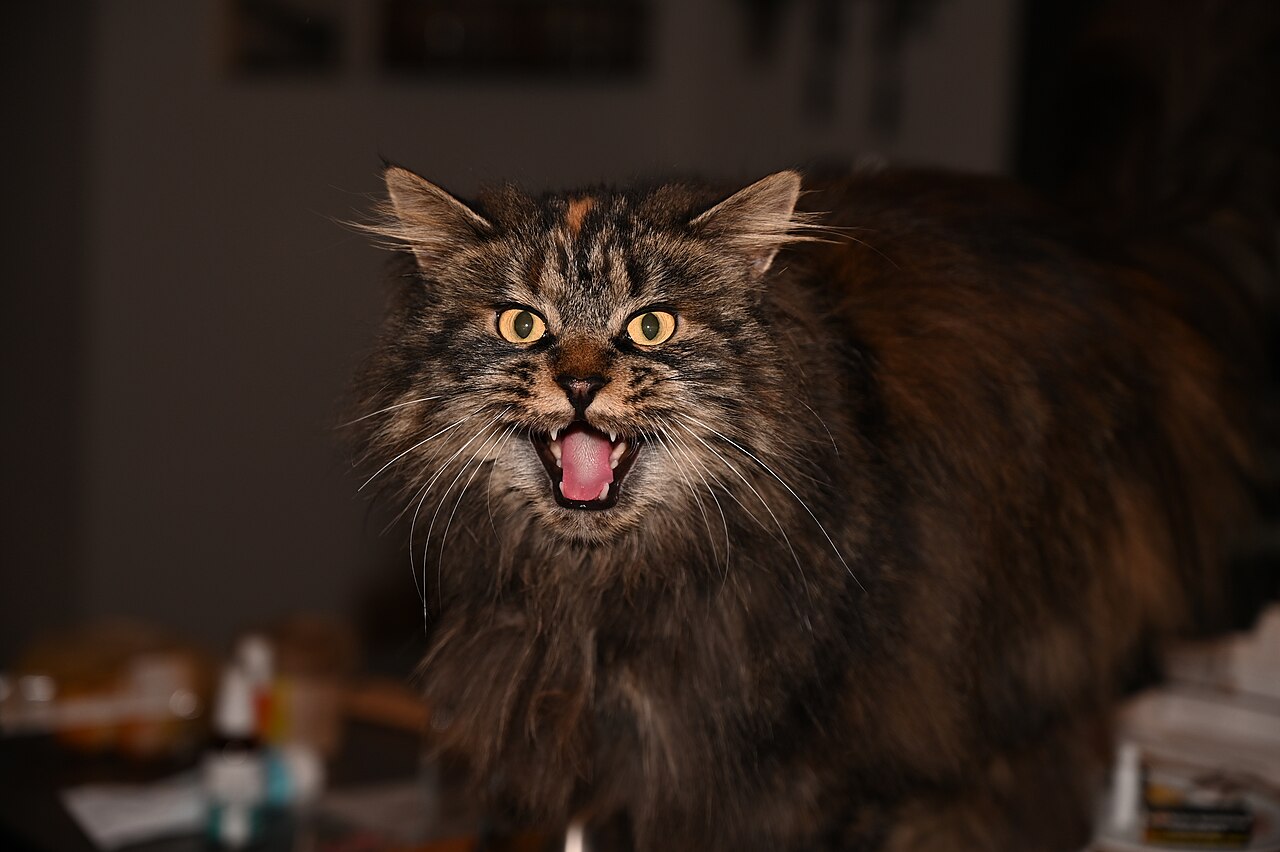
Orange Maine Coons usually show the classic tabby pattern , thick swirling stripes on a warm ginger base. But the color is the least interesting thing about them. Look at the size. A male Maine Coon can hit 18 pounds. If your orange cat is large, rectangular, and has ear tufts, you are in Maine Coon territory. The combination of orange tabby plus massive bone structure plus lynx tips on the ears is a three-point signal that narrows things down fast.
Orange is a common color in Maine Coons. Breeders produce it deliberately. It is not rare.
2. Persian
An orange Persian looks like a fuzzy orange basketball with a face. The flat profile, short nose, and round head are unmistakable. Orange Persians come in solid (no stripes) and tabby varieties. The solid orange ones are sometimes called "red" in show terminology. If your orange cat has a pushed-in face and a thick, cottony coat, Persian is the top candidate. No other breed combines orange, flat face, and that specific coat texture.
3. Abyssinian
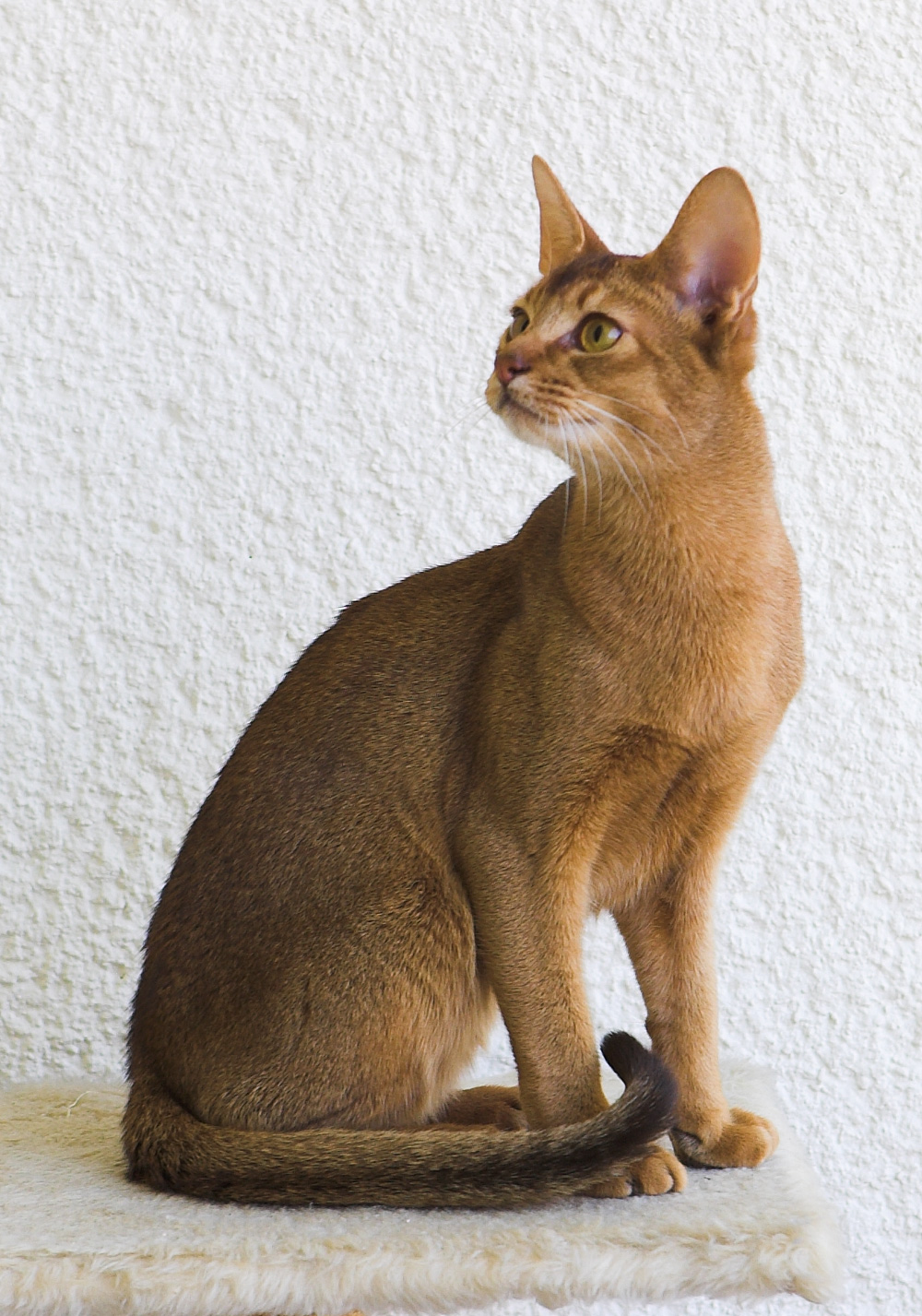
Abyssinians are not orange in the solid sense. They are "ruddy" or "sorrel" , a warm, reddish-brown ticked coat where each hair has bands of color. The effect is a glowing, almost fox-like coat with no stripes on the body. If your cat looks orange-ish but with a subtle, heathered texture rather than bold stripes, check Abyssinian. The body is lean and muscular, the ears are large, and the face is wedge-shaped. A ticked orange coat plus an athletic build is a strong Abyssinian signal.
4. British Shorthair
British Shorthairs in orange usually show the classic tabby pattern on a plush, dense coat. The body is the tell: compact, round, heavy. A British Shorthair feels like a solid block of cat. The face is round with full cheeks, and the eyes are large and copper or gold. If your orange cat is built like a tank with a teddy bear face, British Shorthair is worth a hard look. The combination of orange tabby plus cobby body plus round face narrows the field considerably.
5. Exotic Shorthair
Think of the Exotic Shorthair as a Persian in a short coat. Same flat face, same round body, but with a plush, easy-care coat. Orange Exotics are common, and they look like someone photoshopped a Persian's face onto a British Shorthair's body. The flat face is the dead giveaway. No other shorthair breed with a flat face and orange coat exists in significant numbers. If your orange cat has a squished face but short fur, Exotic Shorthair is a strong bet.
Orange cat breed comparison at a glance
| Feature | Maine Coon | Persian | Abyssinian | British Shorthair | Exotic Shorthair |
|---|---|---|---|---|---|
| Body Size | Large (15-25 lbs) | Medium (7-12 lbs) | Medium (6-10 lbs) | Medium (9-17 lbs) | Medium (7-14 lbs) |
| Face Shape | Square muzzle | Flat, round | Wedge-shaped | Round, full cheeks | Flat, round |
| Coat Length | Long, shaggy | Long, cottony | Short, ticked | Short, plush | Short, plush |
| Orange Pattern | Classic tabby | Solid or tabby | Ruddy/sorrel ticked | Classic tabby | Solid or tabby |
| Key Tell | Ear tufts + size | Flat face + coat texture | Ticked coat + lean body | Round face + dense coat | Flat face + short coat |
What if none of these fit?
Most orange cats are not purebreds. They are domestic shorthairs or domestic longhairs with an orange coat. And that is fine. The orange gene is common in the general cat population. A random-bred orange cat is just as orange as a pedigreed one.
The question is whether the non-color features , body type, face shape, ear shape, coat texture , point toward a specific breed. If they do not, you have a handsome orange domestic cat. If they do, you have a hypothesis worth testing.
Try our cat breed identifier with a clear photo. It checks 40+ markers beyond coat color. Or read the full visual identification guide for a step-by-step method that works on any cat, orange or not.
Frequently Asked Questions
What breed is my orange cat?
Orange is a color, not a breed. About 80% of orange cats are male, and most are domestic shorthairs. When the coat points to a specific breed, the usual candidates are Maine Coon, Persian, Abyssinian, British Shorthair, and Exotic Shorthair, distinguished by body size, face shape, and coat texture rather than the orange itself.
Are most orange cats male?
Yes, roughly 80%. The orange gene sits on the X chromosome. Males need one copy to be orange, while females need two, which makes orange females rarer. It is the same genetics that make calico and tortoiseshell cats almost always female.
What is an orange tabby cat's breed?
Orange tabby describes a color and pattern, not a breed. The classic tabby pattern (swirling stripes on a ginger base) shows up across Maine Coons, British Shorthairs, and domestic shorthairs alike. Look past the pattern to body size, face shape, and ear structure for breed clues.
Are orange cats rare?
No. Orange is common in the general cat population, especially in males. What is rare is an orange purebred: solid orange is accepted in some breeds but breed-specific color rules vary, so a random orange cat is far more likely to be a domestic shorthair than a pedigreed breed.
What breed of cat has orange eyes?
Copper or gold eyes are common in British Shorthairs, Bombay, and many orange-coated cats, but eye color is a weak breed signal on its own. Pair it with body type and coat texture: a large rectangular cat with copper eyes points to Maine Coon, a cobby round cat to British Shorthair.
Keep reading
All articlesIdentification
How to Identify a Mixed Breed Cat: 7 Common Mixes Explained
Identify your mixed breed cat: Birman, Turkish Angora, Abyssinian, Maine Coon, Siamese, and Ragdoll mixes. What each mix actually looks like and how to count the clues.
9 min read
Identification
Cats That Look Like Bengals: 5 Breeds Compared
Egyptian Mau, Ocicat, or Savannah? Compare 5 breeds that mimic Bengal rosettes, athletic build, and wild expression — side-by-side photos and trait checklists inside.
6 min read
Identification
Cats That Look Like British Shorthairs
Chartreux, Scottish Fold, or Russian Blue? Compare the 4 breeds most often confused with British Shorthairs — differences in face shape, coat texture, eye color, and temperament.
5 min read
Still not sure what your cat is?
Stop guessing from photos and text. Upload one clear photo and the AI checks 40+ visual markers in seconds. Free, no sign-up, and your photo is never stored.
🐱 Free cat breed scan