

The Lykoi looks like a tiny werewolf. The breed name comes from the Greek word for wolf, and one look at the roan coat explains why: patches of colored hairs mixed with white, sparse in places, with bare skin around the eyes, muzzle, and sometimes the body. The look is striking. The coat also changes the health picture: less hair means less protection.
The Lykoi was developed around 2011 from a natural mutation that causes partial hair loss, a condition called hypotrichosis. The founding cats were checked thoroughly, from cardiac exams to dermatology consultations, before the breed moved forward. Lykois are still reasonably healthy overall. But the sparse coat puts them in a category closer to hairless breeds like the Sphynx, the Donskoy, and the Peterbald, and that changes what you need to watch.
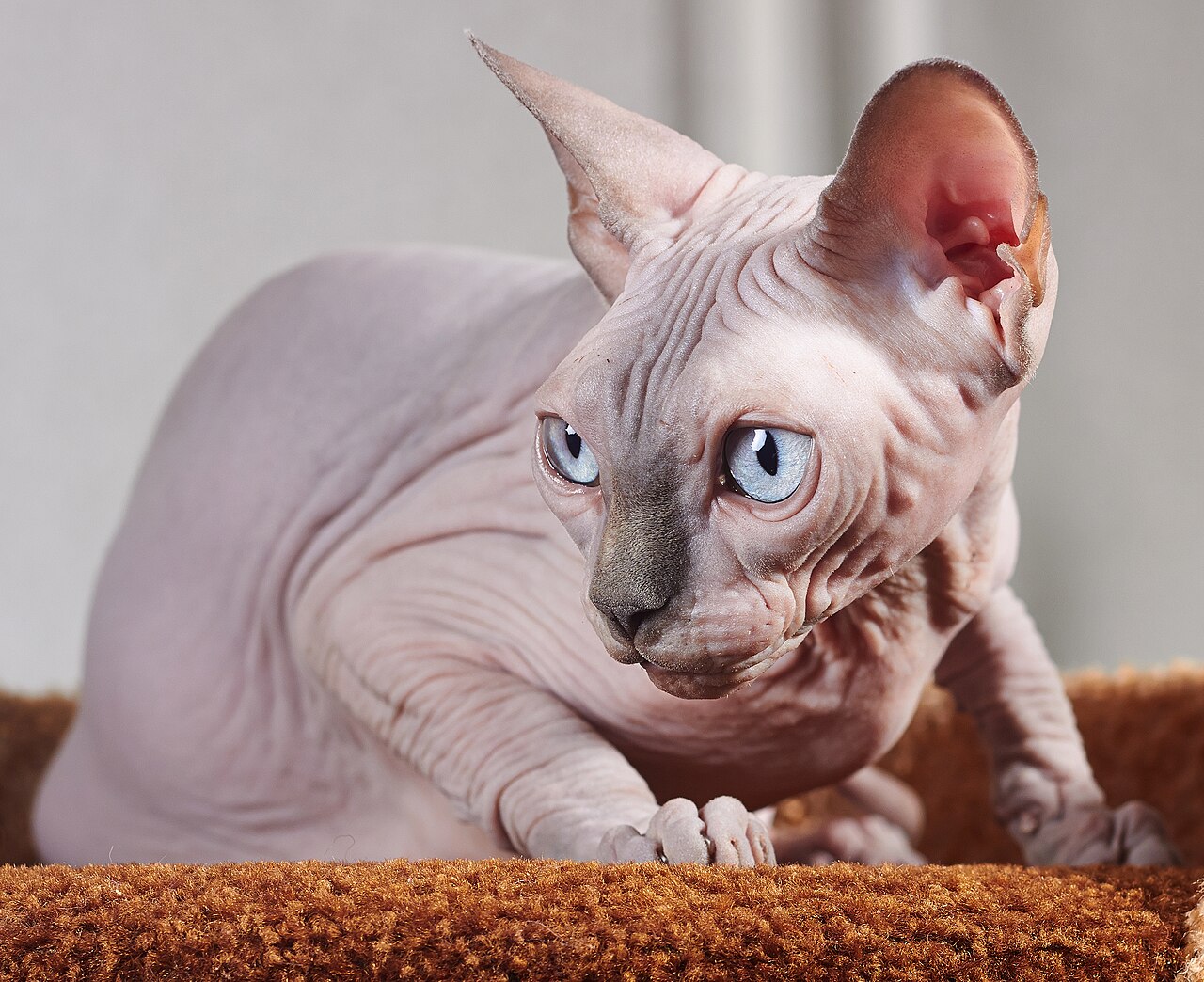
1. Skin Infections and Allergies
With less hair acting as a barrier, allergens contact the skin more easily. Lykois have a higher risk of skin infections and allergic reactions than a standard domestic shorthair. Many also develop a condition called lymphocytic mural folliculitis, where the immune system reacts around the hair follicles. The signs: excessive hair loss, itching, scabbing, and crusted skin.
Treatment varies and may include antibiotics, anti-inflammatories, steroids, medicated shampoos, and fish oil supplements. If your Lykoi is scratching constantly or developing crusts, see a vet rather than guessing at home remedies.
2. Sunburn
A full coat filters the sun. The Lykoi does not have that filter, so sunburn is a real risk for cats that go outside or spend hours in a sunny window. The burn typically hits the ear tips, the nose, and around the eyes, the same thin-haired zones that burn on hairless cats.
Sunburn is not just uncomfortable. It raises the risk of skin cancer, particularly squamous cell carcinoma. Keep Lykois out of direct UV where you can, or get them used to protective clothing if they spend time outdoors.
3. Cancer Risk
Squamous cell carcinoma is one of the more common skin cancers in cats, and it prefers areas with thin or no hair: the ears and around the eyes. Because Lykois have thinner-haired body regions and sun exposure adds risk, they sit higher in the risk pool for this specific cancer.
Other cancers can affect Lykois too, including lymphoma, mast cell tumors, and nasal tumors. None of this means every Lykoi will get cancer. It means skin checks at the vet should be routine, and any new bump, crust, or sore that does not heal deserves a look.
4. Osteoarthritis
Selective breeding gave some Lykois achondroplastic dwarfism, the same short-limbed trait seen in Munchkin cats and Corgis. Shorter limbs can come with angular limb deformities, and both conditions often lead to arthritis. Carrying extra weight makes arthritis worse.
Treatments range from monthly injections like Solensia to gentler options like acupuncture and joint supplements. If your Lykoi hesitates before jumping, climbs less, or slows down on stairs, that is a mobility check worth booking.
5. Temperature Regulation
The coat insulates. A Lykoi has less of it, so like hairless breeds it struggles to regulate body temperature. In cooler weather or a cold room, the cat loses heat faster than a normal-coated cat. Hypothermia is the concern.
Practical fixes are simple: a shirt or sweater, plenty of blankets, and keeping the home warm in winter. If your Lykoi feels cold to the touch and is lethargic or shivering, warm it up gradually and check in with a vet if it does not recover.
Lykoi health issues at a glance
| Issue | Why It Matters | Key Sign |
|---|---|---|
| Skin infections | Thin coat lets allergens through | Itching, crusted skin |
| Sunburn | No coat to filter UV | Red ears, nose tip |
| Skin cancer | UV exposure on bare skin | Non-healing sores |
| Osteoarthritis | Short limbs from dwarfism gene | Less jumping |
| Temperature | Little insulation | Shivering, seeking warmth |
Is your cat actually a Lykoi?
The werewolf look is specific: a roan coat with mixed colored and white hairs, sparse patches, bare skin around the eyes and muzzle, and an overall muted gray-brown tone. It is also genuinely rare. Most cats described as "wolf cats" are ordinary shorthairs with patchy coats, a different thing entirely.
If your cat has that sparse, roan-patterned coat, our cat breed identifier can compare the visual markers against the Lykoi breed profile. And because coat problems are central to this breed, you may also want the coat patterns guide to see how roan differs from tabby and ticked coats.
Beyond the 5 Key Issues: Other Health Concerns
The five problems above are the ones most tied to the Lykoi coat and build. Three more concerns are worth knowing, even when they are less dramatic.
Molting and ingrown hairs
The Lykoi coat sheds in cycles. Coverage can swing from almost fully coated to nearly naked over the year, and molting can bring ingrown hairs with it. The CFA lists this as a natural feature to watch rather than an illness. Keep grooming gentle, and see a vet if a spot looks red or infected.
Allergies and the hypoallergenic question
Despite the sparse coat, Lykois still produce the Fel d 1 allergen, the protein that triggers most cat allergies. Less hair may mean less dander spread around the home, but the breed is not safe for most allergy sufferers. If someone in the house is allergic, test that assumption before committing.
Lifespan and quality of life
A Lykoi typically lives 12 to 15 years. Sun protection, warmth, and prompt attention to skin issues support a healthy life, the same care that prevents the bigger problems above.
⚕️ Furriq Health Screen is a visual observation tool, not a veterinary diagnosis. This analysis does not replace professional veterinary advice. Always consult a licensed veterinarian for any health concerns about your cat.
Related breeds
All breedsKeep reading
All articlesHealth
Sphynx Cat Health Problems: 6 Issues
Sphynx cats face real health risks: HCM, myasthenia, skin oil buildup, dental disease, sunburn, and temperature issues. Here is what to watch.
6 min read
Health
British Shorthair Cat Health Problems: 5 Issues
British Shorthairs carry real inherited risks: HCM, polycystic kidney disease, obesity, dental crowding, and hemophilia B. Here is what to watch.
5 min read
Health
Bengal Cat Health Problems: 5 Issues
Bengals face PRA, FIP, flat-chested kitten syndrome, separation anxiety, and skin sensitivity. Here is what to watch in this high-energy breed.
5 min read
Still not sure what your cat is?
Stop guessing from photos and text. Upload one clear photo and the AI checks 40+ visual markers in seconds. Free, no sign-up, and your photo is never stored.
🐱 Free cat breed scan