
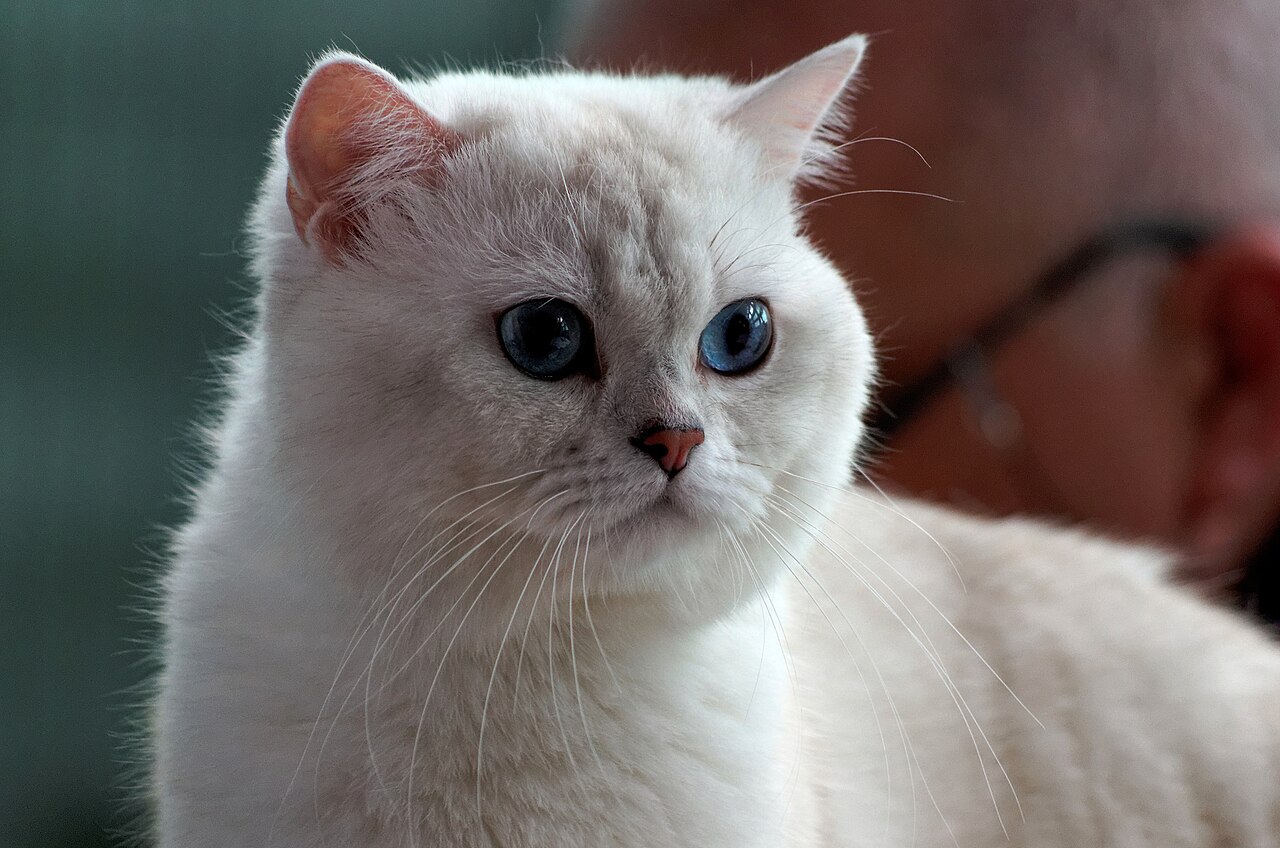

The British Shorthair is the cat for people who want a roommate, not a shadow. It will sit near you for hours, rarely meow, and accept being ignored with total dignity. That calm is exactly why the breed is so popular, and exactly what gets owners into trouble, because a cat that never asks for anything will happily eat everything. Obesity is the number one health problem in the breed, and it is preventable with a food scale and a schedule.
You already know the look: a round face with full cheeks, big copper eyes, and a coat so plush it stands away from the body like velvet. The solid blue-gray version, the British Blue, is one of the most recognized cats in the world. Here is what it actually takes to keep one healthy for the 12 to 17 years these cats usually live.
What a British Shorthair Looks Like
The breed data tells a consistent story. Round head, full cheeks, short nose with a visible stop between forehead and nose. Large, round copper or gold eyes, blue in the colorpoint varieties. A dense, plush double coat that stands away from the body, feels like thick velvet or wool, and sheds like a snow globe in spring and fall. A stocky, cobby body with a broad chest, short legs, and round paws. A medium-short, thick tail with a rounded tip.
Adults run 9 to 18 lbs, and they take their time getting there. British Shorthairs mature slowly, reaching full physical and emotional development somewhere between 3 and 5 years. A 2-year-old British Shorthair still has kitten behavior in it. Expect that, and do not panic when your 1-year-old acts nothing like the serene cat in the photos.
Grooming: The Plush Coat Is Work
Brush two to three times a week with a slicker brush or grooming glove. That is the minimum. During spring and fall shedding, brush daily, because the loose undercoat comes out in drifts and your furniture is not part of the plan. The coat resists matting better than longhair coats, which is the one mercy here. Dead hair still needs help leaving, so skipping the brush for a week means fur tumbleweeds in every corner.
Dental care matters more than people expect. The short, brachycephalic face crowds the teeth, which invites gum disease. Brush two to three times a week with enzymatic cat toothpaste, start the routine in kittenhood, and budget for annual professional cleanings.
Diet: Measure Everything
Portion control is the single most important part of British Shorthair care. The breed is famously easygoing, which means it will not run off extra calories, and it will never say no to food. Feed measured meals of high-quality food twice a day. Resist free-feeding. Keep treats under 10% of daily calories. Weigh your cat monthly and adjust portions before the pounds arrive, because an overweight British Shorthair is a heart problem waiting to happen. The cat weight calculator gives you the breed's healthy adult range to compare those monthly weigh-ins against.
Exercise: Gentle Encouragement
These are not climbers. They prefer ground-level play, so two short play sessions a day with wand toys, balls, or puzzle feeders do the job without overwhelming anyone. A few low perches and toys that reward movement keep the weight off. Do not buy a 6-foot cat tree expecting gymnastics. Buy one anyway, because they will use the bottom shelf.
Health: Screen the Heart, Test the Kidneys
Hypertrophic cardiomyopathy, HCM, is the breed's most significant hereditary concern. Breeding cats should get regular cardiac screening, and any British Shorthair should get an annual exam that includes a heart check. Polycystic kidney disease, PKD, came in through Persian outcrossing, and a DNA test settles it. Two rarer concerns exist: hemophilia B in some lines, and dental disease from the crowded mouth. Annual exams catch these early, which matters because the breed lives a long time when managed well.
Is Your Cat Actually a British Shorthair?
The round face and plush coat are the strongest signals, but the breed gets over-claimed all the time. The American Shorthair has a longer muzzle and a coat that lies flat. The Chartreux is always blue-gray with a more trapezoidal head. The Scottish Fold shares the round face but has folded ears. If your cat has the round head, the copper eyes, and the springy coat, start with the British Shorthair breed profile and compare the markers one by one.
For a second opinion, upload a clear side-profile photo to the Furriq cat breed scanner. It scores face shape, ear set, and body type, the same features this guide uses, and it works on mixes too. Know this: the scanner reads visible clues, not DNA, and a British Shorthair mix will often keep the round face while losing the plush coat.
If your cat already matches, the personality guide and the breed profile health notes cover the rest. And because people mix up the round-faced and fluffy breeds constantly, the Ragdoll care guide and the Siberian care guide are worth a skim before you settle on an answer.
FAQ
Are British Shorthairs hypoallergenic?
No. They produce normal levels of the Fel d 1 allergen, and the dense double coat sheds dander and fur in volume. The plush coat feels wonderful and releases plenty of allergens into the home. Spend time with the breed before committing if allergies are a concern.
Do British Shorthairs shed a lot?
Yes. Heavy shedding year-round, worse in spring and fall. Two to three brushings a week, daily in shedding season, keeps the loose undercoat off your clothes and cuts down hairballs.
Why will my British Shorthair not sit on my lap?
Because it is not that kind of cat. The breed is affectionate but not needy, happy to share the room without demanding lap time. They bond by proximity. If your cat chooses the armchair next to you over your lap, that is the breed working as designed.
Keep reading
All articlesBreed Care
Ragdoll Cat Care Guide: Grooming, Diet & Health
Ragdoll care in practice: brushing the silky semi-long coat, feeding a big laid-back cat without weight gain, indoor-only rules, and cardiac screening.
6 min read
Breed Care
Siberian Cat Care Guide: Grooming & Diet
Siberian cat care: taming the triple coat through spring shed, high-protein meals for a heavy frame, climbing enrichment, and the hypoallergenic question.
6 min read
Cat Health
Cat Breed DNA Test: Accuracy, Cost & What It Shows
What a cat breed DNA test can and cannot show, how accurate the results are, what kits cost, and when a free photo check tells you enough.
8 min read
Still not sure what your cat is?
Stop guessing from photos and text. Upload one clear photo and the AI checks 40+ visual markers in seconds. Free, no sign-up, and your photo is never stored.
Free cat breed scan