

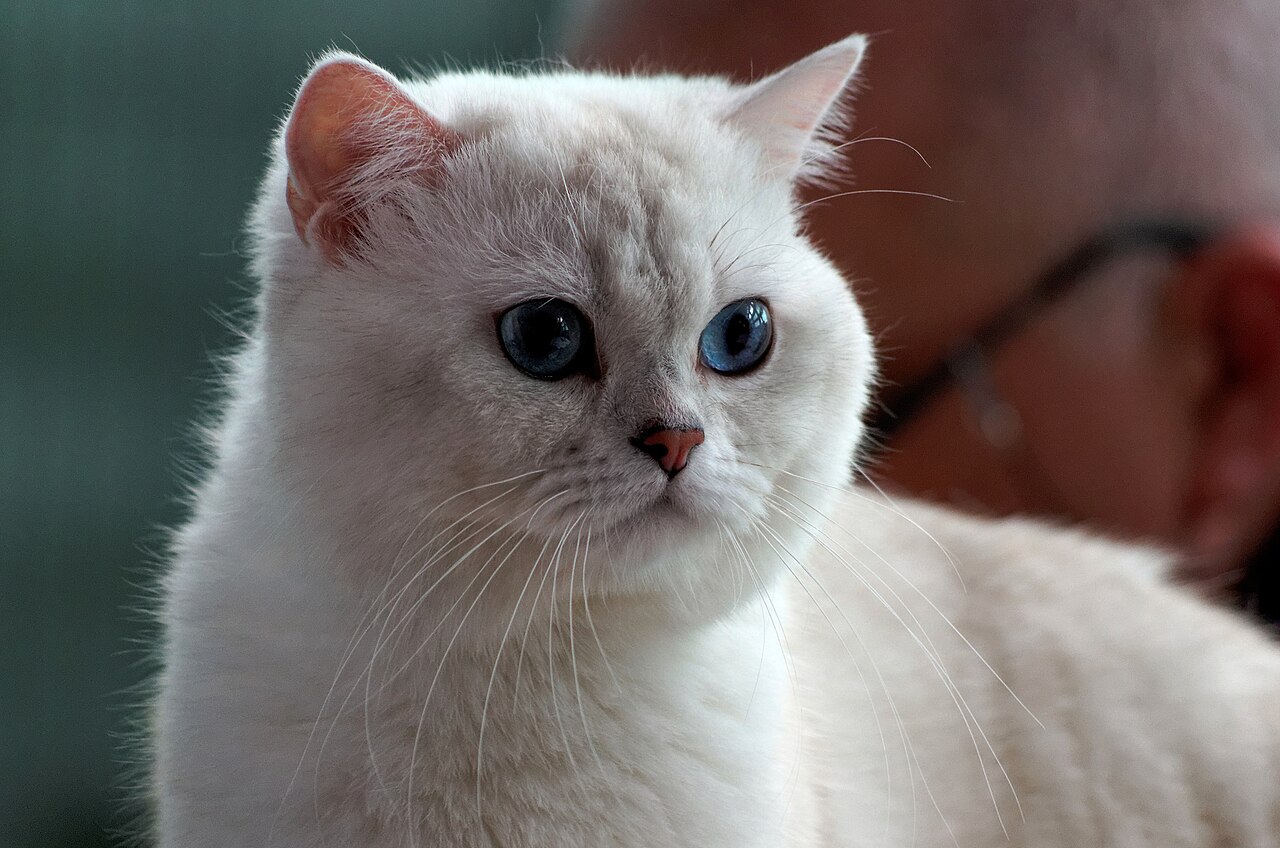
British Shorthairs look like living teddy bears. Round face, full cheeks, dense plush coat, big copper eyes. People see that face and expect a soft, needy lap cat. Then they bring one home and discover the truth: this is one of the most independent breeds you will ever meet. The contrast is the whole story. The British Shorthair personality is a calm, self-sufficient mind inside a huggable toy-like body.
Here is the short version. British Shorthairs are quiet, easygoing, and loyal in a low-key way. They are not clingy, not noisy, not needy. They will sit near you for hours, rarely on your lap, and they are perfectly happy with their own company. They get along with kids and other pets, stay calm under stress, and mature slowly, reaching their full personality around three years old or later. For the physical side, see the British Shorthair breed profile.
1. The Teddy Bear Look
Start with the look, because it explains everything that follows. The British Shorthair has a round head, a short nose, full cheeks, and a sturdy cobby body with short legs. The coat is dense and plush, standing slightly away from the body like velvet. It feels like a stuffed animal, and it is bred to feel that way. The classic British Blue, the gray-blue version with copper eyes, is the image most people picture. Its longhaired cousin, the British Longhair, is the same round, plush cat with a longer coat.
Here is the twist. A face this soft usually means a needy cat. The British Shorthair breaks that pattern completely. The look invites cuddles. The temperament politely declines most of them. New owners often spend the first month confused, holding out a hand to a cat that would rather nap three feet away. That is not a broken cat. That is the breed working exactly as designed.
2. Independent by Nature
Independence is the core of the British Shorthair personality. These cats are genuinely fine with their own company. A British Shorthair can spend a working day alone, nap in a sunbeam, and greet you at the door without drama. This makes the breed a strong match for people with long commutes or busy schedules. You do not need a pet sitter for every short trip away, though you should still arrange one for long ones.
Around strangers, the same reserve applies. A British Shorthair is polite but distant with visitors, watching from a shelf until the guest proves interesting. It is never aggressive, just patient. And the independence has a flip side that surprises people: the cat chooses you, not the other way around. A British Shorthair will decide when you get attention, and the decision is final. You cannot bribe one into being clingy. Respect the pace, and you get a steady, drama-free companion in return.
3. Affection on Their Terms
Do not read "independent" as "cold." British Shorthairs bond deeply with their people. They show it in quiet ways: following you from room to room, settling on the sofa beside you, sleeping at the foot of the bed. The affection is real. It just arrives on the cat's schedule, not yours.
Most British Shorthairs tolerate being held rather than loving it. A few seconds of cuddling, then they wriggle free and sit nearby instead. Owners who accept this early end up with a wonderfully satisfying relationship. The cat does not scream for attention, does not knock things off shelves, does not yowl at 3 a.m. It shares your space calmly, which is its way of loving you.
4. Calm and Quiet
Energy-wise, the British Shorthair is the opposite of breeds like the Siamese. Activity levels are low. An adult British Shorthair sleeps most of the day, plays in short bursts, and has no interest in climbing your curtains. They are content with a window, a soft bed, and a predictable routine. This is the rare breed that genuinely suits a quiet apartment.
The voice matches the energy. British Shorthairs rarely meow, and when they do, the sound is soft and polite rather than demanding. Compared with the Siamese, one of the loudest breeds in the world, the difference is night and day. If you have a talkative cat and want to know whether it fits a breed pattern, the Siamese personality guide covers the chatty end of the spectrum. This article covers the silent one.
5. With Kids and Other Pets
British Shorthairs generally do well with children and other animals. They are patient, sturdy, and not easily provoked. A British Shorthair will walk away from a too-loud toddler rather than hiss or scratch. Dogs, other cats, and even calm small pets usually coexist fine, especially when introductions are gradual.
The one condition is space. This is a cat that values its own territory. Give it a high shelf, a quiet room, or a covered bed to retreat to, and it will be a relaxed family member. Crowd it constantly, and it will simply leave the room. The breed is forgiving, but it is not a doormat.
British Shorthair vs Scottish Fold vs Chartreux: temperament at a glance
| Trait | British Shorthair | Scottish Fold | Chartreux |
|---|---|---|---|
| Personality | Calm, independent | Sweet, adaptable | Quiet, devoted |
| Cuddliness | Low to medium, on its terms | High, loves laps | Medium, one-person cat |
| Activity | Low, sleeps a lot | Medium, playful | Low to medium |
| Vocalization | Rare, soft | Soft, infrequent | Very rare |
All three breeds share the round face and plush coat, so the table matters more than the looks. If you are deciding between them, the Scottish Fold leans playful and people-focused, the Chartreux is quieter and bonds with one person, and the British Shorthair sits between them: independent and calm. Each profile has more detail, starting with the Scottish Fold breed profile and the Chartreux breed profile.
Is a British Shorthair Right for You?
Here is the honest checklist. Choose a British Shorthair if you want a calm, quiet companion that fits an apartment, if you are fine with affection on schedule, and if you can handle a dense coat that sheds in spring and fall. Brush it twice a week and you are set. This is a low-maintenance personality in a moderately high-maintenance coat.
Skip the breed if you want a Velcro cat, a lap warmer, or a constant conversationalist. Those cats exist, and they are wonderful; they are just not British. If you are not sure what you are living with, personality is a clue but not proof. Compare your cat against the British Shorthair breed profile, work through the cat breed identification guide, or run a photo through our cat breed identifier for a faster answer. Whatever the result, an independent teddy bear is a good thing to live with.
FAQ
Are British Shorthairs affectionate?
Yes, but on their terms. They bond deeply and show it in quiet ways: following you from room to room, settling on the sofa beside you, sleeping at the foot of the bed. They rarely sit on your lap. The affection is real, it just arrives on the cat's schedule.
Do British Shorthairs like to be held?
Most tolerate it rather than loving it. A few seconds of cuddling, then they wriggle free and sit nearby instead. Owners who accept this early end up with a wonderfully satisfying relationship.
Are British Shorthairs good apartment cats?
Very good ones. Activity levels are low, they rarely meow, and they have no interest in climbing your curtains. Give one a high cat tree or a quiet corner, and it is content with a window, a soft bed, and a predictable routine.
Related breeds
All breedsKeep reading
All articlesBreed Guides
Maine Coon Personality & Characteristics
Maine Coon traits go beyond size: calm, friendly temperament, soft chirps instead of meows, and a slow climb to maturity. Life with a gentle giant.
7 min read
Breed Guides
Siamese Cat Personality & Behavior: What to Expect
Siamese cats are loud, clingy, and brilliant. The Siamese personality means constant meowing, intense attachment, and daily play. Is that your cat?
7 min read
Breed Guides
Sphynx Personality & Temperament: What to Expect
The Sphynx temperament is more dog than cat: clingy, playful, smart, and prone to separation anxiety. What to expect before you adopt one.
7 min read
Still not sure what your cat is?
Stop guessing from photos and text. Upload one clear photo and the AI checks 40+ visual markers in seconds. Free, no sign-up, and your photo is never stored.
Free cat breed scan