

Cat Breed Glossary
What Is Tortoiseshell Cat?

Quick Answer
Tortoiseshell (tortie) is a coat pattern of intermixed orange and black, not a breed. Tortie cats are almost always female. The "tortitude" reputation comes from owner surveys, not controlled studies.
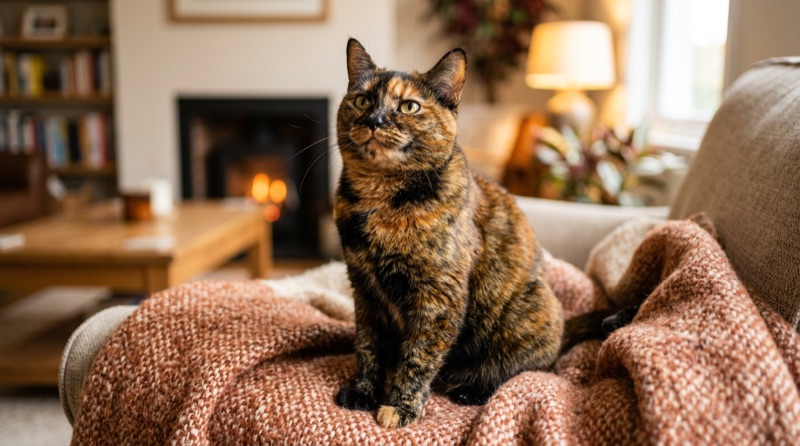
Tortoiseshell (tortie) describes a cat with a coat of intermixed orange and black patches, sometimes with cream or grey. Like tabby and calico, tortoiseshell is a color pattern, not a breed. The pattern appears in many breeds and in domestic shorthairs. Tortie cats are almost always female, for the same genetic reason as calico cats.

Did You Know?
- 1The word "tortitude" was coined by cat owners who swear their tortie cats have sassier personalities than other cats. Science has not confirmed this, but tortie owners are convinced.
- 2A "torbie" is a tortoiseshell cat with tabby stripes in the orange patches. It is the most colorful combination in the cat world.
- 3In some cultures, tortoiseshell cats are considered good luck. In the US, they are sometimes called "money cats."

How It Works
Same X-chromosome mechanism as calico
Tortoiseshell coloring comes from the same X-linked genetics as calico. The difference is the white gene. Calico cats have the white spotting gene (large white areas). Tortie cats do not, so the orange and black blend together instead of forming distinct patches on a white background.
Tortie tabby (torbie)
When a tortoiseshell cat also carries the tabby gene, the result is a torbie: tortoiseshell coloring with visible tabby stripes in the orange patches. This is common and does not indicate a different breed.
Male torties are rare
Like calico males, male tortoiseshell cats are extremely rare (about 1 in 3,000). They typically have an extra X chromosome (XXY), a condition called Klinefelter syndrome.

Benefits
- Unique patterns
No two tortoiseshell cats have the same pattern. The blending of orange and black is random, making each tortie visually unique.
- "Tortitude" personality myth
Tortie owners often report that their cats have strong, independent personalities. This is called "tortitude." The evidence is owner surveys, not controlled studies: a 2016 UC Davis survey found tortie and calico owners reported more aggression toward humans, a weak signal shaped partly by expectation.

Trade-Offs
- Not a breed identifier
The tortoiseshell pattern is too widespread to indicate any specific breed. It appears in Persians, British Shorthairs, Maine Coons, and millions of domestic shorthairs.
- Personality claims are unproven
Despite the "tortitude" myth, studies have not found a reliable link between coat color and temperament. A tortie cat's personality is shaped by genetics, socialization, and individual variation, not by its color pattern.

Who Is This For?
Ideal for
❌ Not ideal for

Try It with Furriq
- 1
Confirm it is tortoiseshell
Look for intermixed orange and black with little or no white. If there are large white areas, the cat is a calico, not a tortie. If there are tabby stripes in the orange patches, it is a torbie.
- 2
Look beyond the color
The tortie pattern tells you nothing about breed. Look at body shape, ear set, face structure, and coat length for breed clues.
- 3
Scan with Furriq
Upload a photo to Furriq. The AI reads all visible traits, not just color. The tortoiseshell pattern is one input among 40+ markers the tool checks.
Ready to identify your cat?
Upload a photo and get breed clues in seconds, free.
Upload a Photo to Furriq
Frequently Asked Questions
Q.Is tortoiseshell a breed?
No. Tortoiseshell is a coat color pattern (intermixed orange and black). It is not a breed. Tortie cats can be any breed or mixed breed.
Q.What is the difference between tortoiseshell and calico?
Tortoiseshell has orange and black mixed together with little or no white. Calico has a white base with distinct orange and black patches. Both are color patterns, not breeds.
Q.Do tortoiseshell cats really have "tortitude"?
The evidence is owner surveys: a 2016 UC Davis study found tortie and calico owners reported more aggression toward humans than owners of other colors. The signal is weak and shaped by owner perception, and no controlled study has confirmed it. A tortie's temperament is shaped by genetics, socialization, and individual variation.
Q.Can a male cat be tortoiseshell?
Extremely rarely, about 1 in 3,000. Male torties typically have an extra X chromosome (XXY), a condition called Klinefelter syndrome.

Sources

More Glossary Terms