
The honest answer
Does Coat Color Really Determine Personality?
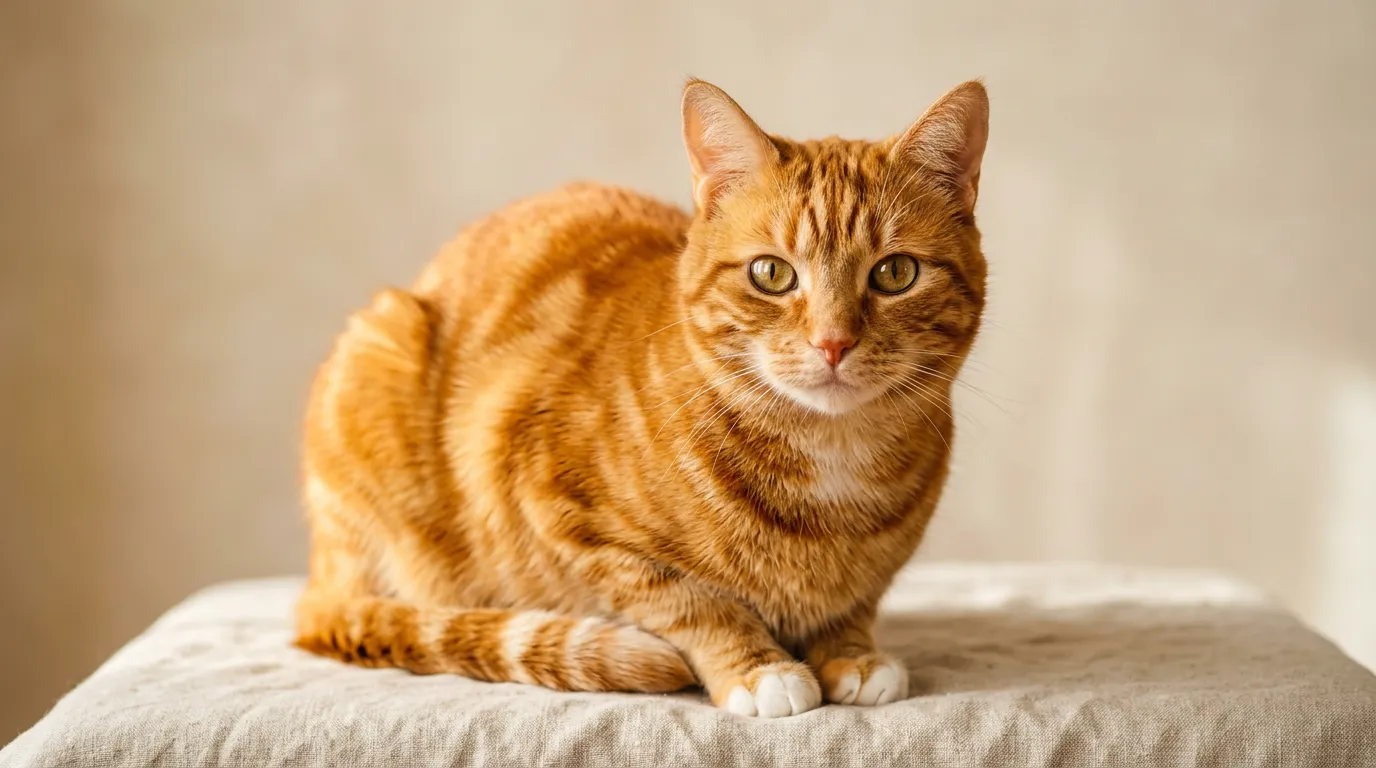
The honest answer: we do not know for sure. There are statistical correlations — orange cats tend to be friendlier, black cats tend to be calmer, calico cats tend to be more independent. But these are averages across many cats, not predictions for any individual cat.
The likely explanation is that coat color genes are physically close to (linked to) genes that influence behavior, and that selective breeding has reinforced certain color-personality combinations over generations. A breeder who wants a friendly orange Persian will select for both traits simultaneously.
Bottom line: Your cat's personality is shaped by genetics, socialization, and environment. Coat color is one small piece of a much bigger puzzle. The best way to understand your cat is to spend time with it — or upload a photo to Furriq and let our AI identify the breed traits that might explain its behavior.
Orange / Ginger Cats Personality
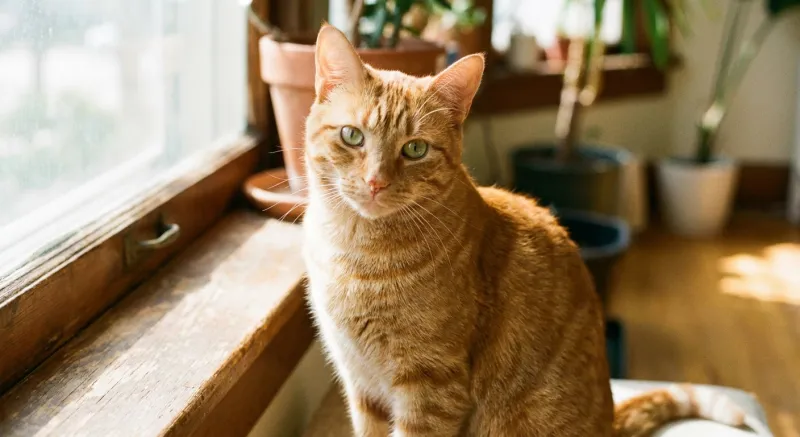
Orange cats are famous for their bold, social, and sometimes clueless charm. The internet calls it "sharing one brain cell." There is a kernel of truth: orange cats score high on friendliness scales in most surveys.
Common Personality Traits
- Outgoing and affectionate — they tend to approach strangers first
- Food-motivated, which may explain why they are often overweight
- Playful well into adulthood, sometimes described as "eternal kittens"
- More likely to be male (about 80% of orange cats are male)
The Science Behind the Color
The orange gene (O) is X-linked, which means males only need one copy to be orange. Females need two, which is why orange females are rarer. The gene affects pigment production but not behavior directly — the personality link is likely a statistical artifact of breeding patterns, not genetics.
Breeds That Come in Orange
Fun Fact
Every orange tabby cat has some form of tabby pattern — the orange gene does not produce a truly solid coat. You will always see at least faint stripes or markings.
Curious what breed your orange might be? Check the visual markers →
Black Cats Personality
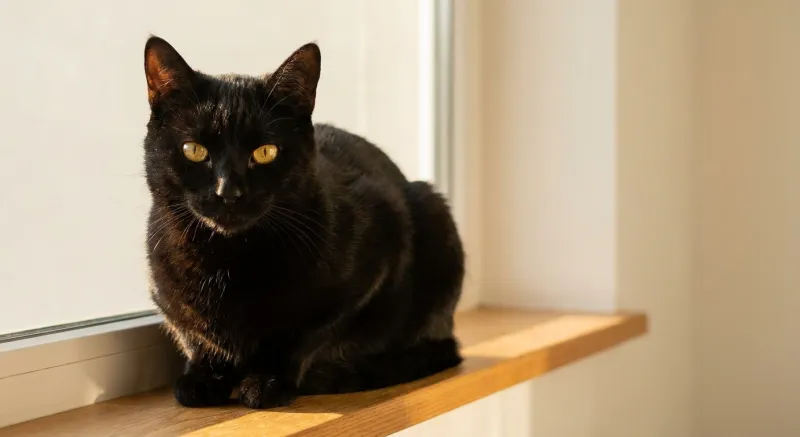
Black cats have a reputation problem. Superstition says unlucky; owners say loyal, calm, and surprisingly vocal. Studies from shelter adoption data show black cats are adopted at similar rates to other colors once people meet them in person.
Common Personality Traits
- Calm and adaptable — they adjust well to new environments
- Loyal to their owners, sometimes described as "dog-like"
- Playful but not hyperactive — a good balance for apartment living
- Vocal — many black cat owners report frequent meowing and chirping
The Science Behind the Color
Solid black is caused by a recessive allele (a) of the agouti gene that suppresses tabby striping. The same melanin pigment that makes the coat black may also influence temperament through linked genes, though this is not proven. Black cats may also carry genes for other coat patterns that are hidden by the dominant black.
Breeds That Come in Black Cats
Fun Fact
Black cats can "rust" in sunlight. UV exposure breaks down melanin, turning the coat brownish or revealing hidden tabby stripes. Indoor cats stay blacker.
Curious what breed your black cats might be? Check the visual markers →
Gray / Blue Cats Personality
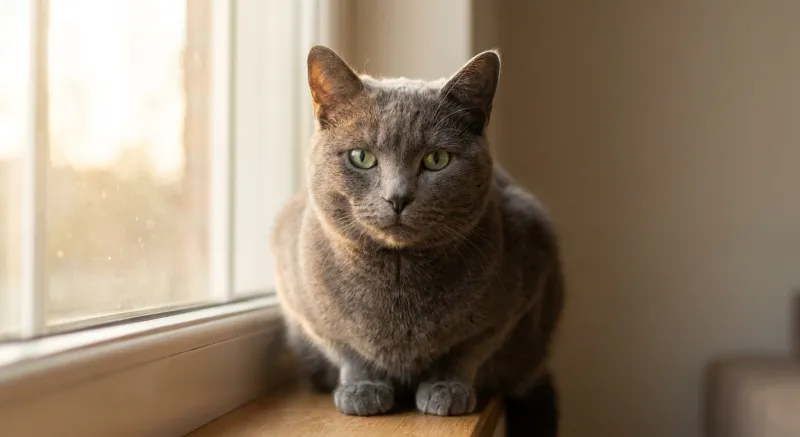
Gray cats (also called blue in breed standards) are often described as quiet, gentle, and independent. They are not aloof — they choose when to be affectionate and tend to bond deeply with one person.
Common Personality Traits
- Reserved with strangers but deeply bonded to their chosen person
- Quiet — they are not typically vocal cats
- Intelligent and observant, often watching before acting
- Sensitive to changes in routine or environment
The Science Behind the Color
Gray (blue) is a dilution of black. The dilution gene (d) clumps pigment granules, making the coat appear gray instead of black. This same gene affects all eumelanin-based colors — a dilute orange becomes cream, a dilute chocolate becomes lilac.
Breeds That Come in Gray
Fun Fact
Russian Blue, Chartreux, and Korat all look nearly identical to the untrained eye: solid gray, green or gold eyes, medium build. The differences are in head shape, coat texture, and eye color shade — exactly the kind of markers AI can detect.
Curious what breed your gray might be? Check the visual markers →
Calico Cats Personality
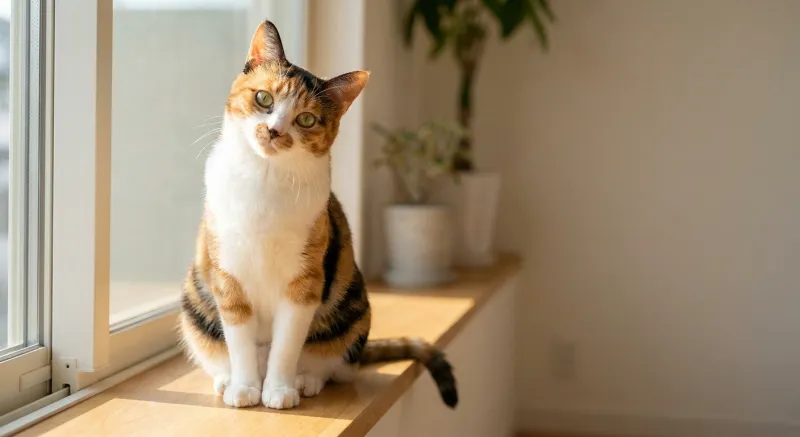
Calico cats — white with patches of orange and black — have a reputation for being feisty. Owners call it "cattitude." The science is interesting: almost all calicos are female, and the patch pattern is random X-inactivation.
Common Personality Traits
- Spirited and independent — they know what they want
- Can be affectionate on their own terms, not typically lap cats
- Strong-willed, sometimes described as "sassy" or "fiery"
- More territorial than single-color cats in some studies
The Science Behind the Color
Calico requires two X chromosomes: one carrying orange (O), one carrying non-orange (o). In each cell, one X is randomly inactivated (Lyonization), creating the patch pattern. Male calicos are extremely rare (XXY, about 1 in 3,000) and usually sterile.
Breeds That Come in Calico Cats
Fun Fact
Calico is not a breed — it is a color pattern. A calico Maine Coon and a calico Domestic Shorthair have the same color genetics but completely different body types and temperaments.
Curious what breed your calico cats might be? Check the visual markers →
Tuxedo Cats (Black & White) Personality
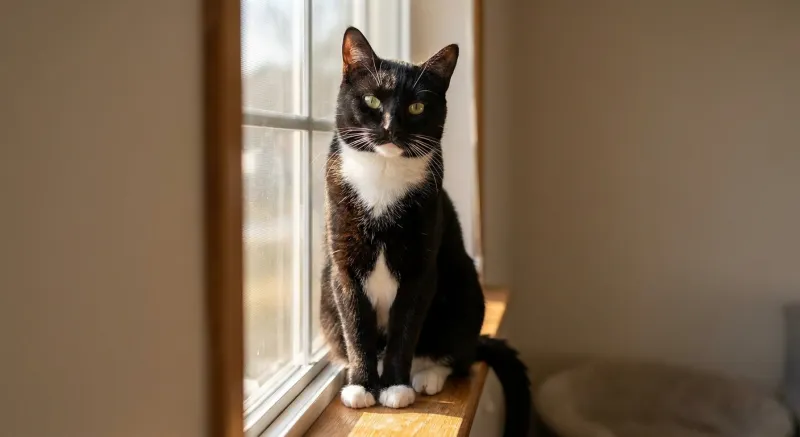
Tuxedo cats — black with a white chest and paws — are often described as confident, vocal, and a bit bossy. They tend to act like they own the place, which owners either love or tolerate.
Common Personality Traits
- Confident and assertive — they tend to be the alpha in multi-cat homes
- Vocal and communicative — they will tell you when something is wrong
- Playful and energetic, especially when young
- Social with humans but can be territorial with other cats
The Science Behind the Color
Tuxedo pattern is caused by the white spotting gene (S), which suppresses pigment in specific areas. The extent of white varies: from a small chest patch to nearly all white. The gene is incompletely dominant — one copy gives moderate white, two copies give extensive white.
Breeds That Come in Tuxedo Cats (Black & White)
Fun Fact
Tuxedo cats have been to the top of Mount Everest (a cat named Roderick) and served in World War II. They also show up in ancient Egyptian art more than any other pattern.
Curious what breed your tuxedo cats (black & white) might be? Check the visual markers →
Tabby Cats Personality
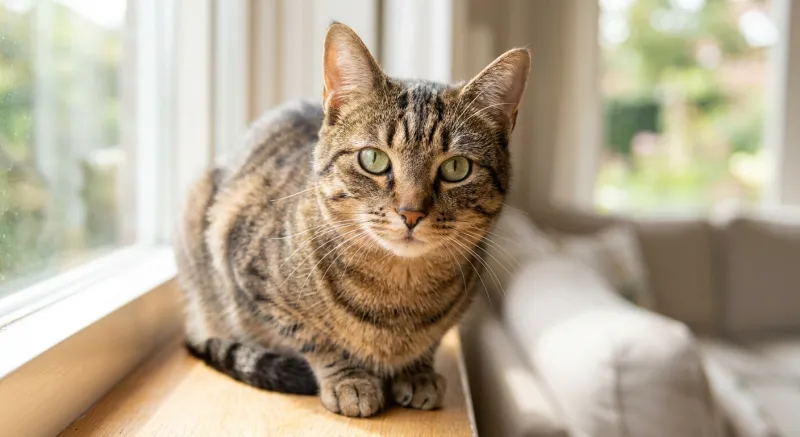
Tabby is the most common coat pattern in domestic cats. The "M" on the forehead is the giveaway. Tabby cats are often described as friendly, easygoing, and adaptable — the "default" cat personality.
Common Personality Traits
- Friendly and adaptable — they fit into most households
- Social with both humans and other pets
- Active and curious, especially classic and mackerel tabbies
- Ticked tabbies (Abyssinian type) are more energetic and mischievous
The Science Behind the Color
Tabby is controlled by the agouti gene (A) and three pattern genes: mackerel (Mc), classic (mc), and ticked (Ta). The "M" marking on the forehead is universal across all tabbies and may be linked to the same genes that control wild-type coat patterns in wild cats.
Breeds That Come in Tabby Cats
Fun Fact
The tabby pattern is the ancestral pattern of all domestic cats. Every cat carries tabby genes — even solid black cats have a hidden tabby pattern that can appear in certain lighting.
Curious what breed your tabby cats might be? Check the visual markers →
Siamese / Colorpoint Cats Personality
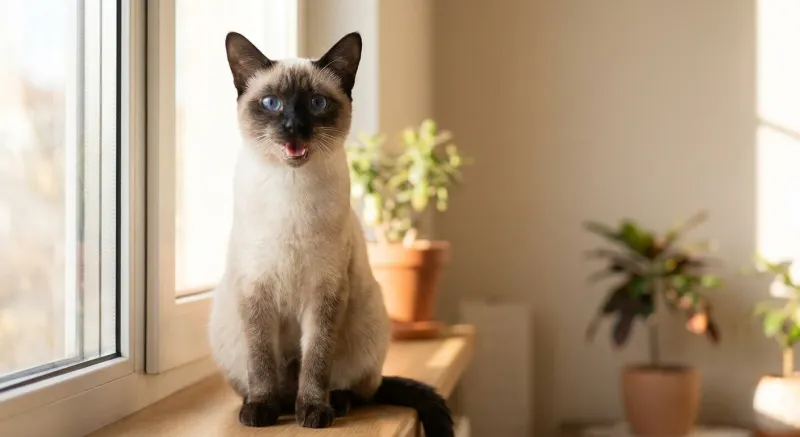
Siamese and colorpoint cats — pale body with dark ears, face, paws, and tail — are the most vocal and demanding of all coat patterns. They are intelligent, social, and will not leave you alone.
Common Personality Traits
- Extremely vocal — they have a loud, low-pitched meow that sounds like a human baby
- Highly social and dependent on human interaction — they do not do well alone
- Intelligent and trainable — they can learn tricks, walk on leash, and open doors
- Active and playful well into old age
The Science Behind the Color
The pointed pattern is caused by a temperature-sensitive mutation of the tyrosinase gene (cs). The enzyme only works at lower temperatures, so the cooler extremities (ears, face, paws, tail) produce pigment while the warm body stays pale. Kittens are born white because the womb is uniformly warm.
Breeds That Come in Siamese
Fun Fact
Siamese cats darken with age. A Siamese kitten born in a cold climate will be noticeably darker overall than one born in a tropical climate. The pattern is literally a map of body temperature.
Curious what breed your siamese might be? Check the visual markers →
White Cats Personality
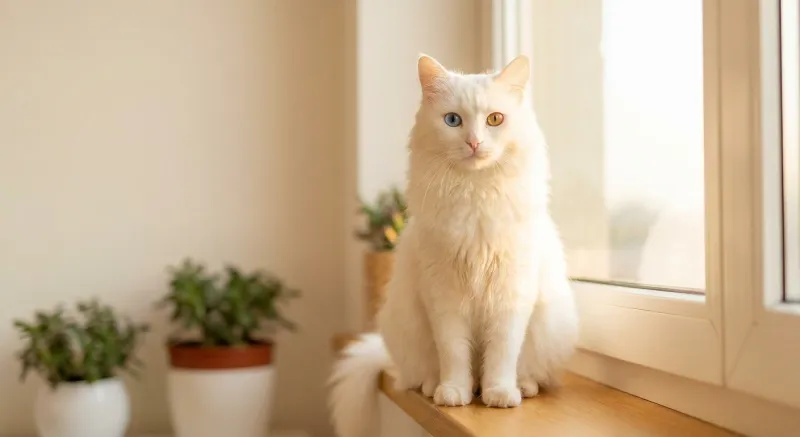
White cats are often described as gentle, calm, and a bit aloof. They are also more likely to be deaf, especially if they have blue eyes — a well-documented genetic link.
Common Personality Traits
- Gentle and calm — they tend to be less active than other colors
- Can be aloof with strangers but affectionate with their owners
- Sensitive to loud noises (especially deaf white cats)
- Often described as "elegant" or "regal" in temperament
The Science Behind the Color
White is caused by the dominant white gene (W), which suppresses all pigment production. This gene is also linked to deafness — about 65-85% of white cats with two blue eyes are deaf in at least one ear. The white gene is epistatic — it masks all other color and pattern genes.
Breeds That Come in White Cats
Fun Fact
White cats with one blue eye and one gold or green eye (odd-eyed) are common in Turkish Angora and Turkish Van breeds. The blue eye side has a higher chance of deafness, while the non-blue eye side usually has normal hearing.
Curious what breed your white cats might be? Check the visual markers →
Coat color is one clue, but breed identification looks at 40+ visual markers — face shape, ear type, body proportions, and more.
Upload a photo — breed scanCat Color Personality at a Glance
| Color | Key Trait | Male % | Common Breeds |
|---|---|---|---|
| Orange | Outgoing and affectionate | ~80% | Persian, Maine Coon, British Shorthair |
| Black Cats | Calm and adaptable | ~50% | Bombay, British Shorthair, Maine Coon |
| Gray | Reserved with strangers but deeply bonded to their chosen person | ~50% | Russian Blue, British Shorthair, Chartreux |
| Calico Cats | Spirited and independent | ~0.03% | Domestic Shorthair, Maine Coon, Persian |
| Tuxedo Cats (Black & White) | Confident and assertive | ~50% | Domestic Shorthair, Maine Coon, British Shorthair |
| Tabby Cats | Friendly and adaptable | ~50% | Maine Coon, British Shorthair, American Shorthair |
| Siamese | Extremely vocal | ~50% | Siamese, Ragdoll, Birman |
| White Cats | Gentle and calm | ~50% | Turkish Angora, Turkish Van, Persian |
Gray vs Grey: Same Cat, Different Spelling
If you are searching for "gray cat personality" or "grey cat personality" — same thing. American English uses "gray," British English uses "grey." The cats do not care. Both spellings refer to the same dilute black coat caused by the dilution gene (d). Russian Blues, Chartreux, Korats, and Nebelungs are all "gray" or "grey" cats with similar quiet, gentle temperaments.
Related: What Breed Is Your Cat?
Coat color is one of 40+ visual markers our AI checks. If you want to go beyond color and identify your cat's possible breed, upload a photo. The scan is instant and covers 60+ breeds.
Frequently Asked Questions
Does a cat color affect its personality?+
There is some statistical correlation between coat color and certain personality traits, but it is not a direct cause-and-effect relationship. Orange cats tend to be friendlier, black cats tend to be calmer, and calico cats tend to be more independent — but these are averages across many cats, not rules. Individual personality is shaped by genetics, socialization, and environment far more than coat color alone.
Are orange cats really friendlier?+
Multiple surveys and shelter studies show orange cats score higher on friendliness and sociability scales. However, this may be because orange cats are more often male (about 80%), and male cats tend to be more outgoing regardless of color. The "one brain cell" meme is fun but not science.
Are black cats really unlucky?+
No. Black cats are considered lucky in many cultures — in Japan and the UK, a black cat crossing your path is good fortune. The "unlucky" reputation comes from medieval European superstition. In terms of personality, black cats are often described as calm, loyal, and adaptable.
Why are calico cats almost always female?+
Calico requires two X chromosomes: one carrying the orange gene, one carrying non-orange. In each cell, one X is randomly inactivated, creating the patch pattern. Males have only one X chromosome, so they are either orange or non-orange, not both. Male calicos are extremely rare (XXY, about 1 in 3,000) and usually sterile.
What is the difference between a tabby and a calico?+
Tabby is a coat pattern (stripes, swirls, or spots caused by the agouti gene). Calico is a color combination (white with orange and black patches). A cat can be both — a "caliby" or "tabico" is a calico cat with visible tabby stripes in the orange patches.
Do gray cats have a specific personality?+
Gray (blue) cats are often described as quiet, gentle, and independent. They tend to bond deeply with one person and can be reserved with strangers. This is especially true for Russian Blues and Chartreux, which are naturally reserved breeds. But a gray Domestic Shorthair may be just as outgoing as any other cat.
Are Siamese cats the most vocal?+
Yes. Siamese and colorpoint cats are consistently ranked as the most vocal domestic cat breeds. They have a distinctive loud, low-pitched meow that sounds almost human. They use vocalization to communicate needs, demand attention, and express opinions about everything.
Can I tell my cat breed from its color?+
Color narrows the field but does not identify a breed. A pointed pattern suggests Siamese, Ragdoll, or Birman ancestry. A solid gray suggests Russian Blue, Chartreux, or Korat. But most cats are mixed breeds, and color alone is not enough. Upload a photo to Furriq and our AI checks color plus 40 other visual markers for a more complete picture.
What is a tuxedo cat?+
A tuxedo cat is a black cat with a white chest and paws, resembling a formal tuxedo. The pattern is caused by the white spotting gene. Tuxedo is not a breed — it is a color pattern that appears in many breeds and mixed-breed cats. Tuxedo cats are often described as confident, vocal, and a bit bossy.
Do white cats have more health problems?+
White cats with blue eyes have a higher risk of deafness — about 65-85% are deaf in at least one ear. This is a genetic link between the white pigment gene and inner ear development. White cats are also more prone to sunburn and skin cancer on their ears and nose, especially in sunny climates.