
Cat eye guide
Cat Eye Colors
Cats come in eight eye colors: blue, green, gold, amber, copper, hazel, odd eyes, and the rare dichroic iris. The color comes from melanin in the iris, the same pigment that colors the coat, which is why eye color and coat color so often travel together. Below is each color family, which breeds carry it, and a chart you can scan while looking at your own cat.
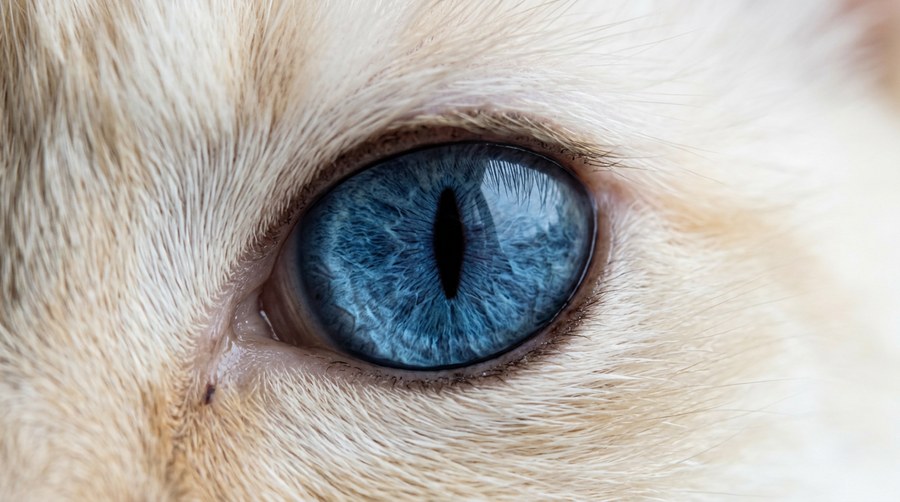
Blue
Blue eyes carry almost no melanin. In adult cats you will see them almost exclusively on pointed breeds, because the same gene that restricts coat pigment to the face, ears, paws, and tail also starves the iris. That is why the Siamese, Ragdoll, Birman, and Himalayan always have blue eyes, and it is why a random blue-eyed kitten with a non-pointed coat will usually change color as it matures.
Green
Green sits in the middle of the melanin range. The Russian Blue is the showpiece: kittens are born yellow-eyed and the emerald green does not settle in until about four months old. The Oriental Shorthair standard calls for solid green in most coat colors. Ordinary domestic cats land on green constantly, which makes it the most common adult eye color after yellow.
Gold and yellow
The most common eye color in the general cat population. The Burmese takes it furthest: the standard wants a vivid chartreuse gold in a big round eye. Gold eyes show up in dozens of breeds and in most random-bred cats, so if you are trying to place a shelter cat by its eyes alone, gold tells you the least.
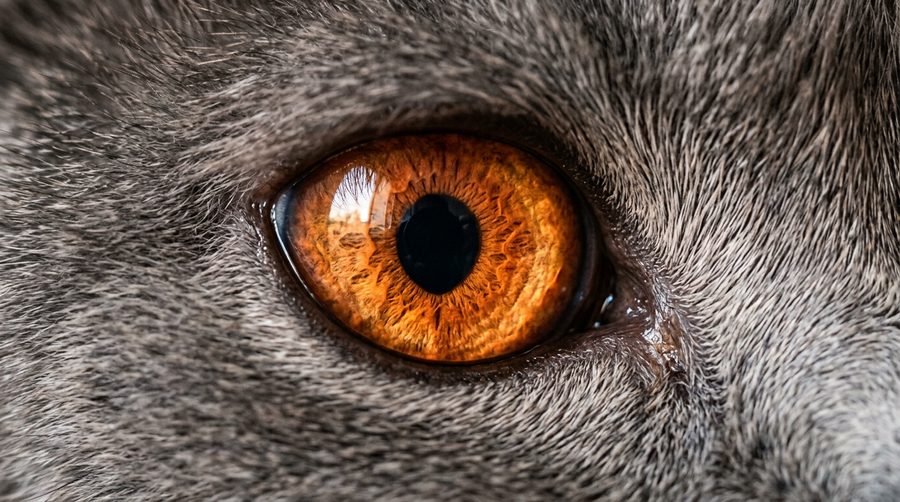
Amber and copper
Amber is a deep warm orange and copper is richer still. These are pedigree colors more than street colors. The British Shorthair and Chartreux both pair blue-gray coats with copper eyes, and the Chartreux standard explicitly rejects green. The Bombay was bred for the contrast: jet-black patent-leather coat, glowing copper eyes. The Persian and Exotic Shorthair come in vivid copper or deep blue depending on the coat. One caveat from the breed data: the Turkish Van's amber can fade with age.
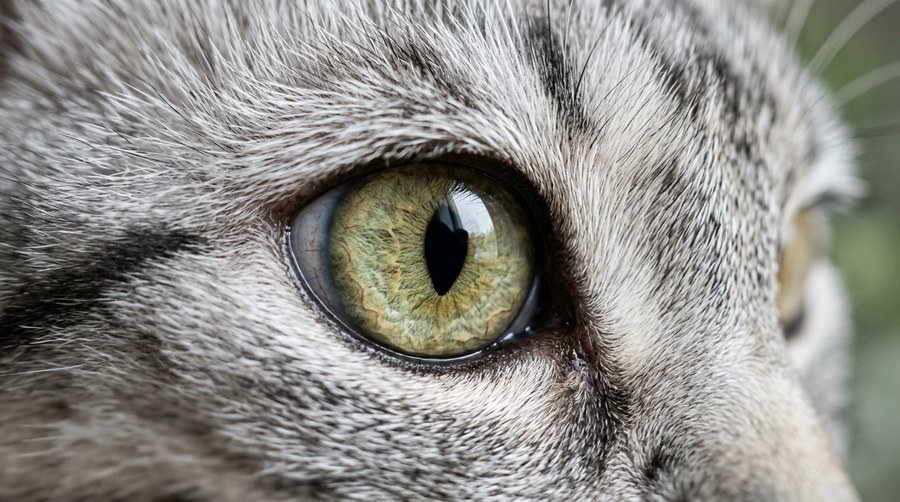
Hazel
Hazel is the in-between: green and gold mixed in the same iris, often with a brownish rim. The American Shorthair and Abyssinian both list hazel in their accepted range. If a cat's eyes look green from one angle and gold from another, hazel is the honest label.
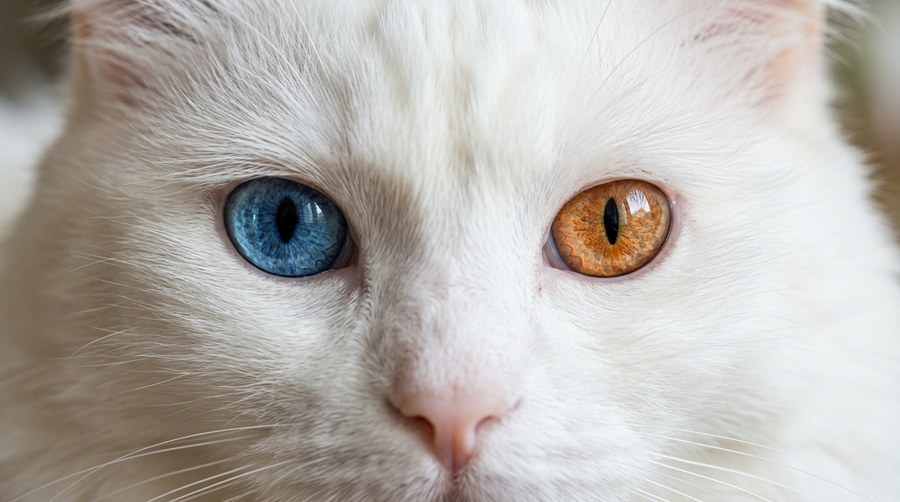
Odd eyes
Odd eyes, one blue and one amber, green, or copper, show up almost exclusively in white or mostly-white cats. The Khao Manee was prized at the Siamese court for exactly this, and the Turkish Angora and Turkish Van both allow it. The genetics run through the genes that produce white coats, which is why odd eyes almost never appear on a tabby.
Dichroic eyes
The rarest of all: two colors inside a single iris, say a ring of blue around a wedge of gold. No breed breeds for it and most veterinary textbooks treat it as a curiosity. If your cat has one, enjoy it, because you will not find another at the shelter.
Breed eye color chart
Eye colors pulled from the breed standards we profile on Furriq. Scan your cat's eye color first, then check whether the coat matches, because eye color alone narrows the list but never closes it.
| Breed | Eye colors | Note |
|---|---|---|
| Russian Blue | Emerald green | Born yellow-eyed, the green settles in by 4 months |
| Siamese | Vivid blue | Pointed coats always pair with blue |
| Ragdoll | Blue | Large ovals, always blue |
| Birman | Deep blue | Almost round and consistently rich |
| Himalayan | Deep blue | Pointed Persian, blue is mandatory |
| Tonkinese | Aqua | Halfway between Siamese blue and Burmese gold |
| British Shorthair | Copper, gold | Round eyes; color follows the coat |
| Chartreux | Copper to orange | Never green, per the standard |
| Bombay | Copper to deep gold | The copper glow against black is the hallmark |
| Persian | Copper or deep blue | Blue only in pointed lines |
| Exotic Shorthair | Copper or deep blue | The Persian look in a short coat |
| Burmese | Gold to chartreuse | Big round expressive golds |
| American Shorthair | Copper, gold, green, hazel, blue | Wide range, tied to coat color |
| Abyssinian | Gold, green, hazel | Dark eyeliner completes the look |
| Scottish Fold | Copper, gold, blue-green, odd | Odd eyes appear in whites |
| Norwegian Forest Cat | Green, gold, copper, blue, odd | Eye color is independent of coat |
| Turkish Angora | Blue, green, amber, gold, odd | No link between coat and eye color |
| Turkish Van | Amber, blue, odd | Amber is classic and can fade with age |
| Khao Manee | Blue, green, amber, odd | Bred in Siam for jewel-bright eyes |
| Japanese Bobtail | Blue, gold, green, odd | Distinctive upward slant |
| Devon Rex | Gold, green, blue-green, odd | Mischievous upward-slanting ovals |
| Oriental Shorthair | Green, blue, odd | Vivid green in most coat colors |
| Savannah | Gold to green | Hooded lids give a hawk-like gaze |
All kittens start blue
Kittens are born with their eyes shut. When the eyes open around two weeks, they are blue, because melanin has not reached the iris yet. Pigment production ramps up over the following weeks, and by three or four months most cats show their adult color. Russian Blues follow the same schedule in reverse style: yellow-eyed kittens, emerald adults. So the blue-eyed tabby kitten you met at eight weeks is probably a gold-eyed tabby by winter.
White cats, blue eyes, and hearing
The genes that produce a solid white coat can also affect hearing. White cats with one or two blue eyes carry a higher risk of congenital deafness, sometimes in one ear only. Breed registries recommend a hearing test for blue-eyed white kittens, and a Bilateral BAER test settles it definitively. A deaf cat lives a normal life indoors, but you want to know before you train by voice.
Done reading? Try the identifier on your own cat
Upload a photo and Furriq checks 40+ visible markers, eye color among them, against these breed profiles. Guests get one free scan, no sign-up required, and every result is framed as clues, not proof.
No cat photo handy?
Scan a sample, one tap:
Only cat photos are recognized — non-cat images will return meaningless results
Example results
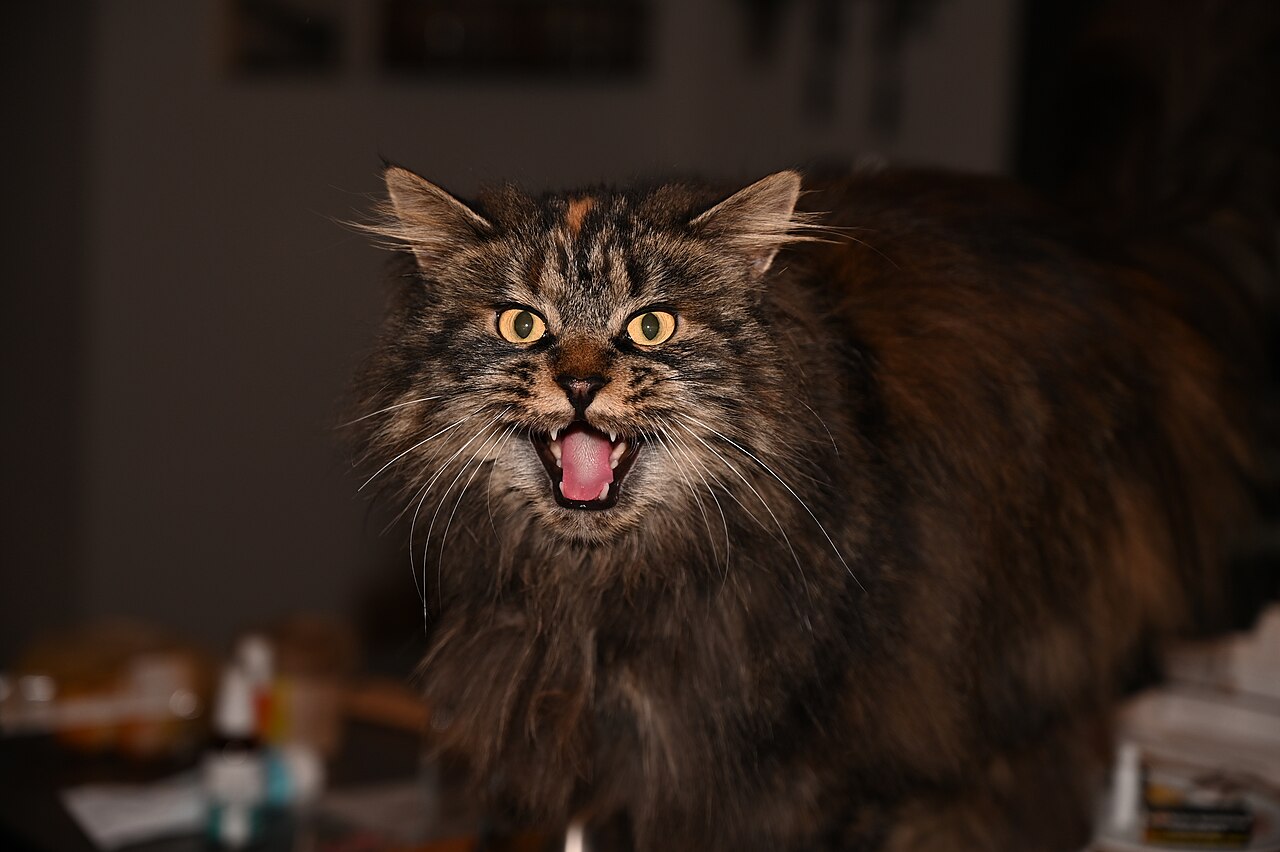
Maine Coon
~92%
Large frame, ear tufts, rectangular body
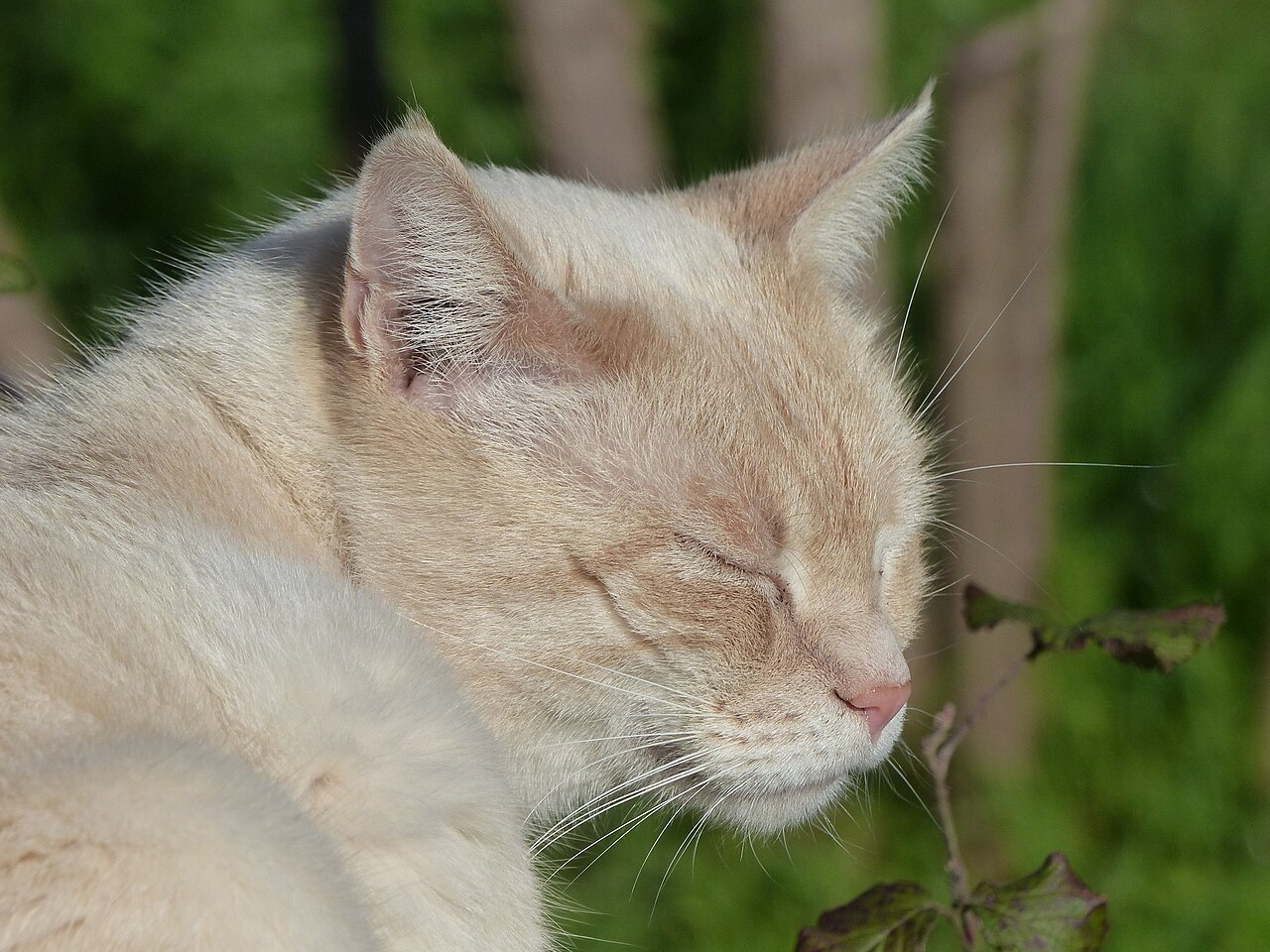
Siamese
~87%
Blue eyes, pointed coat, triangular face
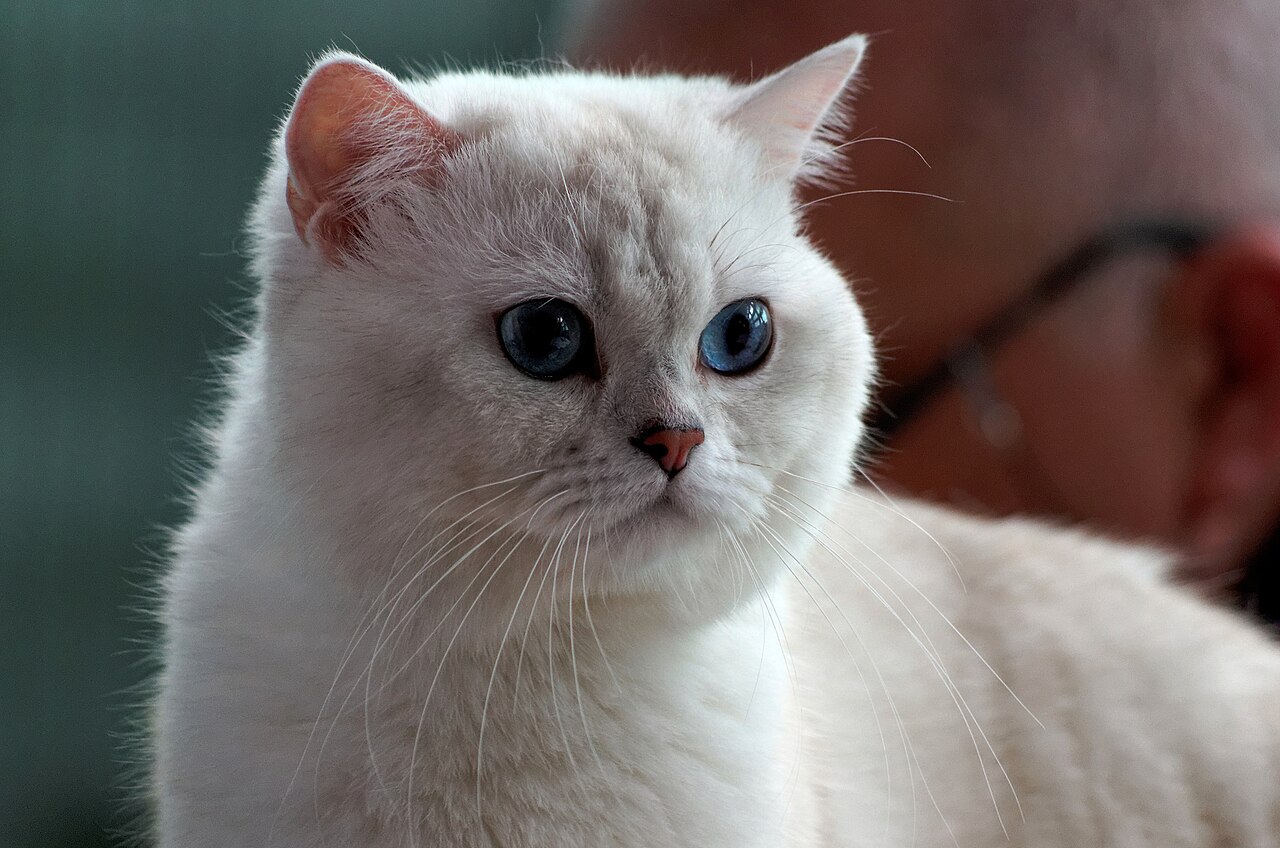
British Shorthair
~85%
Dense coat, round face, copper eyes
Frequently asked questions
What is the rarest eye color for cats?
A dichroic iris, with two colors in one eye, is the rarest by a wide margin. Odd eyes come next. Among ordinary single colors, deep copper is the least common in the general cat population, while solid blue adults are mostly limited to pointed breeds.
What eye colors do cats usually have?
Yellow and green dominate the general cat population. Gold, hazel, amber, and copper are progressively less common, and adult blue is rare outside pointed breeds such as the Siamese and Ragdoll.
What is the most popular cat eye color?
Popularity is a matter of taste, but search data says blue: the most-shared cat photos on the internet are overwhelmingly blue-eyed pointed breeds. Copper has a devoted following among British Shorthair and Bombay owners for the contrast it makes with the coat.
Are white cats with blue eyes deaf?
Not automatically, but the risk is real. The genes behind a solid white coat can also prevent part of the inner ear from developing, and the risk rises with blue eyes, highest in white cats with two blue eyes. Deafness can affect one ear only, so a cat that reacts to some sounds may still be deaf on one side. Ask your vet about a BAER hearing test.